

15 Rupees – India - British
India
Context
Year: 1918
Country: India 
Issuer: India - British
Ruler: George V
Currency:
(1770—1947)
Demonetized: Yes
Total mintage: 2,110,012
Material
References
KM: #Click to copy to clipboard525
Numista: #15712
Value
Bullion value: $1220.10
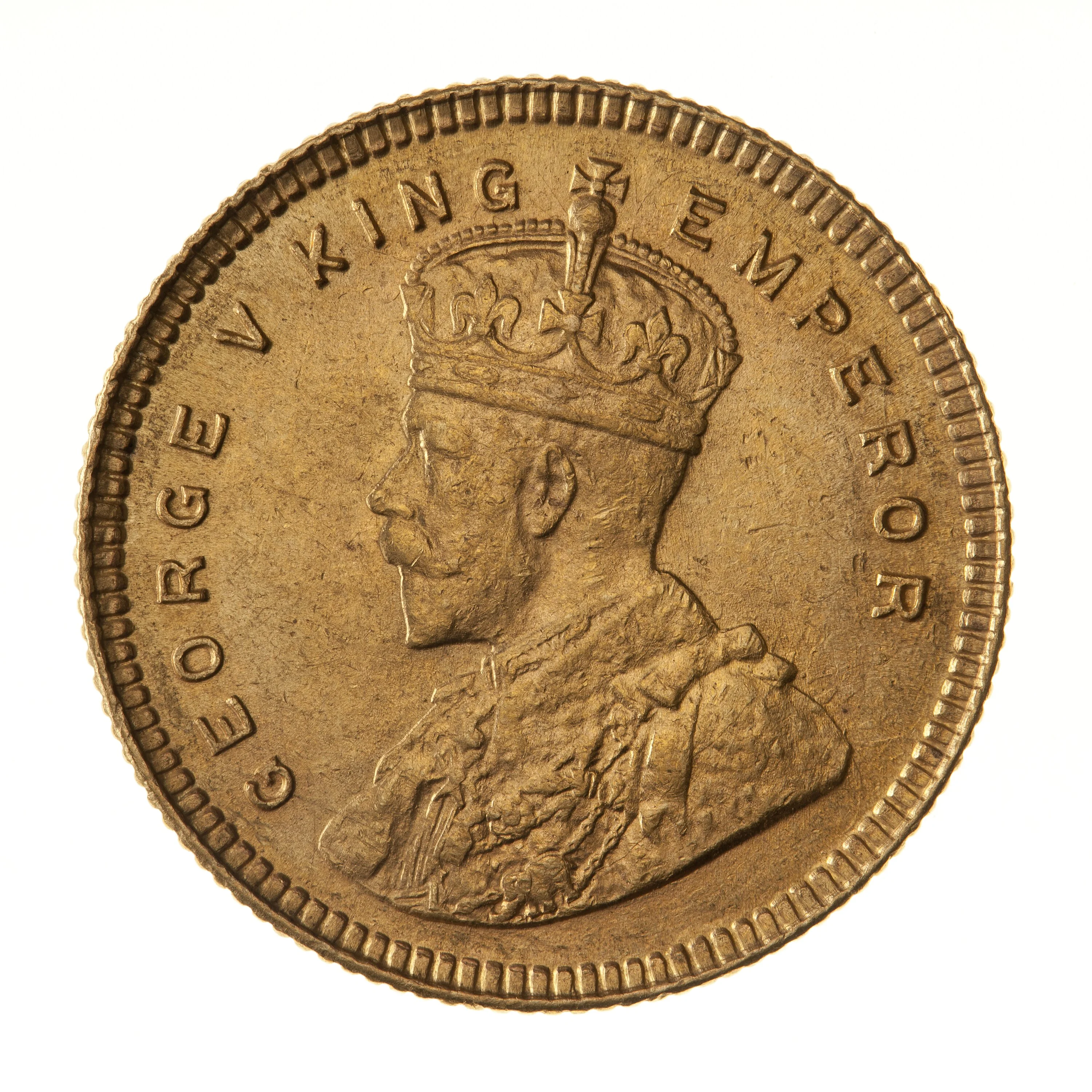
Obverse
Description:
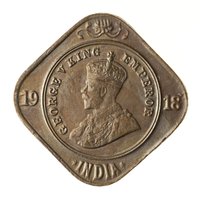
King George V left-facing bust within a toothed border and legend.
Inscription:
GEORGE V KING EMPEROR
Translation:
GEORGE V KING EMPEROR
Script: Latin
Language: English
Engraver: Edgar Bertram MacKennal
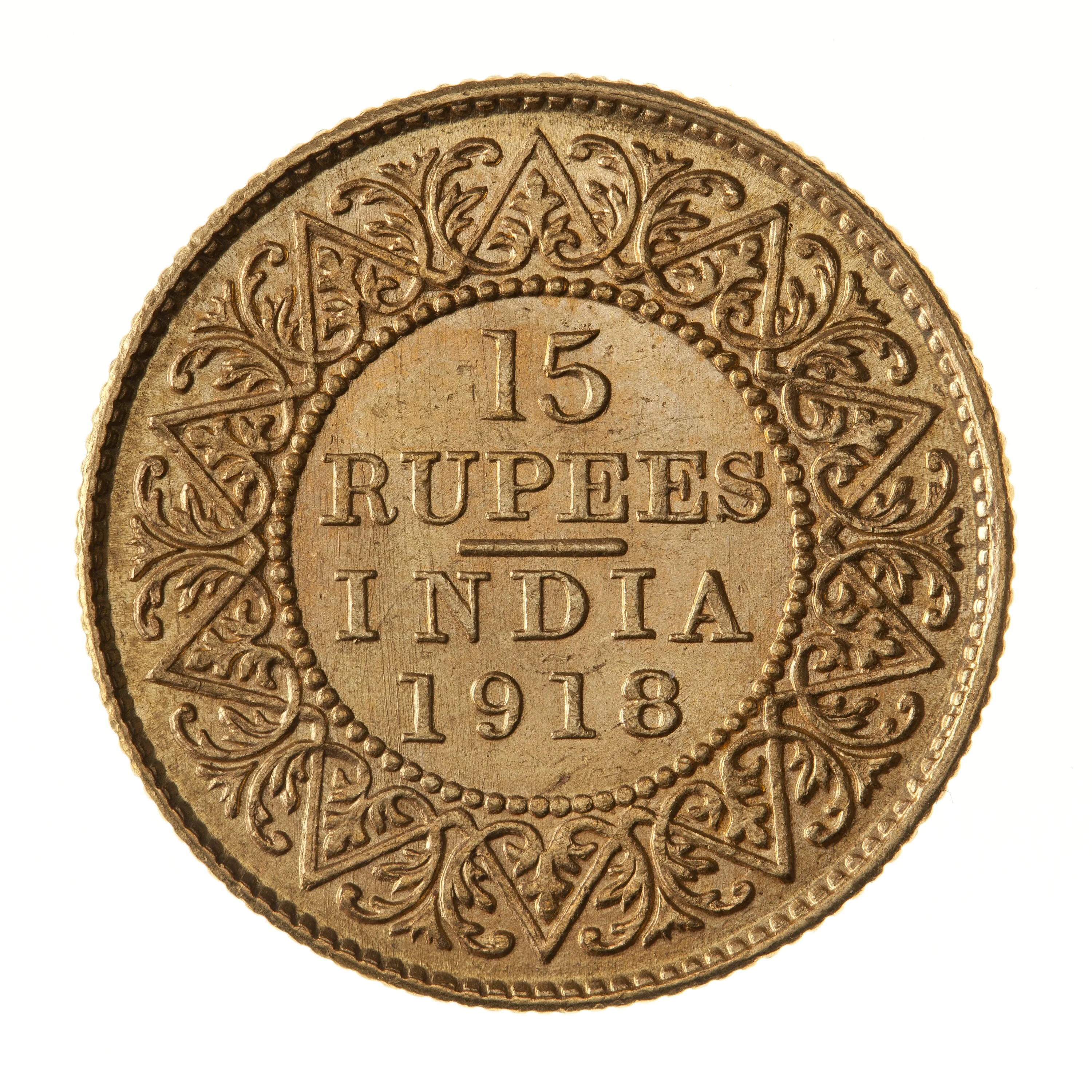
Reverse
Description:
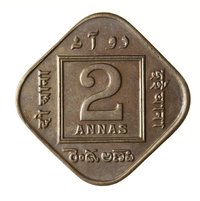
Beaded circle legend, outer scrollwork, raised toothed border.
Inscription:
15
RUPEES
INDIA
1918
RUPEES
INDIA
1918
Script: Latin
Edge
Reeded
Mints
| Name | Mark |
|---|---|
| Mumbai / Bombay | — |
Mintings
| Year | Mint Mark | Mintage | Quality | Collection |
|---|---|---|---|---|
| 1918 | — | 2,110,000 | ||
| 1918 | — | 12 | Proof |
Historical background
By 1918, the currency situation in British India was under severe strain, a direct consequence of the First World War. The pre-war system, based on the gold exchange standard with the silver rupee as the primary circulating coin, was destabilised. To conserve Britain's gold reserves for the war effort, the automatic conversion of rupees and council bills (the mechanism for remittance to India) into sterling was suspended. This effectively severed the rupee's direct link to gold, making it a managed currency controlled by the Secretary of State for India in London. The government also issued massive amounts of paper currency, with the total value in circulation more than tripling between 1914 and 1918 to finance war expenditures, leading to significant inflationary pressures.
A critical factor was the dramatic rise in the price of silver on the global market, as demand for the metal surged. Since the rupee was a silver coin, its intrinsic bullion value began to approach and even threaten to exceed its fixed exchange value of 1s 4d (16 pence sterling). This created a serious risk of rupees being melted down for their silver content, which would have caused a coinage shortage and further monetary chaos. To prevent this, the British government was forced to take extraordinary measures, including demonetising the existing high-value silver rupees in 1917 and issuing new, lighter rupees with reduced silver content—a clear debasement of the coinage to maintain its circulation.
The cumulative effect was a complex crisis of confidence and value. Inflation eroded purchasing power, hitting the fixed-income and rural populations hard. The managed exchange rate, pegged at 1s 4d for official transactions, existed alongside a higher black-market rate, creating a dual system. Furthermore, India’s substantial export surplus, used to fund Britain's war purchases, was settled not in gold but through credits in London ("Council Drafts"), leading to a contentious accumulation of sterling debt known as the "Home Charges." This situation sowed deep resentment, as India bore a heavy financial burden for the war, setting the stage for the post-war currency controversies and the eventual shift to the gold bullion standard in 1927.
A critical factor was the dramatic rise in the price of silver on the global market, as demand for the metal surged. Since the rupee was a silver coin, its intrinsic bullion value began to approach and even threaten to exceed its fixed exchange value of 1s 4d (16 pence sterling). This created a serious risk of rupees being melted down for their silver content, which would have caused a coinage shortage and further monetary chaos. To prevent this, the British government was forced to take extraordinary measures, including demonetising the existing high-value silver rupees in 1917 and issuing new, lighter rupees with reduced silver content—a clear debasement of the coinage to maintain its circulation.
The cumulative effect was a complex crisis of confidence and value. Inflation eroded purchasing power, hitting the fixed-income and rural populations hard. The managed exchange rate, pegged at 1s 4d for official transactions, existed alongside a higher black-market rate, creating a dual system. Furthermore, India’s substantial export surplus, used to fund Britain's war purchases, was settled not in gold but through credits in London ("Council Drafts"), leading to a contentious accumulation of sterling debt known as the "Home Charges." This situation sowed deep resentment, as India bore a heavy financial burden for the war, setting the stage for the post-war currency controversies and the eventual shift to the gold bullion standard in 1927.
💎 Extremely Rare