

4 Annas – India - British
India
Context
Years: 1919–1921
Country: India 
Issuer: India - British
Ruler: George V
Currency:
(1770—1947)
Demonetized: Yes
Total mintage: 47,379,716
Material
Diameter: 24 mm
Weight: 6.8 g
Thickness: 1.6 mm
Shape: Scalloped
Composition: Copper-nickel
Technique: Milled
Alignment: Medal alignment
flip
References
KM: #Click to copy to clipboard519
Numista: #15672
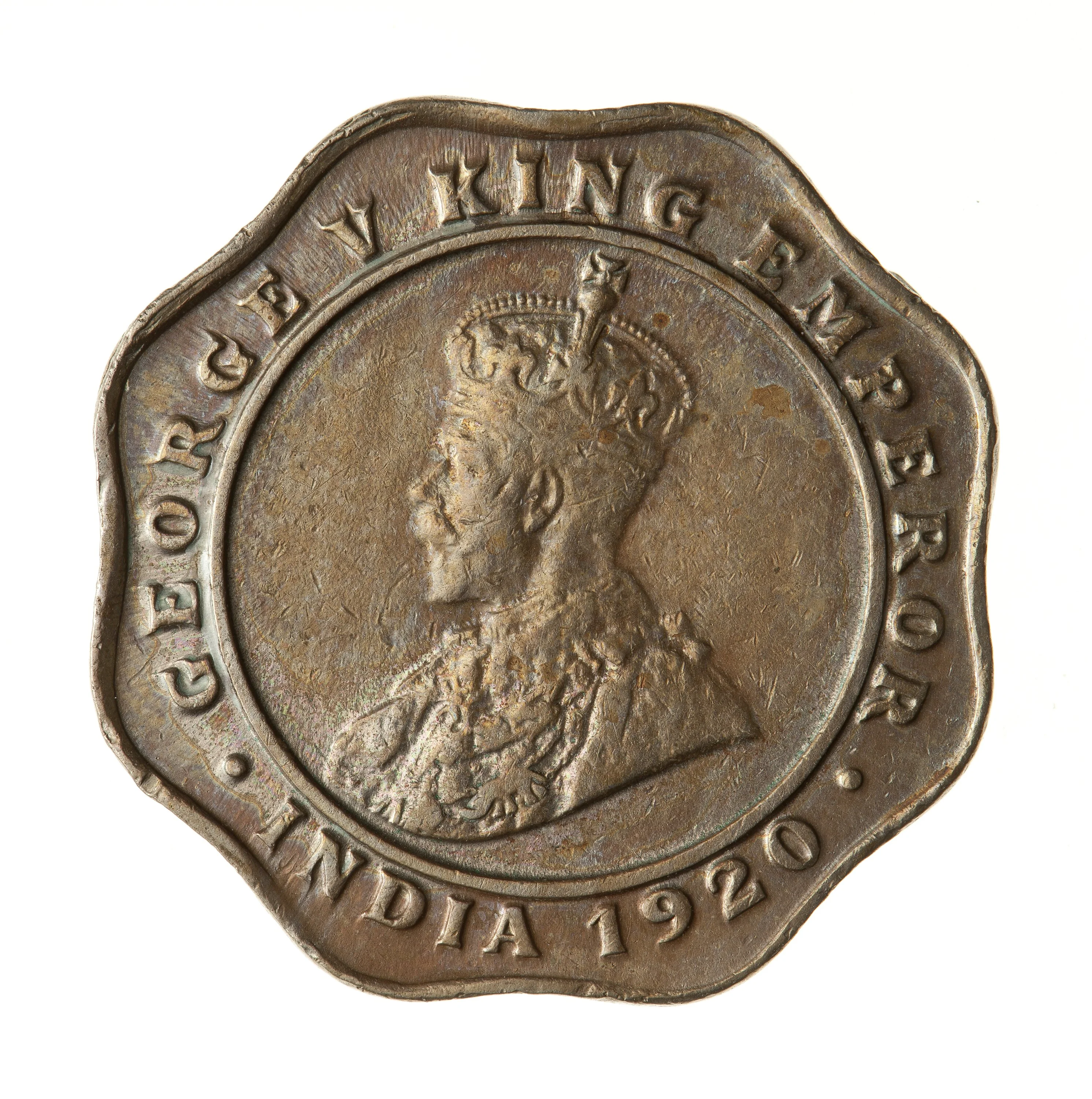
Obverse
Description:
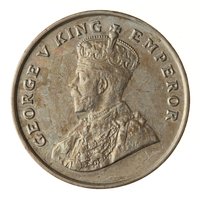
George V left, surrounded by English legend.
Inscription:
GEORGE V KING EMPEROR
INDIA 1920
INDIA 1920
Translation:
GEORGE V KING EMPEROR
INDIA 1920
INDIA 1920
Language: English
Engraver: Edgar Bertram MacKennal
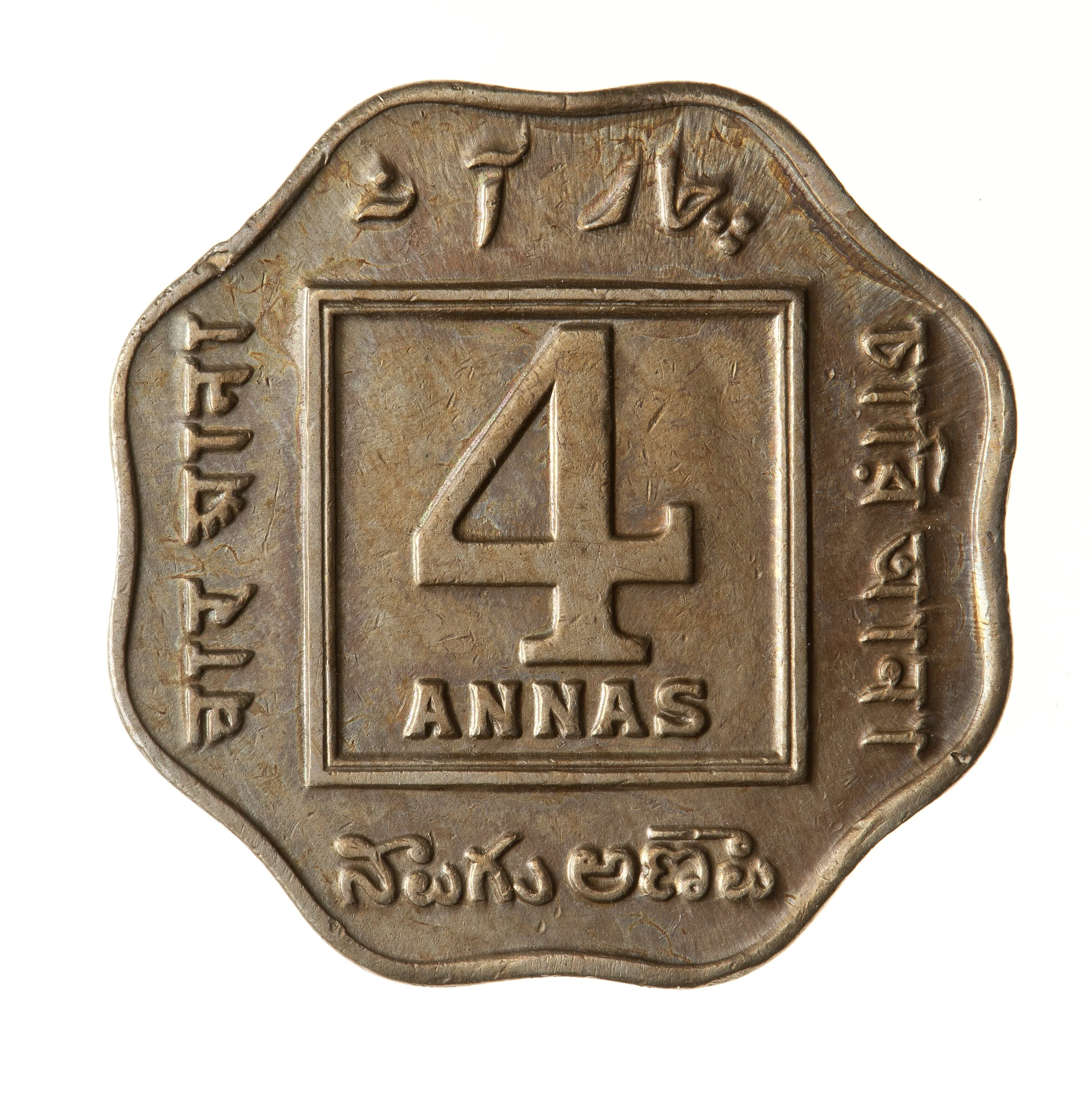
Reverse
Description:
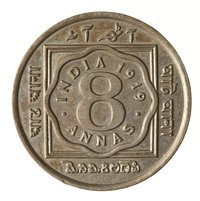
4 anna coin with Urdu, Bengali, Telugu, and Devanagari scripts.
Inscription:
4
ANNAS
ANNAS
Edge
Plain
Mints
| Name | Mark |
|---|---|
| Kolkata / Calcutta / Murshidabad | — |
| Mumbai / Bombay | . |
Mintings
| Year | Mint Mark | Mintage | Quality | Collection |
|---|---|---|---|---|
| 1919 | — | 18,632,006 | ||
| 1919 | • | 7,672,000 | ||
| 1919 | • | — | Proof | |
| 1920 | — | 18,191,051 | ||
| 1920 | — | — | Proof | |
| 1920 | • | 1,665,559 | ||
| 1920 | • | — | Proof | |
| 1921 | — | — | ||
| 1921 | — | — | Proof | |
| 1921 | • | 1,219,100 | ||
| 1921 | • | — | Proof |
Historical background
In 1919, India's currency system was firmly under the British colonial framework of the Gold Exchange Standard, established in 1898. The Indian rupee was not directly convertible to gold but was linked to the British pound sterling, which was itself on the gold standard. The value of the rupee was officially fixed at 1s 4d (16 pence), a rate maintained by the Secretary of State for India in London, who controlled the sale of Council Bills (the instruments used to remit funds to India). This system effectively subordinated India's currency to British monetary policy and the health of the British economy, making it a mechanism for transferring Indian resources to Britain.
The period around 1919 was one of significant strain and transition due to the aftermath of the First World War. Britain had suspended the gold standard in 1914 to finance the war, leading to inflationary pressures and a divergence between the official and market exchange rates for the rupee. Post-war, the British government aimed to restore the pre-war gold standard parity, which included returning the rupee to its 1s 4d peg. This policy was fiercely advocated for by the 1919 Chamberlain (Indian Currency) Commission, which recommended a deflationary path to force the rupee back to its pre-war value, prioritizing the interests of British creditors and civil servants receiving sterling pensions over the Indian economy.
This deflationary mandate had severe consequences for India. It came at a time of rising nationalist sentiment and economic hardship, as the policy deliberately sought to depress domestic prices and incomes. The high exchange rate made Indian exports, particularly jute and cotton, more expensive and less competitive on the global market, hurting Indian producers and farmers. The currency policy of 1919 thus became a major point of economic and political contention, symbolizing colonial exploitation and fueling the demands of the Indian nationalist movement for Swaraj (self-rule) and control over fiscal and monetary autonomy.
The period around 1919 was one of significant strain and transition due to the aftermath of the First World War. Britain had suspended the gold standard in 1914 to finance the war, leading to inflationary pressures and a divergence between the official and market exchange rates for the rupee. Post-war, the British government aimed to restore the pre-war gold standard parity, which included returning the rupee to its 1s 4d peg. This policy was fiercely advocated for by the 1919 Chamberlain (Indian Currency) Commission, which recommended a deflationary path to force the rupee back to its pre-war value, prioritizing the interests of British creditors and civil servants receiving sterling pensions over the Indian economy.
This deflationary mandate had severe consequences for India. It came at a time of rising nationalist sentiment and economic hardship, as the policy deliberately sought to depress domestic prices and incomes. The high exchange rate made Indian exports, particularly jute and cotton, more expensive and less competitive on the global market, hurting Indian producers and farmers. The currency policy of 1919 thus became a major point of economic and political contention, symbolizing colonial exploitation and fueling the demands of the Indian nationalist movement for Swaraj (self-rule) and control over fiscal and monetary autonomy.
🌱 Common