

2 falus – Morocco
Add to wishlist
Morocco
Context
Year: 1865
Islamic (Hijri) Year:: 1281
Issuer: Morocco
Ruler: Sidi Muhammad IV
Currency:
(1659—1882)
Demonetized: Yes
References
Numista: #157030
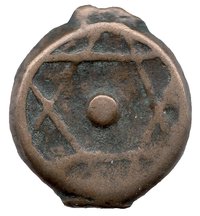
Obverse
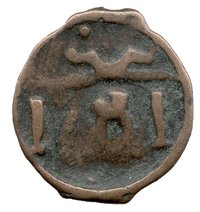
Reverse
Edge
Mintings
| Year | Mint Mark | Mintage | Quality | Collection |
|---|---|---|---|---|
| 1865 | — | — |
Historical background
In 1865, Morocco's currency situation was characterized by profound instability and complexity, reflecting the broader pressures on the Alawite Sultanate from European economic and political encroachment. The monetary system was a fragmented bimetallic system, heavily reliant on a silver standard centered on the dirham and the gold benduqi. However, a chronic shortage of precious metals, coupled with decades of trade deficits and large indemnity payments to European powers following military defeats (like the 1859-60 war with Spain), led to severe debasement. The state's response to fiscal crises was often to mint coins with lower silver content, resulting in a proliferation of coins of varying weights and purities circulating simultaneously, which undermined public trust and hampered commerce.
This internal fragility was exacerbated by intense foreign competition within Morocco's monetary space. Spanish duros (pesetas), French francs, and especially British sterling and Maria Theresa thalers circulated widely, often preferred for foreign trade due to their reliable intrinsic value. This effectively created a dual system where imported European coins, particularly the silver thaler, served as the de facto stable currency for international transactions, while the debased local coinage was used for everyday domestic trade. The Sultanate's limited minting capacity and lack of centralized banking left it unable to control this influx or standardize its own currency.
The situation reached a critical point in 1865, prompting Sultan Muhammad IV to attempt a significant reform. He introduced a new, standardized silver coin, the rial, valued at 10 dirhams and intended to align with the Spanish 5-peseta piece. This was an effort to simplify the chaotic system, restore confidence, and better integrate Morocco into the Mediterranean economy. However, the reform's success was limited; underlying fiscal weaknesses persisted, and European economic influence continued to grow, setting the stage for further monetary crises and ultimately contributing to the financial controls imposed by European powers in the later 19th century.
This internal fragility was exacerbated by intense foreign competition within Morocco's monetary space. Spanish duros (pesetas), French francs, and especially British sterling and Maria Theresa thalers circulated widely, often preferred for foreign trade due to their reliable intrinsic value. This effectively created a dual system where imported European coins, particularly the silver thaler, served as the de facto stable currency for international transactions, while the debased local coinage was used for everyday domestic trade. The Sultanate's limited minting capacity and lack of centralized banking left it unable to control this influx or standardize its own currency.
The situation reached a critical point in 1865, prompting Sultan Muhammad IV to attempt a significant reform. He introduced a new, standardized silver coin, the rial, valued at 10 dirhams and intended to align with the Spanish 5-peseta piece. This was an effort to simplify the chaotic system, restore confidence, and better integrate Morocco into the Mediterranean economy. However, the reform's success was limited; underlying fiscal weaknesses persisted, and European economic influence continued to grow, setting the stage for further monetary crises and ultimately contributing to the financial controls imposed by European powers in the later 19th century.

✨ Legendary