

2 falus – Morocco
Add to wishlist
Morocco
Context
Year: 1880
Islamic (Hijri) Year:: 1297
Issuer: Morocco
Ruler: Moulay al-Hasan I
Currency:
(1659—1882)
Demonetized: Yes
References
Numista: #157015
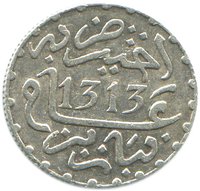
Obverse
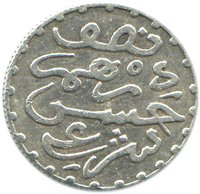
Reverse
Edge
Mintings
| Year | Mint Mark | Mintage | Quality | Collection |
|---|---|---|---|---|
| 1880 | — | — |
Historical background
In 1880, Morocco's currency situation was a complex and deteriorating reflection of its political and economic fragility. The country operated on a bimetallic system, theoretically based on the silver dirham and the gold benduqi, but in practice, a chaotic multitude of coins circulated. Alongside worn and clipped domestic coins, Spanish duros, British sovereigns, French francs, and other foreign currencies were used in trade, their values fluctuating wildly by region and the whims of local money-changers. This monetary anarchy stifled internal commerce, complicated taxation for the Makhzen (the central government), and made the Sultanate vulnerable to external economic pressures.
The core of the crisis was an acute shortage of silver coinage, the lifeblood of everyday transactions. Decades of chronic trade deficits, where imports (especially of European textiles and tea) vastly exceeded exports, caused a persistent drain of silver bullion out of the country. This was exacerbated by the global "silver crisis" of the 1870s, as many Western nations moved to the gold standard, depressing the value of silver and further disrupting Morocco's traditional bullion flows. The Makhzen's response—repeatedly debasing the silver dirham by reducing its weight and purity—only accelerated the crisis, destroying public trust and fueling inflation.
This monetary disorder was both a symptom and a cause of Morocco's increasing subjugation to European powers. By 1880, the Sultanate's financial sovereignty was being systematically dismantled. The previous year, the Treaty of Madrid had strengthened the legal and economic privileges of European merchants. French and Spanish banks were beginning to establish influence, and European diplomats increasingly demanded financial controls as guarantees for loans to the nearly bankrupt state. Thus, the chaotic currency of 1880 signalled not just an economic crisis, but the advanced erosion of Moroccan independence, paving the way for the establishment of foreign-controlled state banks and, ultimately, the protectorate system.
The core of the crisis was an acute shortage of silver coinage, the lifeblood of everyday transactions. Decades of chronic trade deficits, where imports (especially of European textiles and tea) vastly exceeded exports, caused a persistent drain of silver bullion out of the country. This was exacerbated by the global "silver crisis" of the 1870s, as many Western nations moved to the gold standard, depressing the value of silver and further disrupting Morocco's traditional bullion flows. The Makhzen's response—repeatedly debasing the silver dirham by reducing its weight and purity—only accelerated the crisis, destroying public trust and fueling inflation.
This monetary disorder was both a symptom and a cause of Morocco's increasing subjugation to European powers. By 1880, the Sultanate's financial sovereignty was being systematically dismantled. The previous year, the Treaty of Madrid had strengthened the legal and economic privileges of European merchants. French and Spanish banks were beginning to establish influence, and European diplomats increasingly demanded financial controls as guarantees for loans to the nearly bankrupt state. Thus, the chaotic currency of 1880 signalled not just an economic crisis, but the advanced erosion of Moroccan independence, paving the way for the establishment of foreign-controlled state banks and, ultimately, the protectorate system.

✨ Legendary