

3 pence – The Gambia
Add to wishlist
Gambia
Context
Year: 1966
Country: Gambia
Issuer: The Gambia
Ruler: Elizabeth II
Currency:
(1966—1971)
Demonetized: Yes
Total mintage: 2,006,600
Material
References
KM: #
Numista: #15700
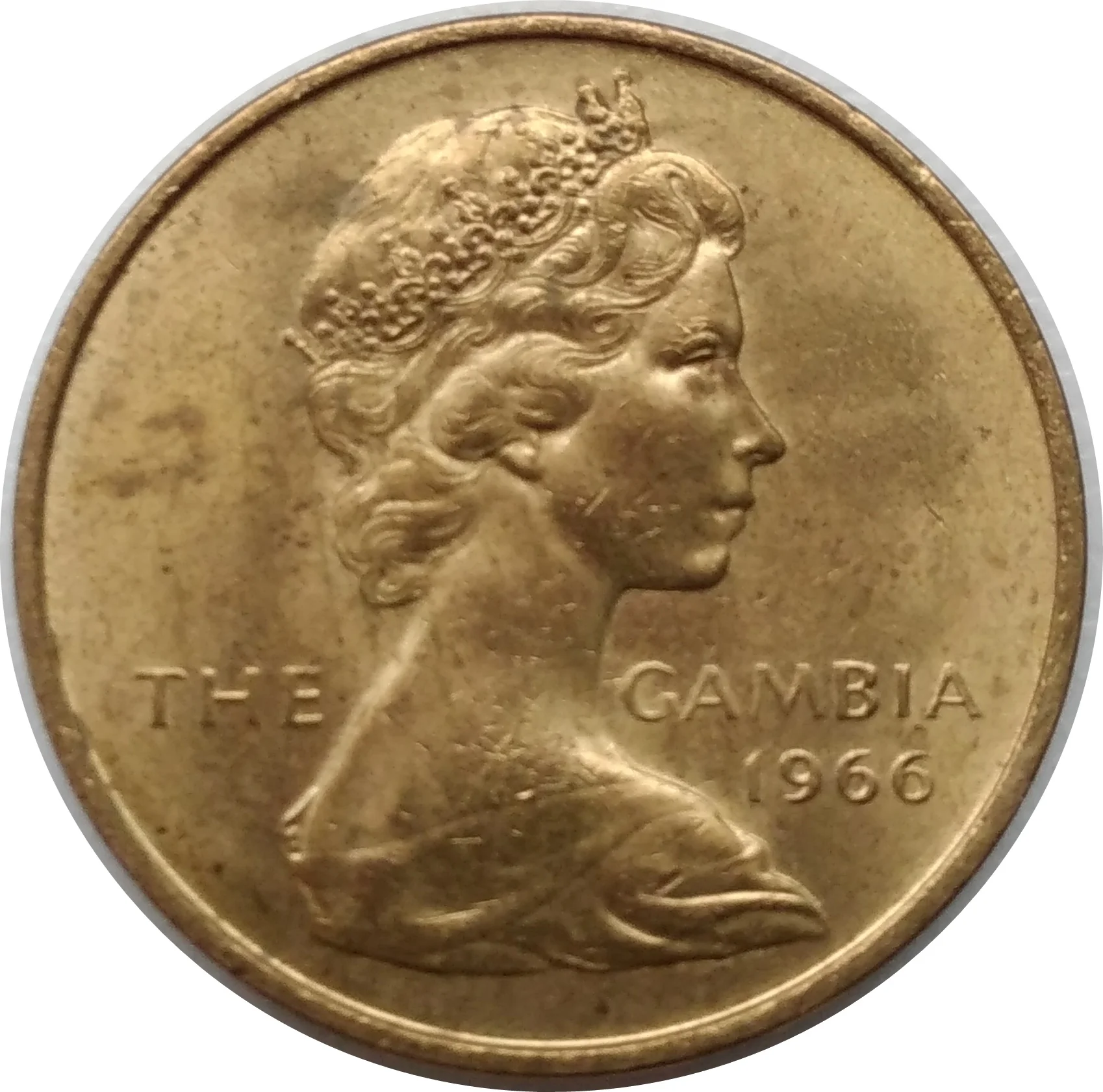
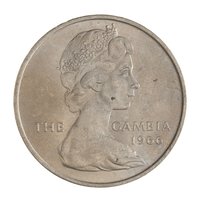
Obverse
Description:
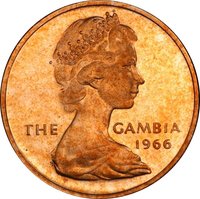
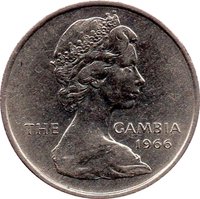
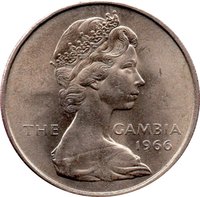
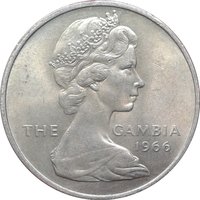
Youthful profile portrait
Inscription:
THE GAMBIA
1966
1966
Script: Latin
Engraver: Arnold Machin
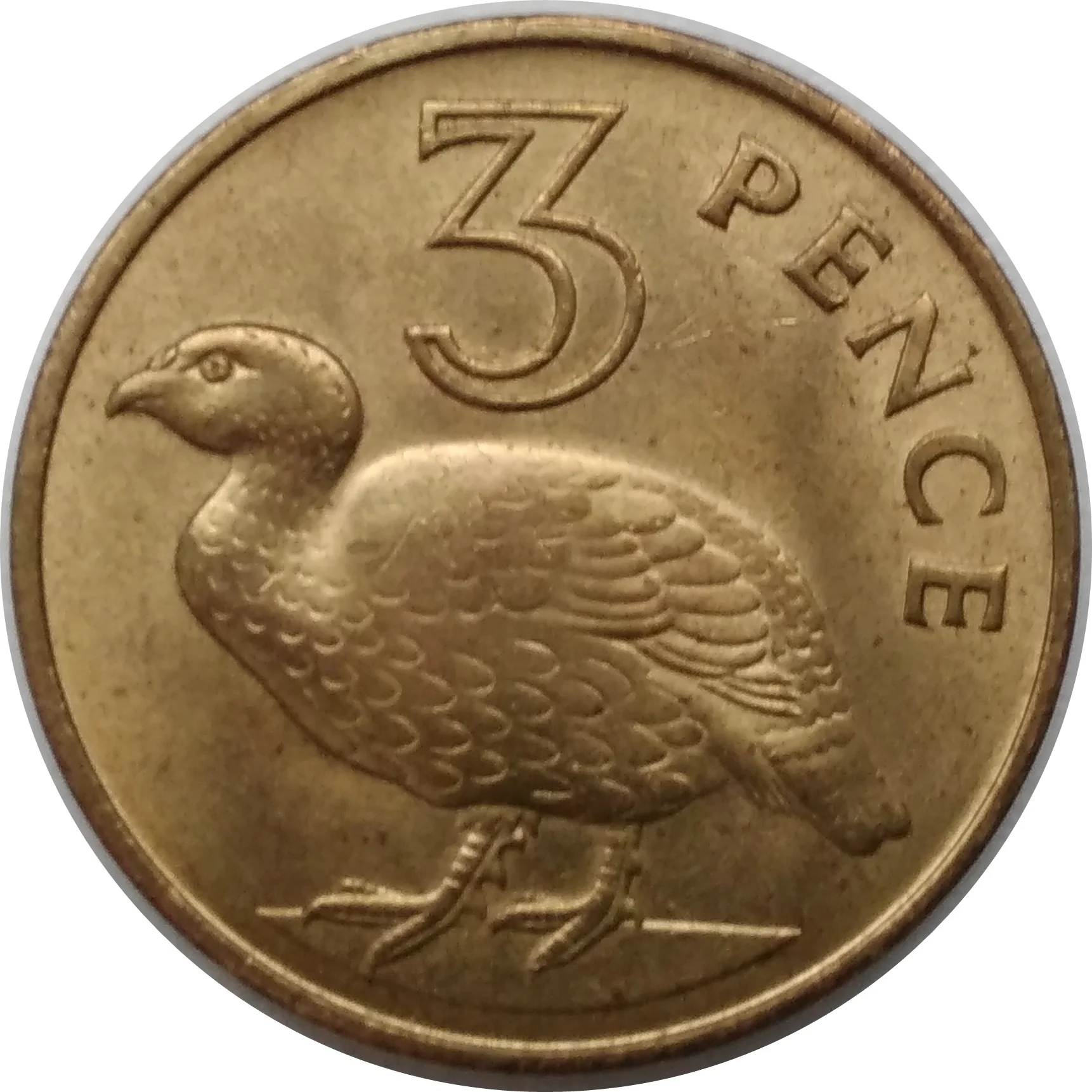
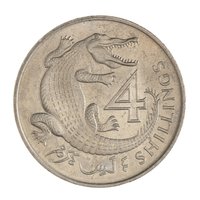
Reverse
Description:
Double-spurred francolin (*Francolinus bicalcaratus*).
Inscription:
3 PENCE
Script: Latin
Engraver: Michael Rizzello
Edge
Plain
Mints
| Name | Mark |
|---|---|
| Royal Mint (Tower Hill) | — |
Mintings
| Year | Mint Mark | Mintage | Quality | Collection |
|---|---|---|---|---|
| 1966 | — | 2,000,000 | ||
| 1966 | — | 6,600 | Proof |
Historical background
In 1966, The Gambia’s currency situation was defined by its membership in the West African Currency Board (WACB), a colonial-era institution that provided a stable but externally controlled monetary system. The Gambia used the West African Pound, which was pegged to and fully backed by the British Pound Sterling. This arrangement, shared with Sierra Leone, Ghana, and Nigeria, ensured convertibility and low inflation but offered The Gambia no independent monetary policy to manage its own economy. As a newly independent nation (achieved in 1965), this system was increasingly seen as an anachronism, limiting financial sovereignty.
The year 1966 was a pivotal transitional period. The other major members had already left the WACB—Ghana in 1958 and Nigeria in 1962—leaving The Gambia and Sierra Leone as the primary users. Recognizing the need for a national currency, The Gambian government passed the Currency Act in 1966, laying the legal groundwork to introduce the Gambian Pound. The preparations involved establishing a new currency authority and arranging for the design, printing, and distribution of the new notes and coins, all set to launch the following year.
Thus, the currency situation in 1966 was one of imminent change, straddling the old colonial order and impending national control. The country was administratively and legally exiting the WACB system, poised to introduce its own currency as a concrete symbol of economic independence. The successful launch of the Gambian Pound in 1971 would ultimately be the culmination of this transitional period begun in the mid-1960s.
The year 1966 was a pivotal transitional period. The other major members had already left the WACB—Ghana in 1958 and Nigeria in 1962—leaving The Gambia and Sierra Leone as the primary users. Recognizing the need for a national currency, The Gambian government passed the Currency Act in 1966, laying the legal groundwork to introduce the Gambian Pound. The preparations involved establishing a new currency authority and arranging for the design, printing, and distribution of the new notes and coins, all set to launch the following year.
Thus, the currency situation in 1966 was one of imminent change, straddling the old colonial order and impending national control. The country was administratively and legally exiting the WACB system, poised to introduce its own currency as a concrete symbol of economic independence. The successful launch of the Gambian Pound in 1971 would ultimately be the culmination of this transitional period begun in the mid-1960s.
🌱 Common