

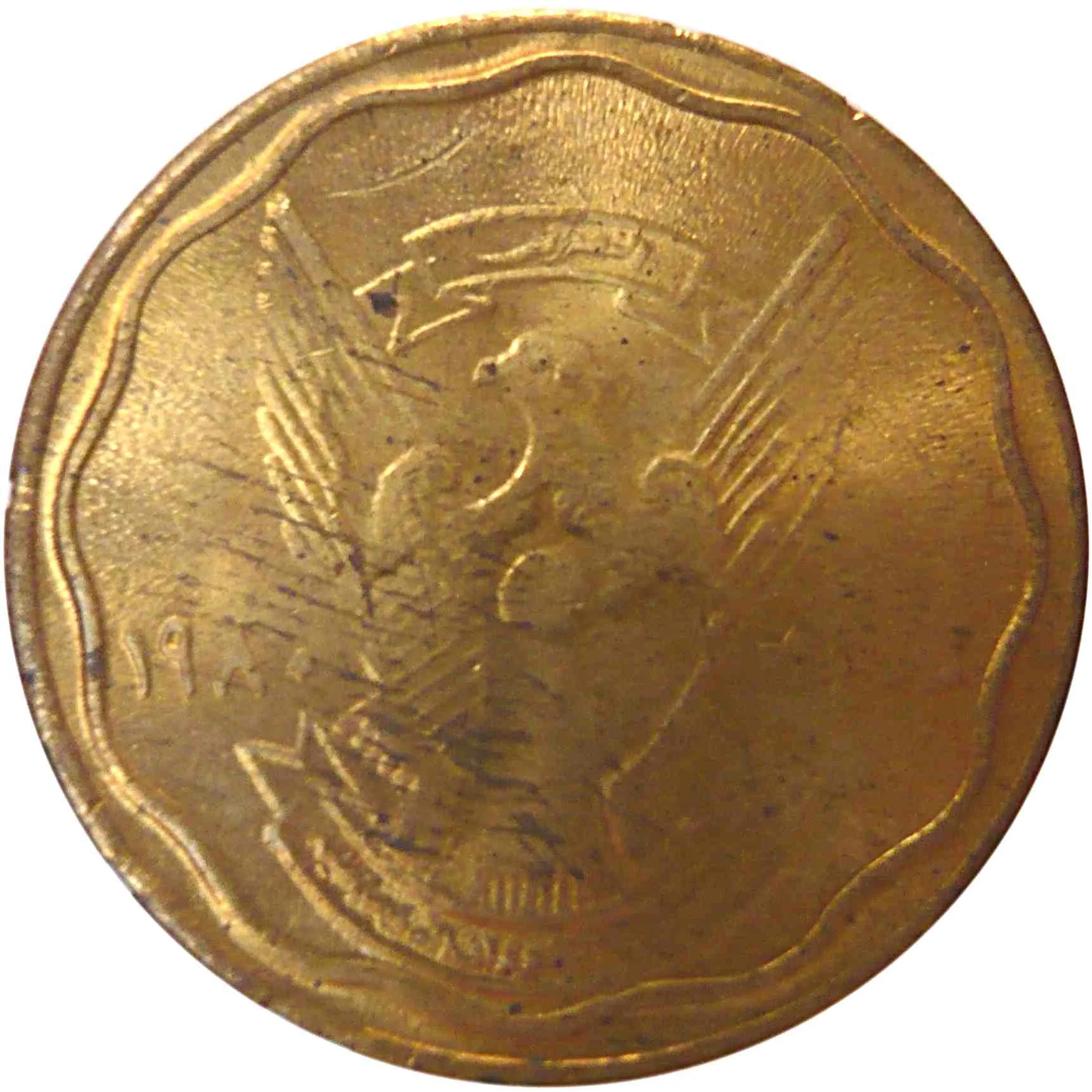
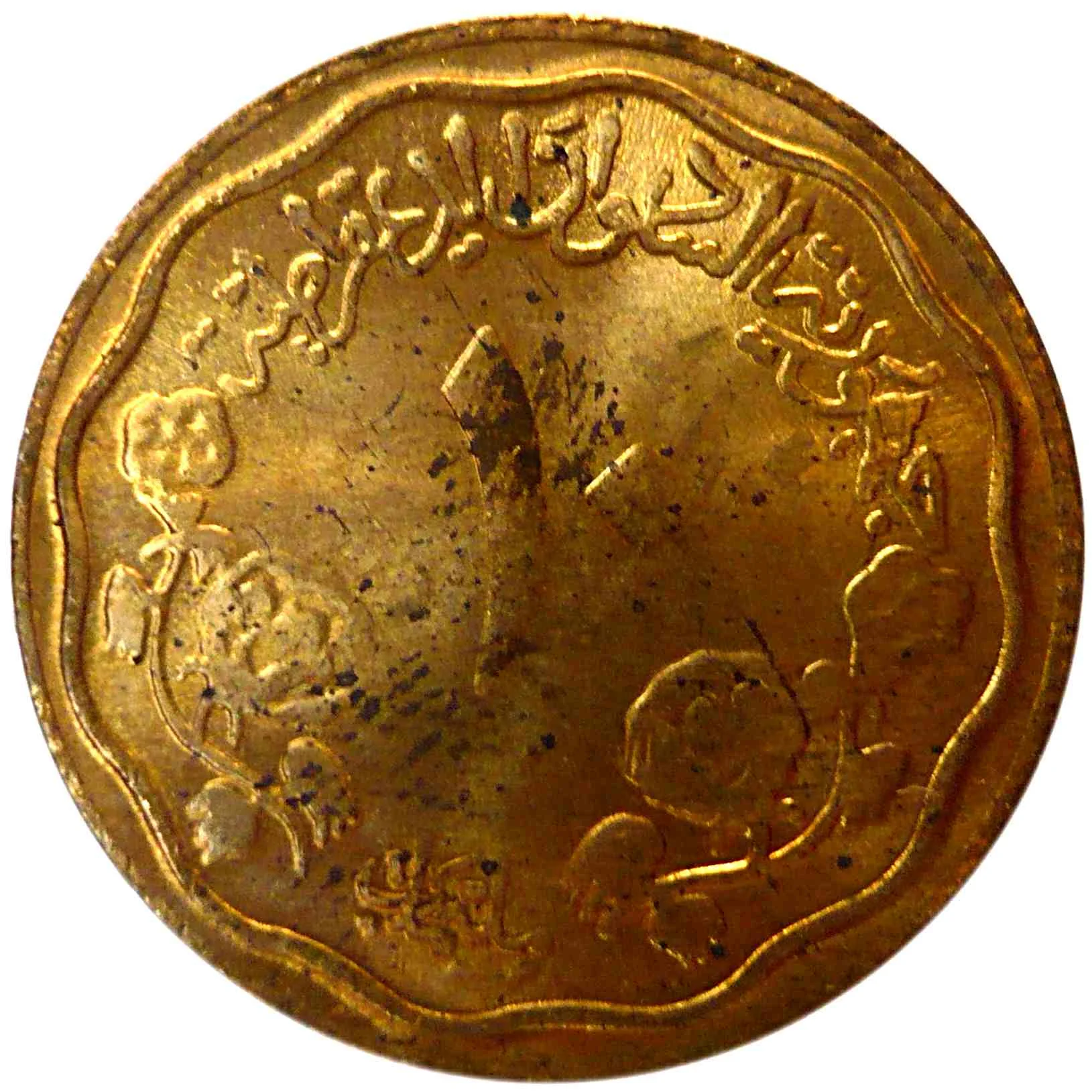
10 milliemes – Sudan
Add to wishlist
Sudan
Context
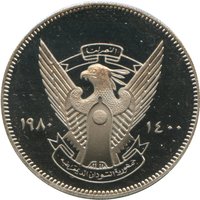
Year: 1980
Islamic (Hijri) Year:: 1400
Issuer: Sudan
Period:
(1969—1985)
Currency:
(1956—1992)
Demonetization: 8 June 1992
Total mintage: 2,270,000
Material
References
KM: #
Numista: #15698
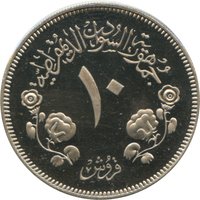
Value
Exchange value: 0.01 SDP
Obverse
Reverse
Edge
Plain
Mintings
| Year | Mint Mark | Mintage | Quality | Collection |
|---|---|---|---|---|
| 1980 | — | 2,270,000 |
Historical background
In the early 1980s, Sudan's currency situation was characterized by severe instability and devaluation, a direct consequence of the nation's deepening economic crisis. The Sudanese pound (SDG), which had been pegged to the US dollar, came under intense pressure due to a combination of factors: plummeting agricultural exports (notably cotton), a massive and unsustainable external debt, and rampant government overspending, including on large-scale infrastructure projects. This led to chronic balance of payments deficits and a critical shortage of foreign exchange reserves, forcing the government of President Gaafar Nimeiry to seek repeated assistance from the International Monetary Fund (IMF).
The government's response, particularly after entering an IMF Structural Adjustment Program in 1978, involved a series of drastic devaluations and the promotion of a dual-exchange rate system. An official rate was maintained for essential imports, while a much weaker "parallel" or black-market rate emerged for most other transactions. This gap between the official and black-market rates widened dramatically throughout the period, creating major distortions, fueling corruption, and crippling formal trade. By the mid-1980s, the black-market rate was often more than three times the official rate, severely undermining confidence in the national currency.
This monetary turmoil was both a cause and a symptom of broader societal distress. Inflation soared, eroding purchasing power and contributing to widespread public discontent. The economic hardship, exacerbated by the currency crisis and the removal of subsidies on essential goods like bread and fuel as part of austerity measures, was a key factor in the popular uprisings that ultimately overthrew Nimeiry's regime in April 1985. Thus, the currency situation of the early 1980s was not merely a financial issue but a central element in the political and social unraveling of Sudan during that turbulent decade.
The government's response, particularly after entering an IMF Structural Adjustment Program in 1978, involved a series of drastic devaluations and the promotion of a dual-exchange rate system. An official rate was maintained for essential imports, while a much weaker "parallel" or black-market rate emerged for most other transactions. This gap between the official and black-market rates widened dramatically throughout the period, creating major distortions, fueling corruption, and crippling formal trade. By the mid-1980s, the black-market rate was often more than three times the official rate, severely undermining confidence in the national currency.
This monetary turmoil was both a cause and a symptom of broader societal distress. Inflation soared, eroding purchasing power and contributing to widespread public discontent. The economic hardship, exacerbated by the currency crisis and the removal of subsidies on essential goods like bread and fuel as part of austerity measures, was a key factor in the popular uprisings that ultimately overthrew Nimeiry's regime in April 1985. Thus, the currency situation of the early 1980s was not merely a financial issue but a central element in the political and social unraveling of Sudan during that turbulent decade.
🌟 Uncommon