

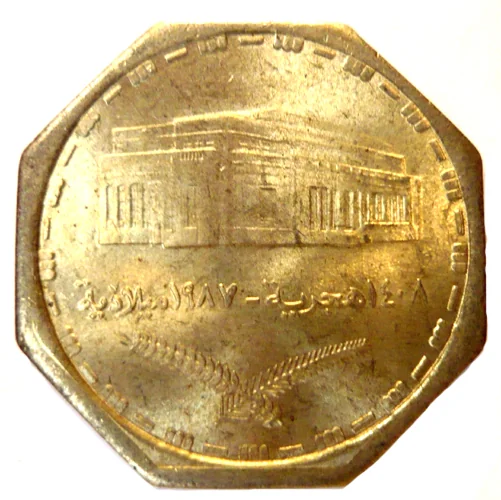
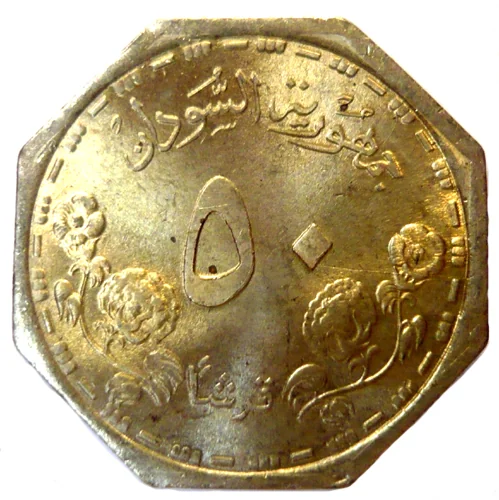
50 piastres – Sudan
Add to wishlist
Sudan
Context
Year: 1987
Islamic (Hijri) Year:: 1408
Issuer: Sudan
Period:
(1956—1969)
Currency:
(1956—1992)
Demonetization: 8 June 1992
Total mintage: 1,000,000
Material
References
KM: #
Numista: #15697
Value
Exchange value: 0.50 SDP
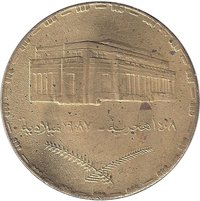
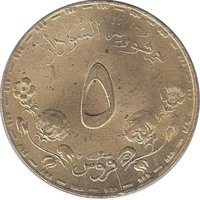
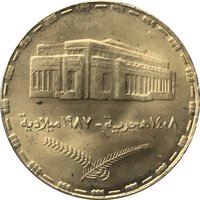
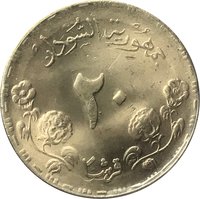
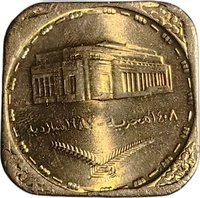
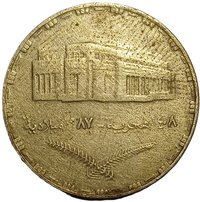
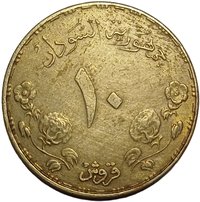
Obverse
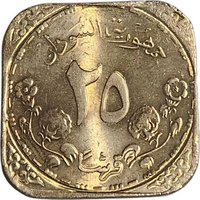
Reverse
Edge
Plain
Mints
| Name | Mark |
|---|---|
| Sudan Mint | — |
Mintings
| Year | Mint Mark | Mintage | Quality | Collection |
|---|---|---|---|---|
| 1987 | — | 1,000,000 |
Historical background
In 1987, Sudan's currency situation was characterized by severe instability and rapid devaluation, a direct consequence of the country's deepening economic crisis. The Sudanese pound (SDG), already weakened by years of mismanagement, was subject to a vast and growing disparity between the official exchange rate set by the government and the thriving black-market rate. This gap, often exceeding 300%, crippled formal trade, encouraged rampant speculation, and led to acute shortages of essential imported goods, including medicine and fuel. The government of Prime Minister Sadiq al-Mahdi, grappling with a colossal external debt, the ongoing civil war in the south, and a severe drought, lacked the fiscal discipline or foreign reserves to defend the currency.
The economic policies in place were contradictory and ineffective. While officially maintaining a fixed exchange rate to project stability, the government was forced to engage in periodic, large-scale devaluations that eroded public confidence. Furthermore, it heavily relied on printing new money to finance its budget deficits and war efforts, fueling hyperinflation that reached an estimated 70% annually. This monetization of debt created a vicious cycle where the currency's purchasing power plummeted, prices soared, and savings were wiped out, pushing more economic activity into the informal sector and dollarization.
Ultimately, the currency chaos of 1987 was a symptom of profound political and economic collapse. The government's inability to address the root causes—ending the fiscally draining civil war, implementing structural reforms demanded by international creditors like the IMF, and curbing rampant corruption—doomed any monetary measures to failure. The situation would continue to deteriorate, setting the stage for the military coup of 1989, which promised economic salvation but would instead entrench a system that led to even more severe currency crises in the decades to follow.
The economic policies in place were contradictory and ineffective. While officially maintaining a fixed exchange rate to project stability, the government was forced to engage in periodic, large-scale devaluations that eroded public confidence. Furthermore, it heavily relied on printing new money to finance its budget deficits and war efforts, fueling hyperinflation that reached an estimated 70% annually. This monetization of debt created a vicious cycle where the currency's purchasing power plummeted, prices soared, and savings were wiped out, pushing more economic activity into the informal sector and dollarization.
Ultimately, the currency chaos of 1987 was a symptom of profound political and economic collapse. The government's inability to address the root causes—ending the fiscally draining civil war, implementing structural reforms demanded by international creditors like the IMF, and curbing rampant corruption—doomed any monetary measures to failure. The situation would continue to deteriorate, setting the stage for the military coup of 1989, which promised economic salvation but would instead entrench a system that led to even more severe currency crises in the decades to follow.
Series: 1987 Sudan circulation coins
🌱 Fairly Common