

2 kopecks – Russian Empire
Add to wishlist
Russia
Context
Years: 1859–1867
Country: Russia
Issuer: Russian Empire
Ruler: Alexander II
Currency:
(1700—1917)
Demonetized: Yes
Total mintage: 163,108,200
Material
References
Y: #
Numista: #15689
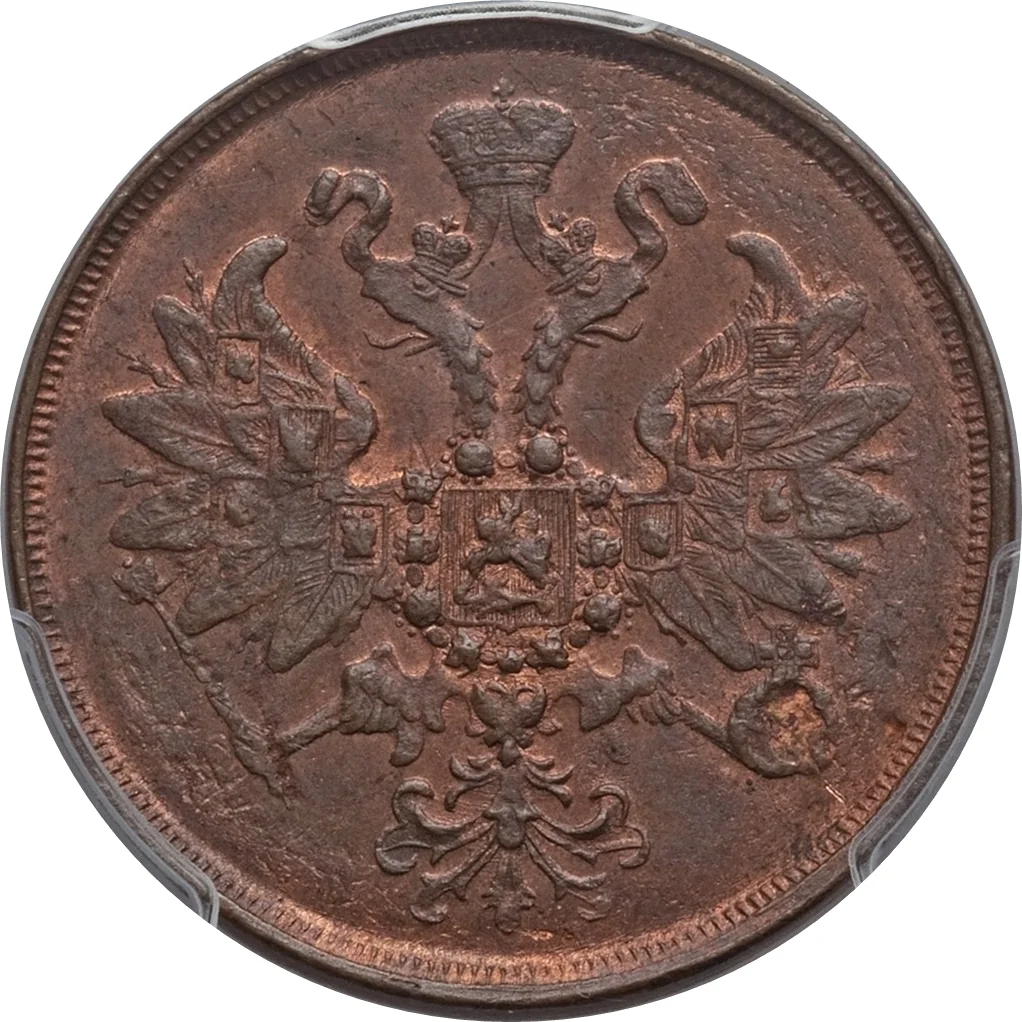
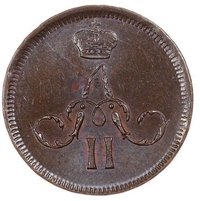
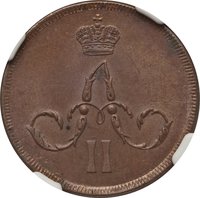
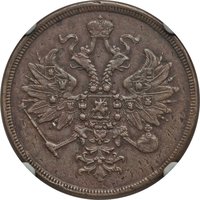
Obverse
Description:
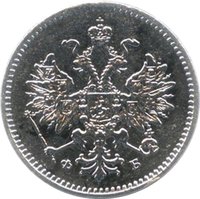
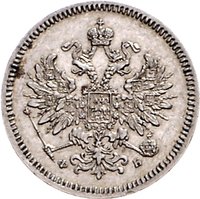
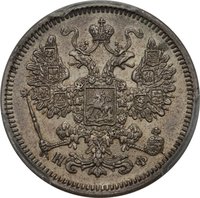
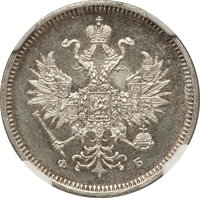
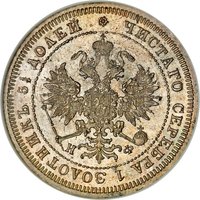
Imperial double-headed eagle.
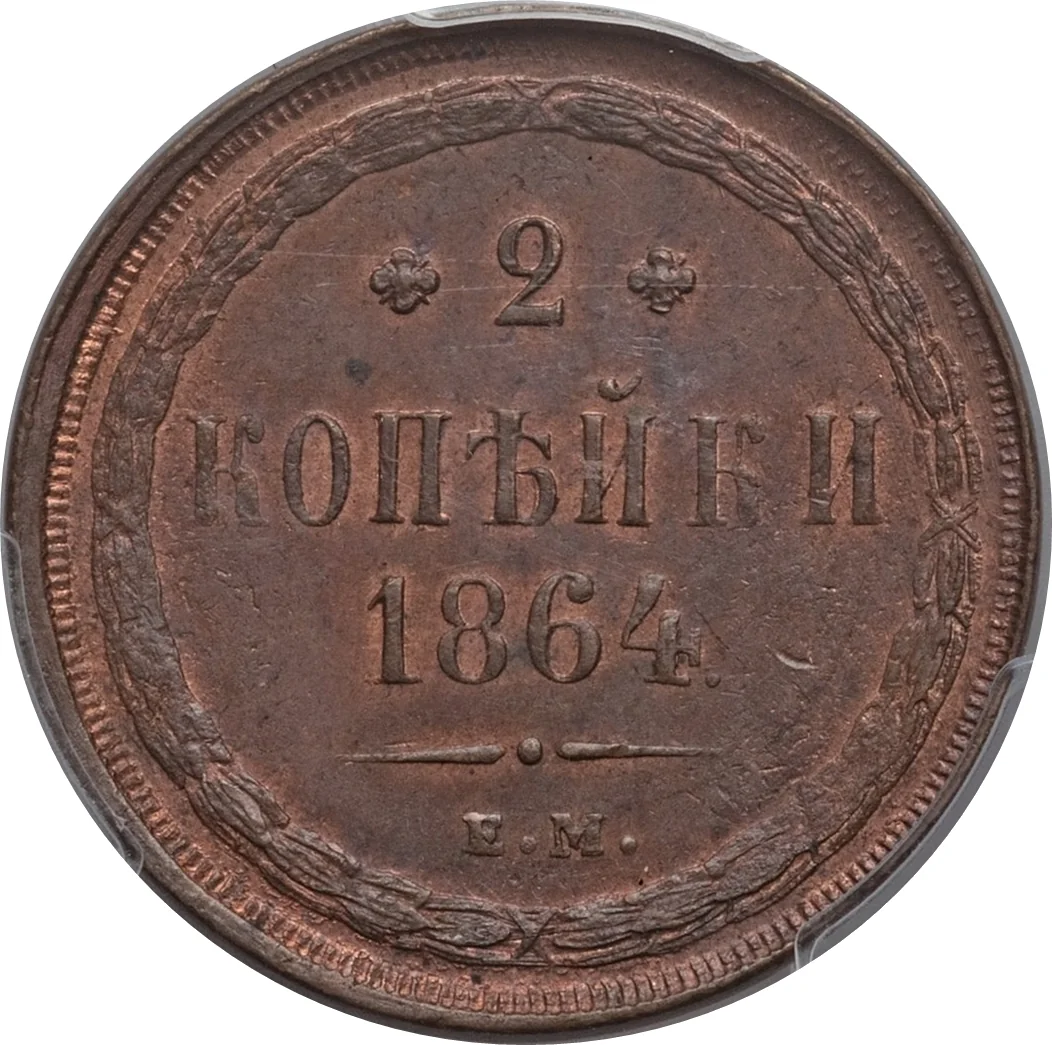
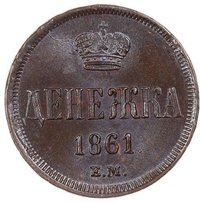
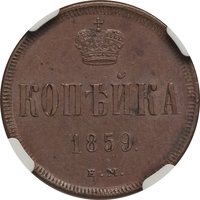
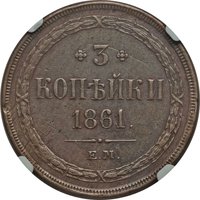
Reverse
Edge
Plain
Mints
| Name | Mark |
|---|---|
| Ekaterinburg Mint | — |
| Mint of Poland | — |
Mintings
| Year | Mint Mark | Mintage | Quality | Collection |
|---|---|---|---|---|
| 1859 | Е.М. | 14,772,000 | BU | |
| 1860 | Е.М. | 19,239,200 | BU | |
| 1861 | Е.М. | 18,547,200 | BU | |
| 1862 | Е.М. | 16,889,600 | BU | |
| 1863 | Е.М. | 21,703,200 | BU | |
| 1864 | Е.М. | 14,175,200 | BU | |
| 1865 | Е.М. | 26,921,800 | BU | |
| 1866 | Е.М. | 21,889,600 | BU | |
| 1867 | Е.М. | 8,970,400 | BU |
Historical background
By 1859, the Russian Empire's currency system was in a precarious state, strained by the immense financial demands of the Crimean War (1853-1856). The war had been funded largely through the printing of paper money, known as assignats, and heavy borrowing. This led to severe inflation and a dramatic divergence between the silver ruble, the official monetary unit, and the depreciating paper assignat ruble. The public had lost confidence in the paper currency, and a complex, unstable system of exchange rates hampered both domestic commerce and international trade, revealing the structural weaknesses of the empire's fiscal apparatus.
The core of the problem was a chronic budget deficit and a fragmented monetary circulation. Since 1843, the government had intended to replace assignats with credit notes (kreditnye bilety) backed by silver, but this reform was incomplete. In practice, both types of paper notes circulated alongside silver and copper coinage, with the paper trading at a significant discount to metal. This effectively created a dual-currency economy, where state accounts were kept in silver rubles while daily transactions were conducted in depreciated paper, causing confusion and economic inefficiency.
Recognizing the crisis, the government of Tsar Alexander II, already engaged in planning the monumental emancipation of the serfs, initiated serious preparations for a major monetary reform. In 1859, key financial institutions were restructured: the former Loan Bank and Commercial Bank were abolished, and their functions were transferred to a newly established State Bank (Gosudarstvennyy bank), which began operations in 1860. This institution was designed to stabilize the currency and provide a foundation for the future, culminating in the reform of 1867 which finally introduced a stable, silver-backed ruble and ended the era of irredeemable paper money. Thus, 1859 stands as a year of decisive transition, marking the end of the old, chaotic system and the first concrete step toward modernizing Russia's finances.
The core of the problem was a chronic budget deficit and a fragmented monetary circulation. Since 1843, the government had intended to replace assignats with credit notes (kreditnye bilety) backed by silver, but this reform was incomplete. In practice, both types of paper notes circulated alongside silver and copper coinage, with the paper trading at a significant discount to metal. This effectively created a dual-currency economy, where state accounts were kept in silver rubles while daily transactions were conducted in depreciated paper, causing confusion and economic inefficiency.
Recognizing the crisis, the government of Tsar Alexander II, already engaged in planning the monumental emancipation of the serfs, initiated serious preparations for a major monetary reform. In 1859, key financial institutions were restructured: the former Loan Bank and Commercial Bank were abolished, and their functions were transferred to a newly established State Bank (Gosudarstvennyy bank), which began operations in 1860. This institution was designed to stabilize the currency and provide a foundation for the future, culminating in the reform of 1867 which finally introduced a stable, silver-backed ruble and ended the era of irredeemable paper money. Thus, 1859 stands as a year of decisive transition, marking the end of the old, chaotic system and the first concrete step toward modernizing Russia's finances.
🌱 Common