

4 Mon – Japan
Japan
Context
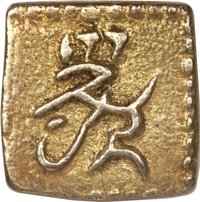
Material
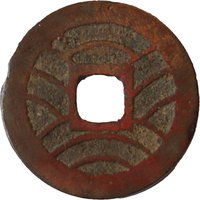
Diameter: 28 mm
Weight: 5.4 g
Shape: Round with a square hole
Composition: Copper
Magnetic: No
Technique: Cast
Alignment: Medal alignment
flip
References
Numista: #156603
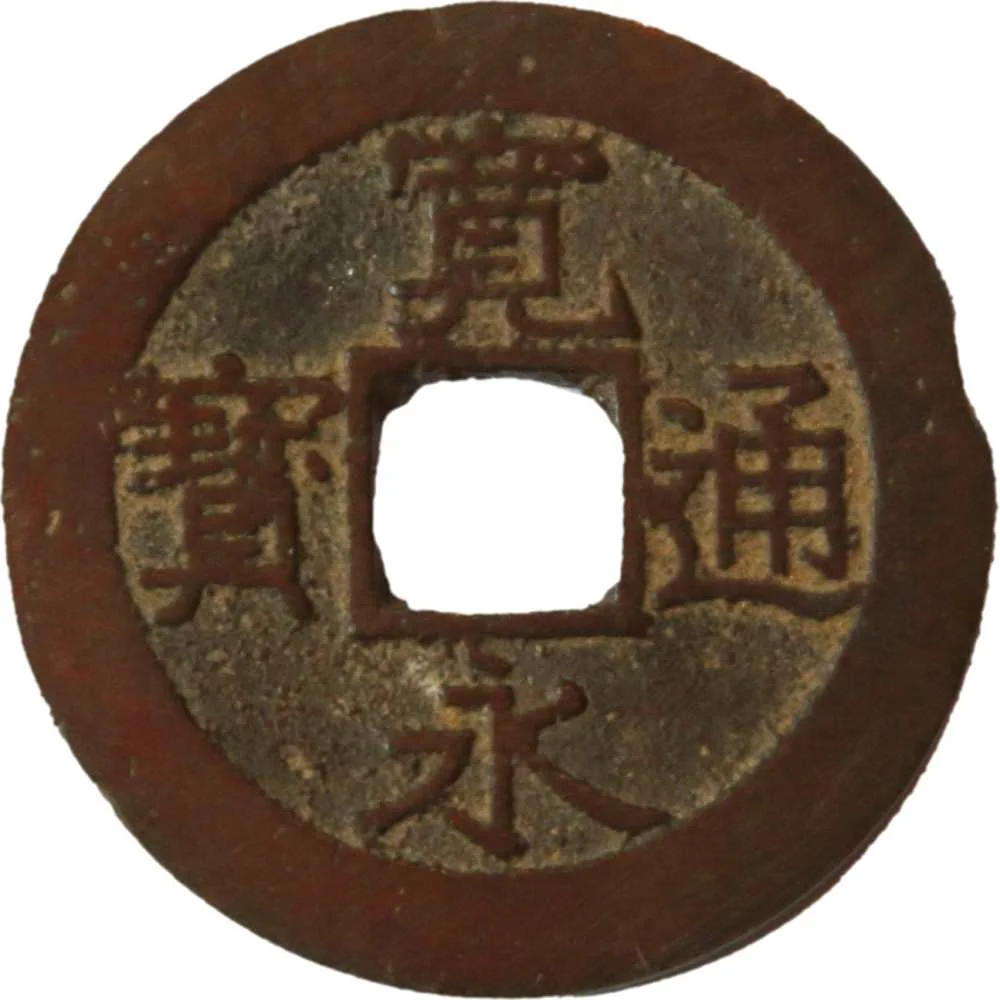
Obverse
Description:
Inscription encircling the square opening.
Inscription:
寛
寶 通
永
寶 通
永
Translation:
Eternal Coins
Circulate Treasure
Kuan
Circulate Treasure
Kuan
Language: Chinese
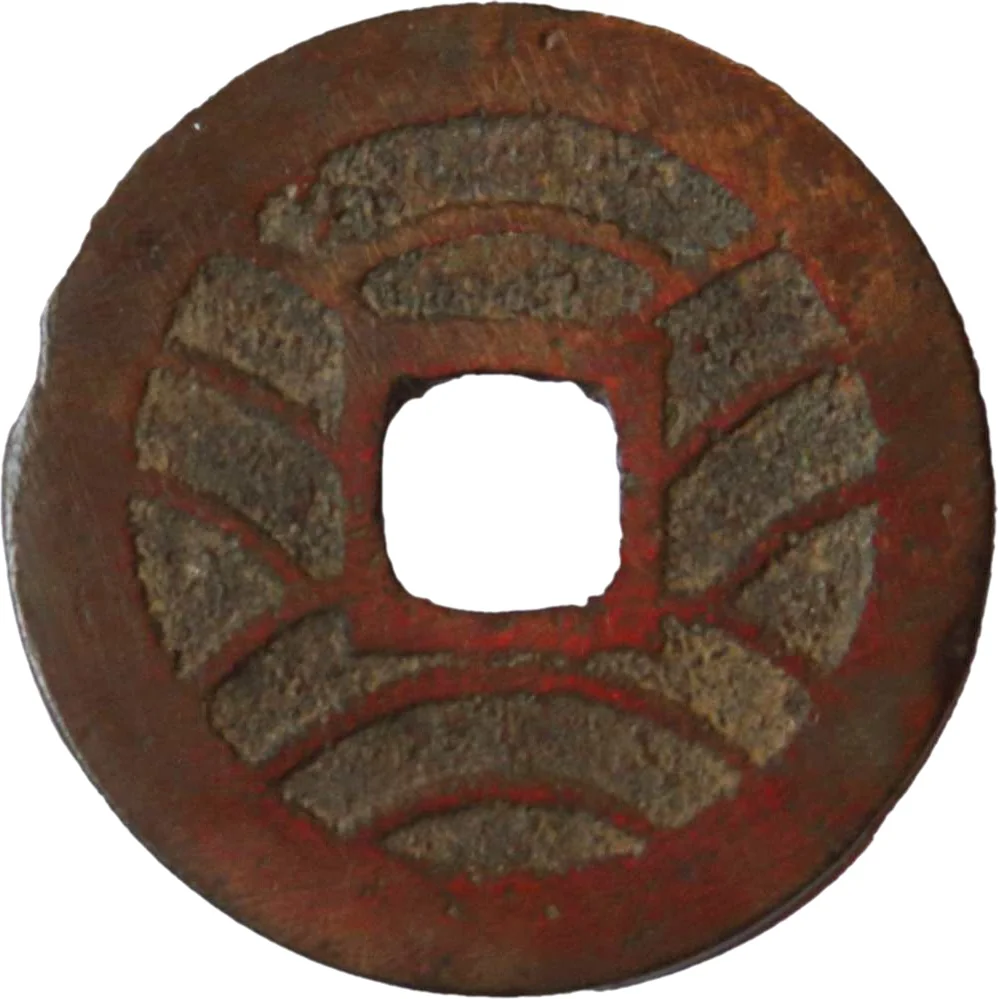
Reverse
Description:
11th wave
Edge
Mintings
| Year | Mint Mark | Mintage | Quality | Collection |
|---|---|---|---|---|
| — | — | — |
Historical background
In 1821, Japan was under the Tokugawa shogunate's strict policy of sakoku (national isolation), which severely limited foreign trade and exchange. The monetary system was complex and bimetallic, based on gold, silver, and copper coins, each with separate, government-mandated exchange rates that did not reflect their intrinsic metal value. This system was managed by the shogunate's mint and was largely isolated from global bullion flows, but it faced persistent internal problems of counterfeiting, debasement, and a chronic shortage of small-denomination currency for daily use among the common people.
The year itself was significant as it marked the culmination of the Tempō Reforms (1842-1843 are more commonly associated, but monetary reforms began earlier). In 1821, the shogunate officially discontinued the use of the Bunsei Eiji gold koban, a coin minted from 1819. This coin had been heavily debased, containing significantly less gold than its face value promised, leading to widespread economic distrust and inflation. Its recall and replacement were attempts to restore confidence in the shogunate's currency and reassert central control over a monetary system that was becoming increasingly unstable.
Overall, the currency situation in 1821 reflected the broader struggles of the late Tokugawa period. The shogunate was caught between the need to finance its operations and the destabilizing effects of currency debasement. While isolated from the world, Japan's domestic economy was growing and commercializing, placing strain on an archaic metallic system. The reforms of 1821 were a temporary fix, but they failed to address the structural weaknesses that would lead to more severe monetary crises and inflation in the coming decades, ultimately contributing to the shogunate's declining authority.
The year itself was significant as it marked the culmination of the Tempō Reforms (1842-1843 are more commonly associated, but monetary reforms began earlier). In 1821, the shogunate officially discontinued the use of the Bunsei Eiji gold koban, a coin minted from 1819. This coin had been heavily debased, containing significantly less gold than its face value promised, leading to widespread economic distrust and inflation. Its recall and replacement were attempts to restore confidence in the shogunate's currency and reassert central control over a monetary system that was becoming increasingly unstable.
Overall, the currency situation in 1821 reflected the broader struggles of the late Tokugawa period. The shogunate was caught between the need to finance its operations and the destabilizing effects of currency debasement. While isolated from the world, Japan's domestic economy was growing and commercializing, placing strain on an archaic metallic system. The reforms of 1821 were a temporary fix, but they failed to address the structural weaknesses that would lead to more severe monetary crises and inflation in the coming decades, ultimately contributing to the shogunate's declining authority.
⭐ Somewhat Rare