

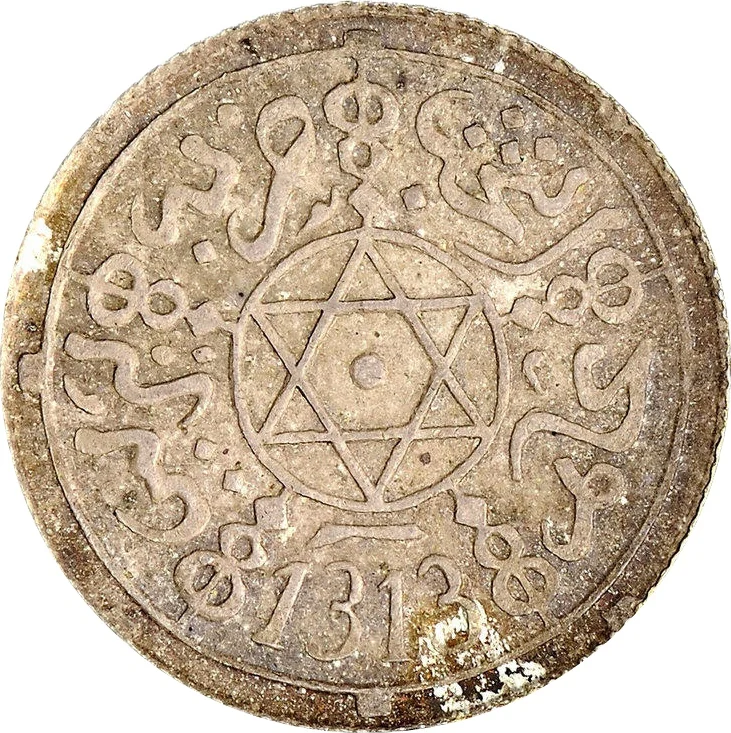
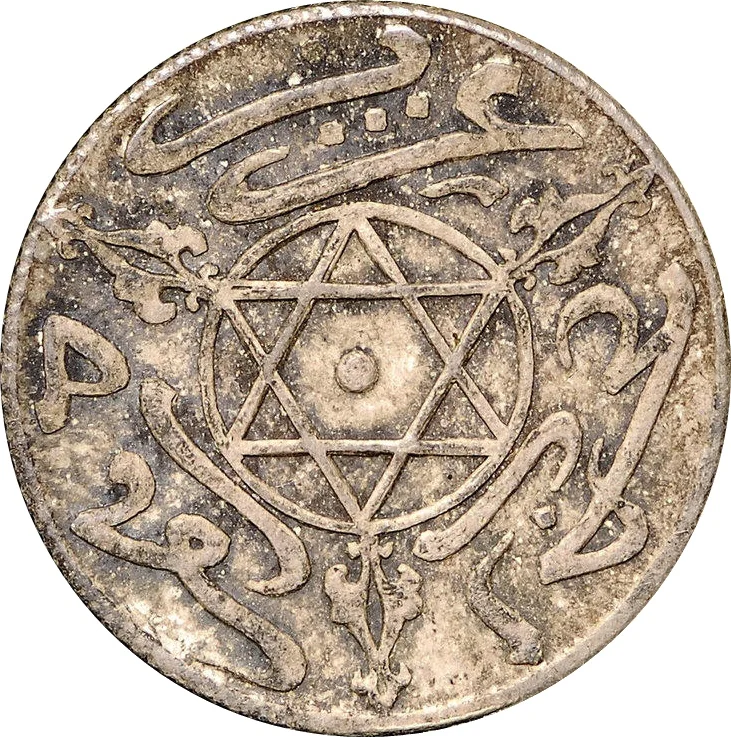
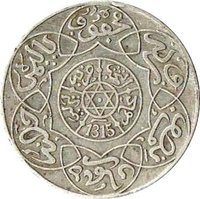
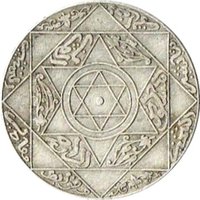
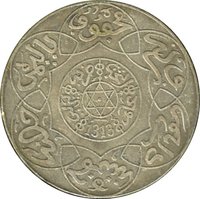
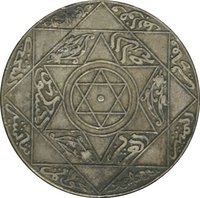
1 dirham – Morocco
Add to wishlist
Morocco
Context
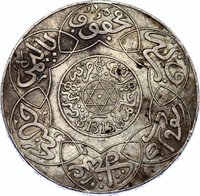
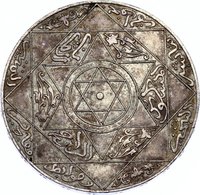
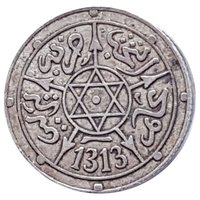
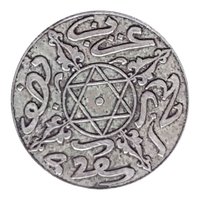
Year: 1896
Islamic (Hijri) Year:: 1313
Issuer: Morocco
Ruler: Abdelaziz
Currency:
(1882—1921)
Subdivision: 1 dirham = ⅒ Rial
Demonetized: Yes
Total mintage: 426,036
Material
References
Y: #
Numista: #156602
Value
Exchange value: 0.1 MAH
Bullion value: $6.16
Mints
| Name | Mark |
|---|---|
| Berlin | — |
Mintings
| Year | Mint Mark | Mintage | Quality | Collection |
|---|---|---|---|---|
| 1896 | — | 426,036 |
Historical background
In 1896, Morocco’s currency situation was a complex and deteriorating reflection of its political and economic fragility. The country operated on a bimetallic system, primarily using silver dirhams and gold benduqi coins, but the system was in crisis. The global decline in the price of silver since the 1870s had severely devalued the silver-based currency, leading to a massive outflow of the now-undervalued gold coins. This created a chronic shortage of sound money, while heavily debased and irregularly minted coins of varying weights and purity circulated widely, causing confusion and hampering trade.
This monetary chaos was exacerbated by the Algeciras Conference of 1906 and the subsequent establishment of the State Bank of Morocco in 1907, which were direct results of European powers capitalizing on Morocco's weakness to secure financial control. While these events post-date 1896, the pressures that led to them were fully present in the mid-1890s. European merchants and diplomats, backed by their governments, aggressively advocated for monetary reform to facilitate their commercial and financial interests, seeing the chaotic currency as an obstacle to economic penetration and a justification for intervention.
Internally, the Makhzen (the Sultan's government) struggled with immense sovereign debt, largely owed to European banks, and had limited control over the money supply as regional caids and tribes often struck their own crude coins. Sultan Abdelaziz’s attempts at modernization, including ordering new coins from European mints, were insufficient and costly. Thus, in 1896, Morocco’s currency was not merely an economic issue but a potent symbol of its fading sovereignty, caught between internal fragmentation and the escalating financial demands of European imperial powers, setting the stage for the protectorate that would be established in 1912.
This monetary chaos was exacerbated by the Algeciras Conference of 1906 and the subsequent establishment of the State Bank of Morocco in 1907, which were direct results of European powers capitalizing on Morocco's weakness to secure financial control. While these events post-date 1896, the pressures that led to them were fully present in the mid-1890s. European merchants and diplomats, backed by their governments, aggressively advocated for monetary reform to facilitate their commercial and financial interests, seeing the chaotic currency as an obstacle to economic penetration and a justification for intervention.
Internally, the Makhzen (the Sultan's government) struggled with immense sovereign debt, largely owed to European banks, and had limited control over the money supply as regional caids and tribes often struck their own crude coins. Sultan Abdelaziz’s attempts at modernization, including ordering new coins from European mints, were insufficient and costly. Thus, in 1896, Morocco’s currency was not merely an economic issue but a potent symbol of its fading sovereignty, caught between internal fragmentation and the escalating financial demands of European imperial powers, setting the stage for the protectorate that would be established in 1912.
Series: 1896 Morocco circulation coins
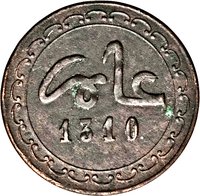
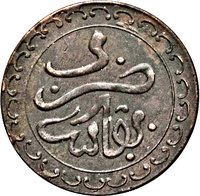
⭐ Somewhat Rare