


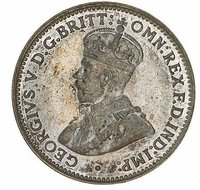
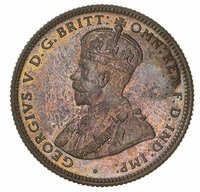
Obverse
Description:
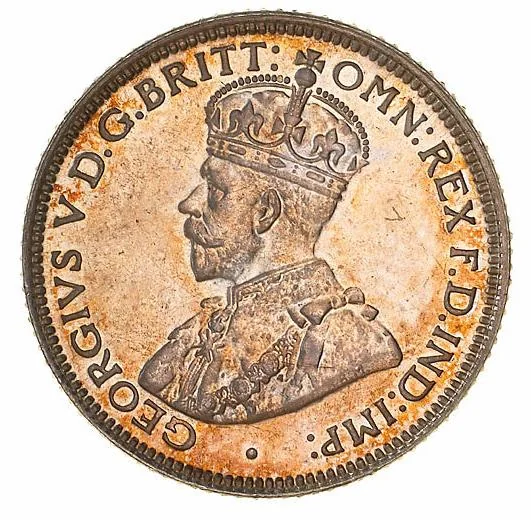
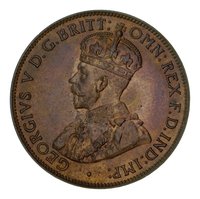
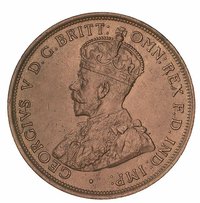
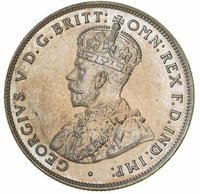
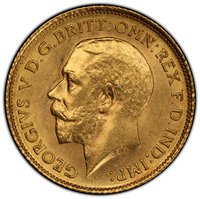
King George V crowned bust left.
Inscription:
GEORGIVS V D.G.BRITT:OMN:REX F.D.IND:IMP:
Translation:
George V, by the Grace of God, King of all the Britains, Defender of the Faith, Emperor of India.
Script: Latin
Language: Latin
Designer: Edgar Bertram MacKennal
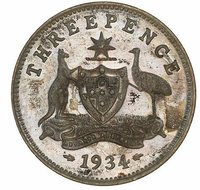
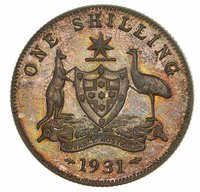
Reverse
Description:
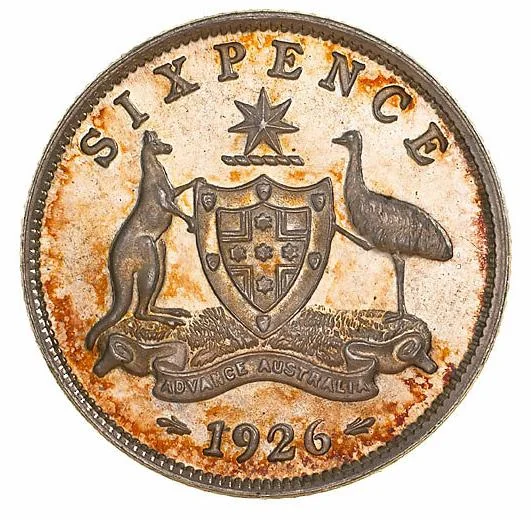
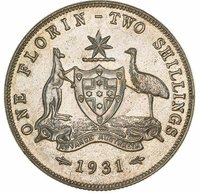
Australian national emblem
Inscription:
SIXPENCE
ADVANCE AUSTRALIA
1918
ADVANCE AUSTRALIA
1918
Script: Latin
Designer: William Henry James Blakemore
Edge
Reeded
Categories
| Symbols> Coat of Arms |
Mints
| Name | Mark |
|---|---|
| Royal Mint (Tower Hill) | — |
| Royal Mint | — |
| Royal Mint | M |
Mintings
| Year | Mint Mark | Mintage | Quality | Collection |
|---|---|---|---|---|
| 1911 | — | 2,000,000 | ||
| 1911 | — | — | Proof | |
| 1912 | — | 1,600,000 | ||
| 1914 | — | 1,800,000 | ||
| 1916 | M | 1,769,000 | ||
| 1916 | M | 25 | Proof | |
| 1917 | M | 1,632,000 | ||
| 1917 | M | — | Proof | |
| 1918 | M | 915,000 | ||
| 1918 | M | — | Proof | |
| 1919 | M | 1,521,000 | ||
| 1919 | M | — | Proof | |
| 1920 | M | 1,476,000 | ||
| 1920 | M | — | Proof | |
| 1921 | — | 3,795,000 | ||
| 1921 | — | — | Proof | |
| 1922 | — | — | Proof | |
| 1922 | — | 1,488,000 | ||
| 1923 | — | 1,458,000 | ||
| 1924 | — | 1,038,000 | ||
| 1924 | — | — | Proof | |
| 1925 | — | 3,266,000 | ||
| 1925 | — | — | Proof | |
| 1926 | — | — | Proof | |
| 1926 | — | 3,609,000 | ||
| 1927 | — | 50 | Proof | |
| 1927 | — | 3,592,000 | ||
| 1928 | — | 2,721,000 | ||
| 1928 | — | — | Proof | |
| 1934 | — | 50 | Proof | |
| 1934 | — | 1,024,000 | ||
| 1935 | — | 392,000 | ||
| 1935 | — | — | Proof | |
| 1936 | — | — | Proof | |
| 1936 | — | 1,800,000 |
Historical background
In 1911, Australia stood on the cusp of a major monetary transformation, moving from a fragmented system towards a unified national currency. Since Federation in 1901, the nation's money supply remained a complex patchwork of British gold sovereigns, British silver and copper coinage, and a multitude of private banknotes issued by dozens of trading banks. This system was inefficient, with notes of varying design and security, and their value was only as reliable as the issuing bank's reputation, leading to periodic instability and confusion in interstate trade.
The push for a single, government-backed currency had been building for years, culminating in the landmark Australian Notes Act 1910 and the Bank Notes Tax Act 1910. These laws, enacted by the Andrew Fisher Labor government, effectively nationalised the note issue. They imposed a prohibitive 10% annual tax on private banknotes, driving them out of circulation, and proclaimed Australian government notes as the only legal tender. By 1911, the new, uniform series of Australian notes, featuring the portrait of King George V, was being circulated by the Commonwealth Treasury, marking the first time Australians used nationally issued paper money.
However, 1911 was a transitional year. While paper currency was now centralised, Australia did not yet have its own distinct coinage. Everyday transactions still relied heavily on British imperial coinage, from pennies to sovereigns. The final step towards a fully independent monetary system would come in 1913 with the Coinage Act, which introduced the Australian pound, divided into 20 shillings and 240 pence, and the establishment of the first Royal Australian Mint in Melbourne. Thus, 1911 represents the pivotal moment when Australia secured control over its paper currency, laying the essential groundwork for the complete sovereign monetary system that would follow.
The push for a single, government-backed currency had been building for years, culminating in the landmark Australian Notes Act 1910 and the Bank Notes Tax Act 1910. These laws, enacted by the Andrew Fisher Labor government, effectively nationalised the note issue. They imposed a prohibitive 10% annual tax on private banknotes, driving them out of circulation, and proclaimed Australian government notes as the only legal tender. By 1911, the new, uniform series of Australian notes, featuring the portrait of King George V, was being circulated by the Commonwealth Treasury, marking the first time Australians used nationally issued paper money.
However, 1911 was a transitional year. While paper currency was now centralised, Australia did not yet have its own distinct coinage. Everyday transactions still relied heavily on British imperial coinage, from pennies to sovereigns. The final step towards a fully independent monetary system would come in 1913 with the Coinage Act, which introduced the Australian pound, divided into 20 shillings and 240 pence, and the establishment of the first Royal Australian Mint in Melbourne. Thus, 1911 represents the pivotal moment when Australia secured control over its paper currency, laying the essential groundwork for the complete sovereign monetary system that would follow.
Series: 1911 Australia circulation coins
🌱 Very Common