

2 paisa – Nepal
Add to wishlist
Nepal
Context
Years: 1935–1942
Issuer: Nepal
Ruler: Tribhuvan Bir Bikram Shah
Currency:
(since 1932)
Demonetized: Yes
Total mintage: 1,606,000
Material
References
KM: #
Numista: #15576
Value
Exchange value: 0.02 NPR
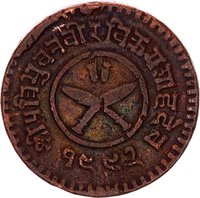
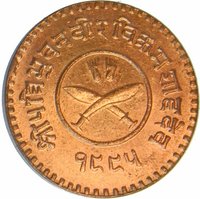
Obverse
Description:
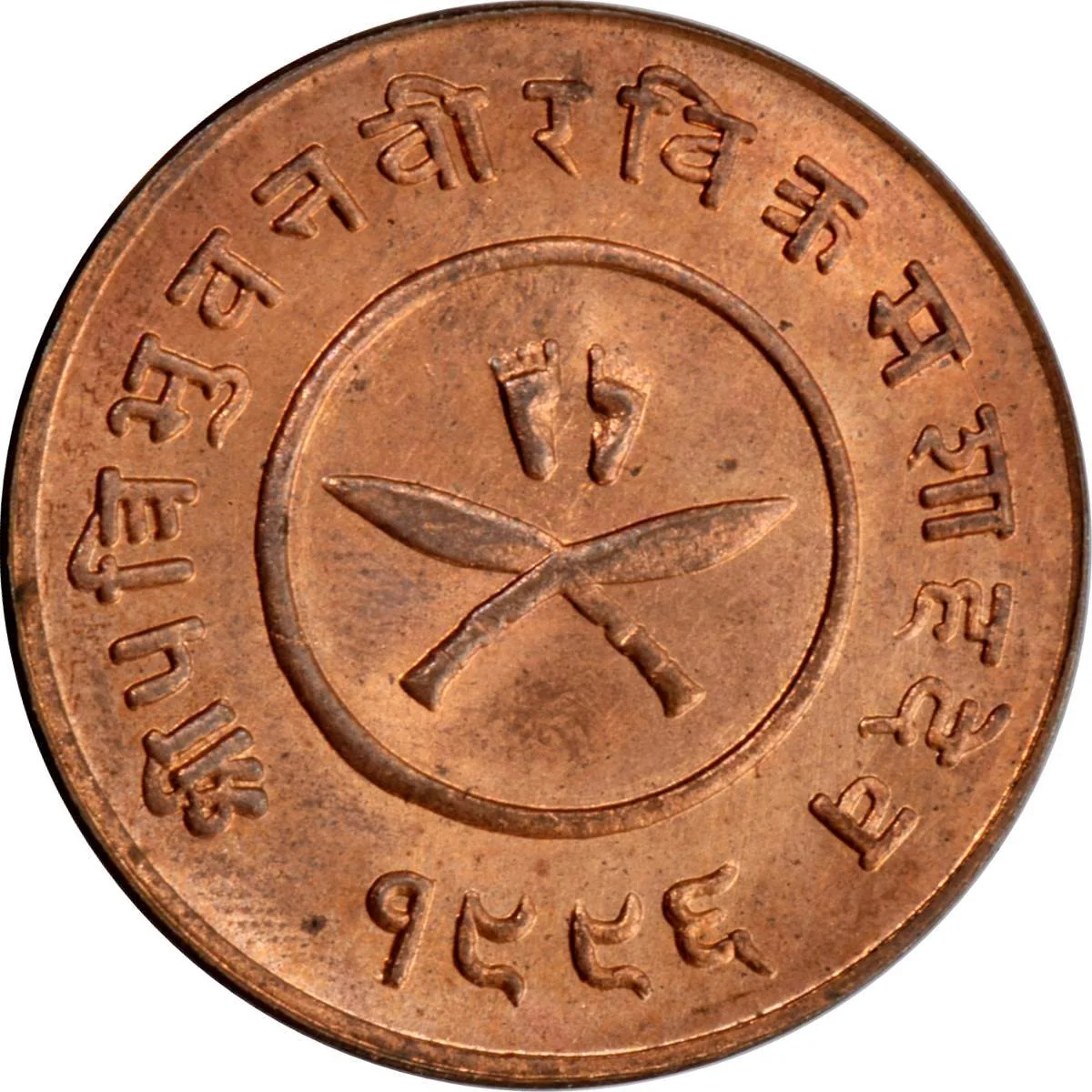
Crossed daggers and footprints in circle, Devnagari legend around, date below.
Inscription:
श्री ५ त्रिभुवन वीर विक्रम शाहदेव
Translation:
Shri 5 Tribhuvan Vir Vikram Shah Dev
Language: Nepali
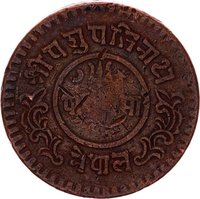
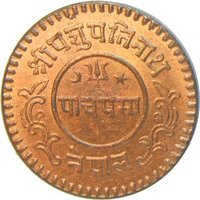
Reverse
Description:
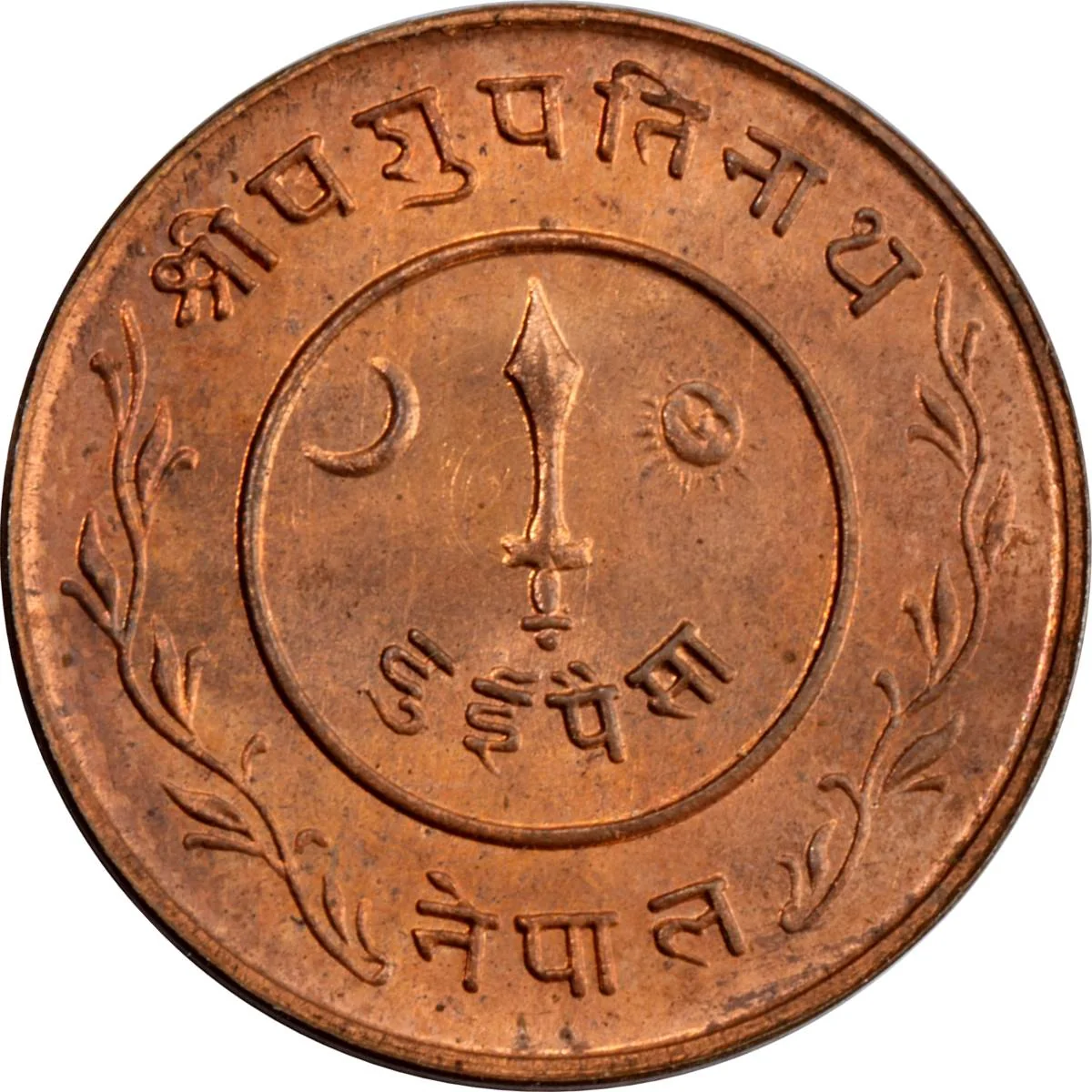
Crescent, star, and dagger. "Dui Paisa" in Devnagari below.
Inscription:
श्री पशुपतिनाथ
दुई पैसा
नेपाल
दुई पैसा
नेपाल
Translation:
Shri Pashupatinath
Two Paisa
Nepal
Two Paisa
Nepal
Language: Nepali
Edge
Plain
Mintings
| Year | Mint Mark | Mintage | Quality | Collection |
|---|---|---|---|---|
| 1935 | — | — | ||
| 1936 | — | 473,000 | ||
| 1937 | — | 1,133,000 | ||
| 1938 | — | — | ||
| 1939 | — | — | ||
| 1940 | — | — | ||
| 1941 | — | — | ||
| 1942 | — | — |
Historical background
In 1935, Nepal's currency situation was characterized by a complex dual system, deeply tied to its political and economic relationship with British India. The primary circulating medium was the Nepalese mohar, but the economy was effectively dominated by the Indian rupee. This was due to Nepal's heavily trade-dependent economy, with India accounting for the vast majority of its foreign commerce. Consequently, Indian rupees were not only accepted but were essential for external trade and held significant influence internally, especially in the Tarai region bordering India. The exchange rate was fixed, with 1 Indian rupee equaling 1.6 Nepalese mohars.
This monetary duality was managed under the Nepal Mint Act of 1932, which centralized and reformed the kingdom's coinage system. The Act aimed to bring order by standardizing the silver content and design of the mohar and its subdivisions (like the sukka and dam), moving production from various scattered mints to a more centralized authority. However, the system remained on a silver standard, and the value of Nepal's coinage was intrinsically linked to the fluctuating global price of silver, creating periods of instability. Furthermore, there were no official banknotes issued by a central bank, as the Nepal Rastra Bank would not be established until 1956.
The currency landscape of 1935 thus reflected a transitional and dependent economy. While King Tribhuvan and the Rana regime sought to assert monetary sovereignty through legal reforms and standardized coinage, the pragmatic reality was one of de facto rupee-zone membership. The economy's anchor was the Indian rupee, with the domestic mohar system serving local and ceremonial purposes. This arrangement underscored Nepal's economic subordination to British India and highlighted the limitations of its monetary autonomy nearly two decades before the end of Rana rule.
This monetary duality was managed under the Nepal Mint Act of 1932, which centralized and reformed the kingdom's coinage system. The Act aimed to bring order by standardizing the silver content and design of the mohar and its subdivisions (like the sukka and dam), moving production from various scattered mints to a more centralized authority. However, the system remained on a silver standard, and the value of Nepal's coinage was intrinsically linked to the fluctuating global price of silver, creating periods of instability. Furthermore, there were no official banknotes issued by a central bank, as the Nepal Rastra Bank would not be established until 1956.
The currency landscape of 1935 thus reflected a transitional and dependent economy. While King Tribhuvan and the Rana regime sought to assert monetary sovereignty through legal reforms and standardized coinage, the pragmatic reality was one of de facto rupee-zone membership. The economy's anchor was the Indian rupee, with the domestic mohar system serving local and ceremonial purposes. This arrangement underscored Nepal's economic subordination to British India and highlighted the limitations of its monetary autonomy nearly two decades before the end of Rana rule.
🌱 Common