

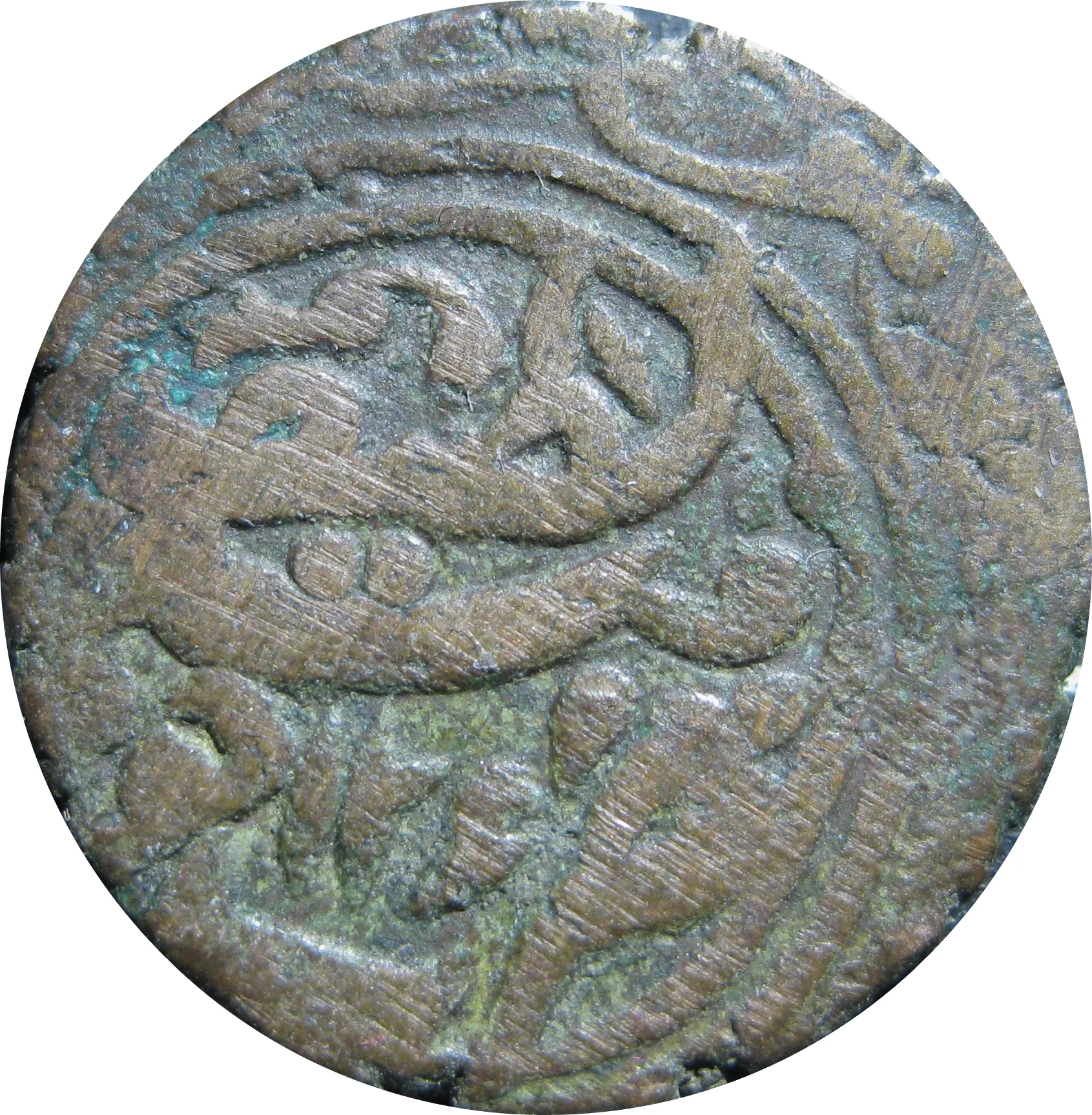
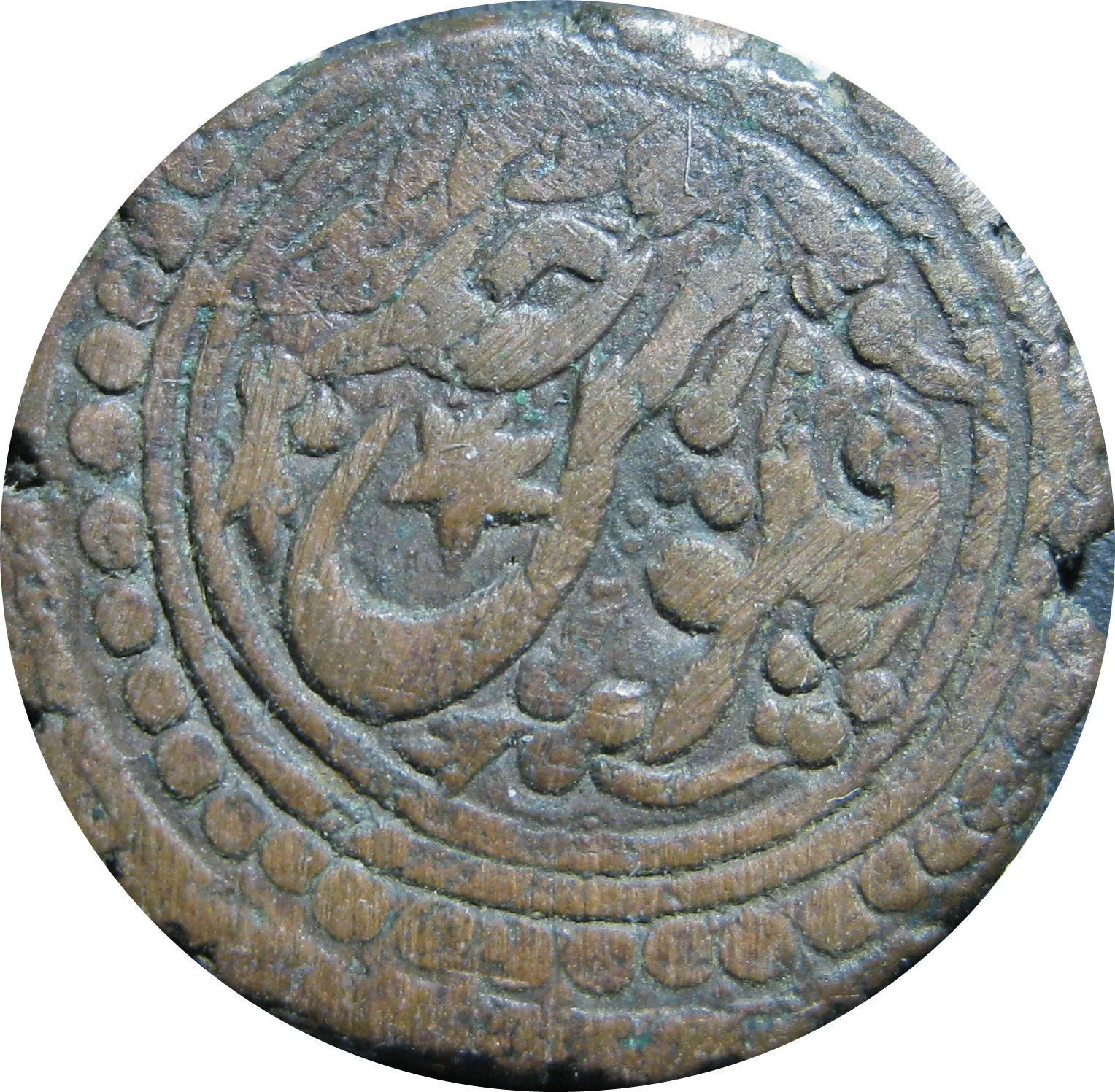
1 pul – Khoqand Khanate
Add to wishlist
Context
Years: 1849–1858
Country: Central Asia
Issuer: Khoqand Khanate
Ruler: Muhammad Khudayar Khan
Currency:
(1796—1876)
Demonetized: Yes
Material
Diameter: 19.5 mm
Weight: 4.4 g
Thickness: 1.9 mm
Shape: Irregular round
Composition: Copper
Magnetic: No
References
Numista: #155696
Obverse
Reverse
Edge
Mintings
| Year | Mint Mark | Mintage | Quality | Collection |
|---|---|---|---|---|
| 1849 | — | — | ||
| 1853 | — | — | ||
| 1858 | — | — |
Historical background
By 1849, the currency system of the Khoqand Khanate was in a state of severe crisis, reflecting the broader political and economic instability of the realm. For decades, the Khanate had financed its military expansion and state expenditures through the relentless debasement of its primary silver coin, the tanga. Successive khans, particularly Muhammad Ali (Madali Khan) and his successors, reduced the silver content of the coinage to a fraction of its original value, leading to rampant inflation and a loss of public confidence. This monetary decay was exacerbated by constant warfare with the Emirate of Bukhara and the rising pressure from the Russian Empire, which disrupted trade and drained the treasury.
The situation was characterized by a chaotic circulation of multiple coin types. Alongside the debased Khoqandi tanga, older full-weight Bukharan and even Russian coins circulated at a premium, creating a dual-system where the value of money was divorced from its face value and depended entirely on its metallic content and origin. The state’s inability to control its currency fueled internal discontent, hampered commerce, and weakened the central authority. Merchants and the population increasingly resorted to barter or hoarded older, purer coins, further strangling the formal economy.
This monetary collapse was both a symptom and a cause of the Khanate's impending demise. The financial instability undermined the government's ability to pay its troops and administer its territories, making it vulnerable to internal rebellion and external conquest. Within two decades, the economic frailty exemplified by the 1849 currency crisis would be a key factor in the Khanate’s inability to resist the final Russian annexation in 1876, which abruptly ended its independent monetary system.
The situation was characterized by a chaotic circulation of multiple coin types. Alongside the debased Khoqandi tanga, older full-weight Bukharan and even Russian coins circulated at a premium, creating a dual-system where the value of money was divorced from its face value and depended entirely on its metallic content and origin. The state’s inability to control its currency fueled internal discontent, hampered commerce, and weakened the central authority. Merchants and the population increasingly resorted to barter or hoarded older, purer coins, further strangling the formal economy.
This monetary collapse was both a symptom and a cause of the Khanate's impending demise. The financial instability undermined the government's ability to pay its troops and administer its territories, making it vulnerable to internal rebellion and external conquest. Within two decades, the economic frailty exemplified by the 1849 currency crisis would be a key factor in the Khanate’s inability to resist the final Russian annexation in 1876, which abruptly ended its independent monetary system.

✨ Legendary