


Obverse
Description:
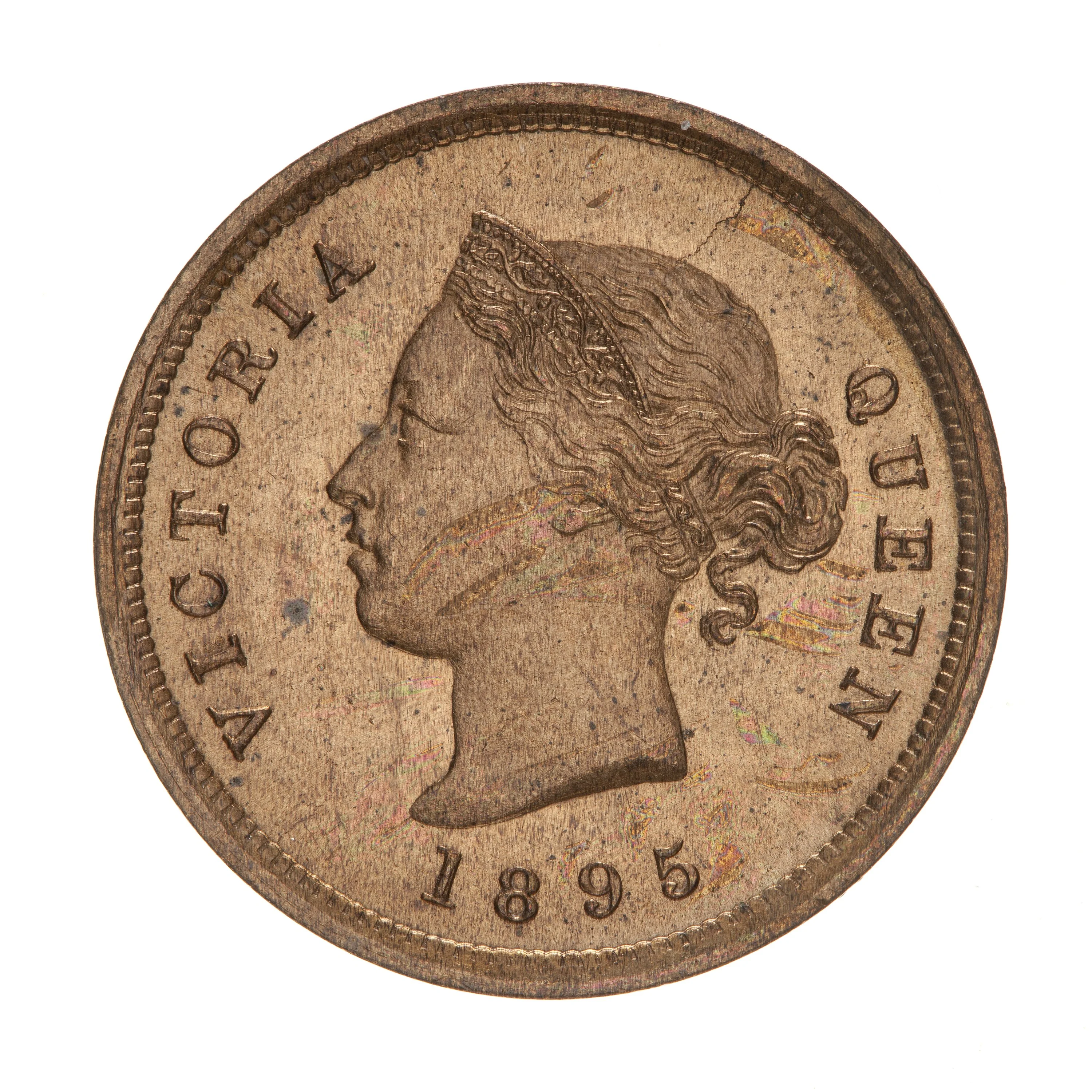
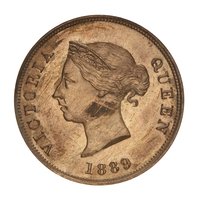
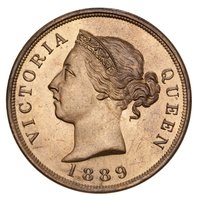
Queen facing left in an oak-leaf coronet. Date below; small "H" above indicates minting by Ralph Heaton and Sons, Birmingham.
Inscription:
VICTORIA QUEEN
1887
1887
Script: Latin
Designer and engraver: Leonard Charles Wyon
Reverse
Description:
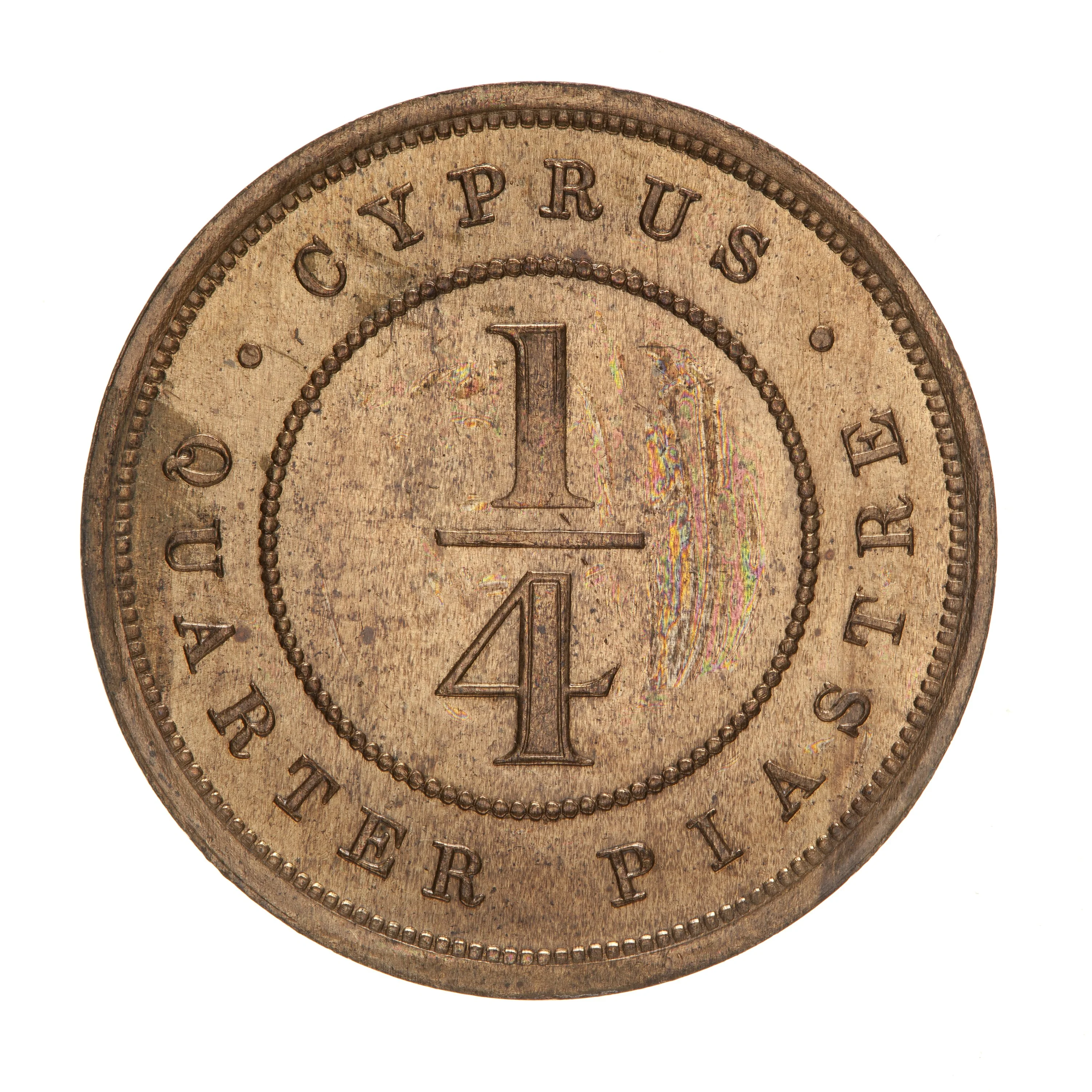
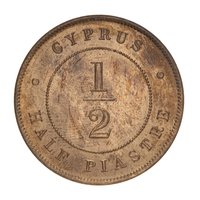
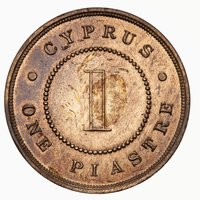
CYPRUS QUARTER PIASTRE within beaded circle.
Inscription:
· CYPRUS ·
1
4
QUARTER PIASTRE
1
4
QUARTER PIASTRE
Script: Latin
Edge
Plain
Mints
| Name | Mark |
|---|---|
| Royal Mint (Tower Hill) | — |
| Heaton and Sons / The Mint Birmingham | H |
Mintings
Historical background
In 1879, Cyprus was under British administration, having been leased from the Ottoman Empire in 1878. The currency situation was complex and transitional, reflecting the island's shift from Ottoman to British control. The official currency in circulation remained the Ottoman piastre (kuruş), a silver-based coin, alongside its fractional units. However, the monetary system was chaotic, with a severe shortage of small change crippling everyday transactions. This scarcity led to the widespread use of cut and mutilated coins, foreign currencies (like French francs and Austrian thalers), and even private token issues by local merchants, creating a confusing and inefficient economic environment.
Recognizing the impediment to trade and governance, the British authorities took decisive action in 1879. They introduced a new decimal currency, the Cyprus pound (£C), divided into 1,000 mils. Crucially, to address the immediate small-change crisis, the first coins minted for Cyprus were not pounds but copper coins of ¼, ½, and 1 piastre (valued at 9, 18, and 36 mils respectively). These were strategically designed to facilitate exchange with the existing Ottoman piastre system while establishing the new decimal standard. The British government also demonetized the various foreign and makeshift currencies to consolidate monetary authority.
Therefore, 1879 marks a pivotal year of reform rather than stability. The background is defined by the British effort to impose order on a fragmented system inherited from Ottoman rule. The introduction of the Cyprus pound and its subsidiary coinage laid the foundation for a modern, standardized monetary system, but the transition was just beginning, with the old Ottoman piastre remaining legal tender alongside the new currency for several years as the population gradually adapted to the change.
Recognizing the impediment to trade and governance, the British authorities took decisive action in 1879. They introduced a new decimal currency, the Cyprus pound (£C), divided into 1,000 mils. Crucially, to address the immediate small-change crisis, the first coins minted for Cyprus were not pounds but copper coins of ¼, ½, and 1 piastre (valued at 9, 18, and 36 mils respectively). These were strategically designed to facilitate exchange with the existing Ottoman piastre system while establishing the new decimal standard. The British government also demonetized the various foreign and makeshift currencies to consolidate monetary authority.
Therefore, 1879 marks a pivotal year of reform rather than stability. The background is defined by the British effort to impose order on a fragmented system inherited from Ottoman rule. The introduction of the Cyprus pound and its subsidiary coinage laid the foundation for a modern, standardized monetary system, but the transition was just beginning, with the old Ottoman piastre remaining legal tender alongside the new currency for several years as the population gradually adapted to the change.
🌟 Limited