

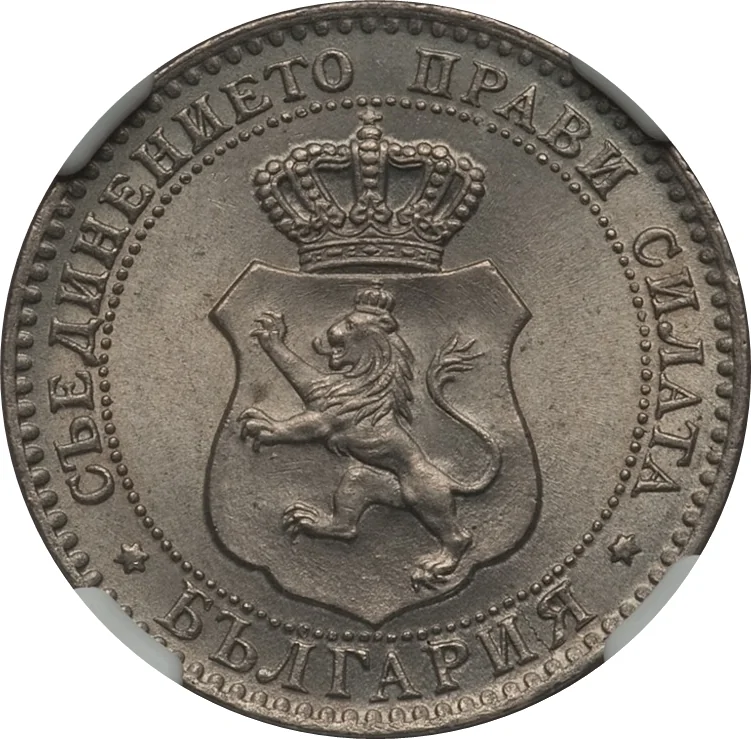
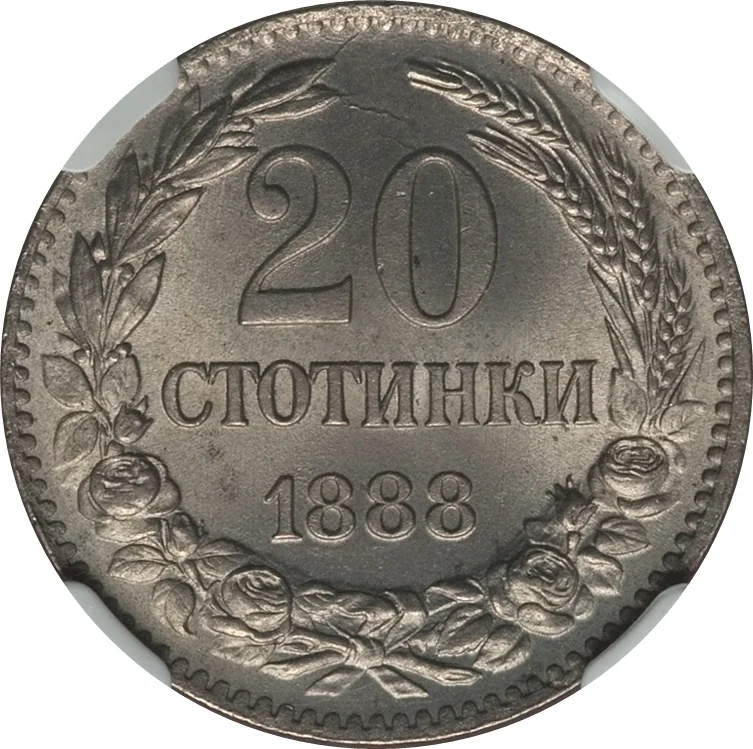
20 Stotinki – Bulgaria
Bulgaria
Context
Year: 1888
Issuer: Bulgaria 
Ruler: Ferdinand I
Currency:
(1881—1952)
Demonetized: Yes
Total mintage: 5,000,000
Material
References
KM: #Click to copy to clipboard11
Numista: #15543
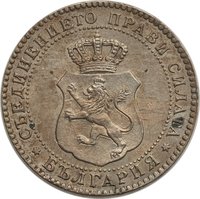
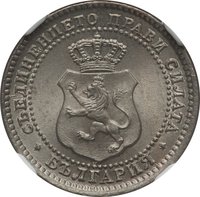
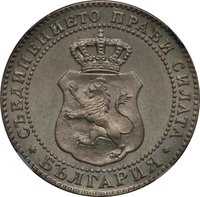
Obverse
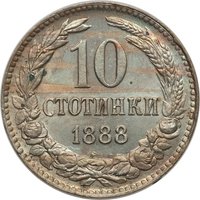
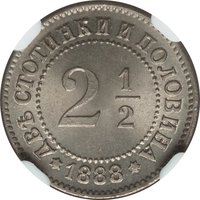
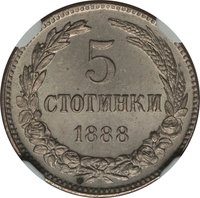
Reverse
Edge
Categories
| Symbols> Coat of Arms |
| Symbol> Wreath |
Mints
| Name | Mark |
|---|---|
| Royal Mint of Belgium | — |
Mintings
| Year | Mint Mark | Mintage | Quality | Collection |
|---|---|---|---|---|
| 1888 | — | 5,000,000 | ||
| 1888 | — | — | Proof |
Historical background
In 1888, Bulgaria's currency situation was defined by its recent political emergence and the complex monetary legacy of the Ottoman Empire. Having gained autonomy in 1878, the young Principality of Bulgaria inherited a circulation dominated by diverse foreign coins, primarily the Ottoman lira (gold), kuruş (silver), and para (copper), alongside various European currencies like the French franc and Russian ruble. This created a chaotic and inefficient system for state administration and economic development, as the government lacked control over its own money supply and faced the practical difficulties of multiple, fluctuating exchange rates.
The state took its first major step toward monetary sovereignty with the establishment of the Bulgarian National Bank in 1885. By 1888, the Bank was actively issuing the first national currency, the lev (plural: leva), which was pegged to and directly backed by the French franc at a fixed rate of 1 lev = 1 franc, adhering to the Latin Monetary Union's bimetallic principles. However, this was a period of transition; the new, modern banknotes and coins circulated alongside the older Ottoman and European money, and public trust in the paper leva was still being established. The system's stability was underpinned by a conservative gold and silver reserve held by the young central bank.
Therefore, the situation in 1888 was one of deliberate construction and fragile consolidation. The government, under Prime Minister Stefan Stambolov, was pursuing a policy of financial stabilization and Western alignment, with the franc peg symbolizing this orientation. The primary challenges were to fully unify the monetary space under the lev, manage the public's preference for metal over paper, and build sufficient reserves to maintain the strict international parity—all essential for securing foreign investment and fostering the economic independence of the nascent Bulgarian state.
The state took its first major step toward monetary sovereignty with the establishment of the Bulgarian National Bank in 1885. By 1888, the Bank was actively issuing the first national currency, the lev (plural: leva), which was pegged to and directly backed by the French franc at a fixed rate of 1 lev = 1 franc, adhering to the Latin Monetary Union's bimetallic principles. However, this was a period of transition; the new, modern banknotes and coins circulated alongside the older Ottoman and European money, and public trust in the paper leva was still being established. The system's stability was underpinned by a conservative gold and silver reserve held by the young central bank.
Therefore, the situation in 1888 was one of deliberate construction and fragile consolidation. The government, under Prime Minister Stefan Stambolov, was pursuing a policy of financial stabilization and Western alignment, with the franc peg symbolizing this orientation. The primary challenges were to fully unify the monetary space under the lev, manage the public's preference for metal over paper, and build sufficient reserves to maintain the strict international parity—all essential for securing foreign investment and fostering the economic independence of the nascent Bulgarian state.
Series: 1888 Bulgaria circulation coins
🌱 Common