

50 Cents – Straits Settlements
Malaysia
Context
Years: 1907–1908
Country: Malaysia 
Issuer: Straits Settlements
Ruler: Edward VII
Currency:
(1845—1939)
Demonetization: 31 December 1952
Total mintage: 6,000,000
Material
References
KM: #Click to copy to clipboard24
Numista: #15532
Value
Bullion value: $26.00
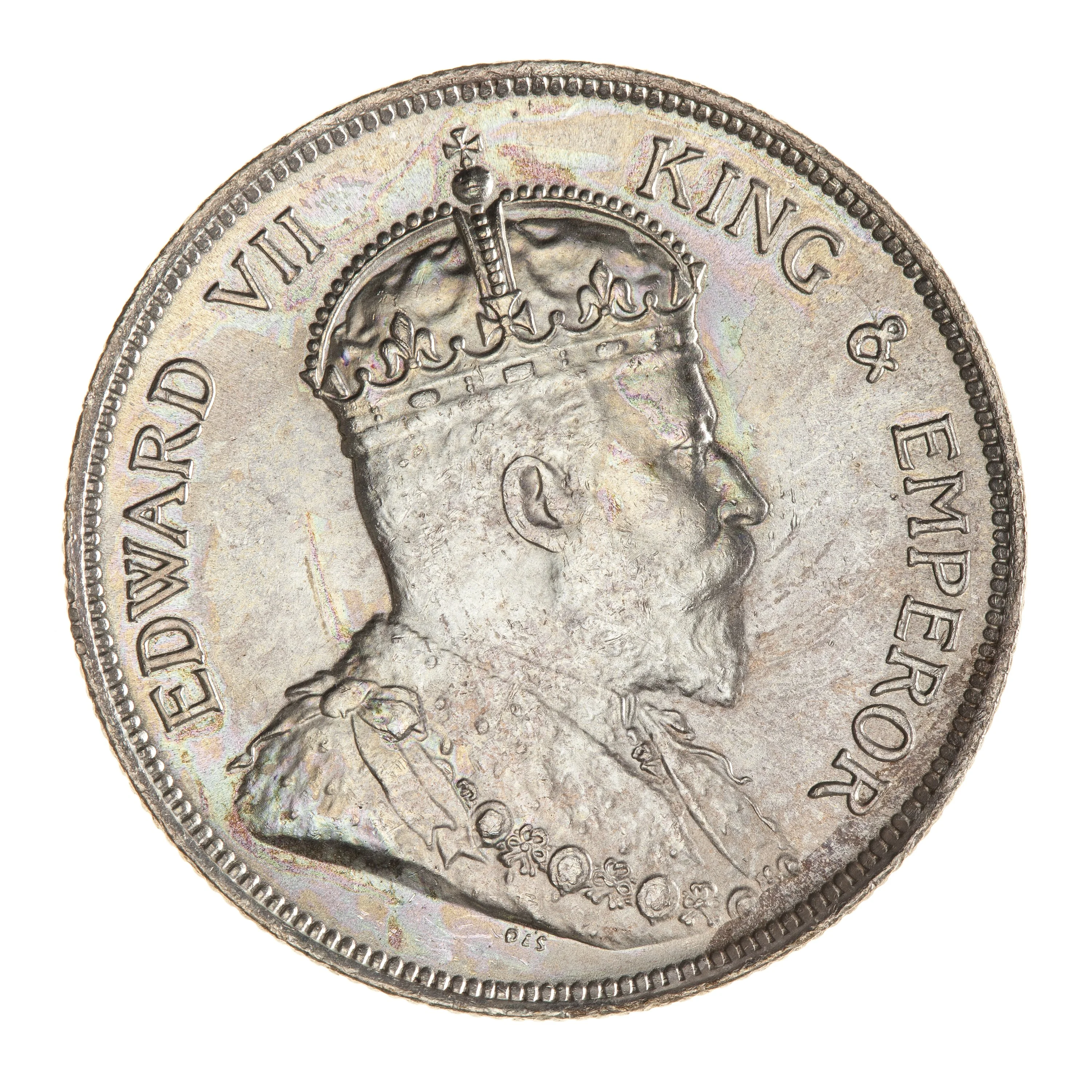
Obverse
Description:
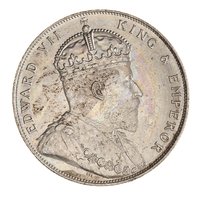
Right-facing crowned bust.
Inscription:
EDWARD VII KING & EMPEROR
Translation:
EDWARD VII KING & EMPEROR
Script: Latin
Engraver: George William de Saulles
Reverse
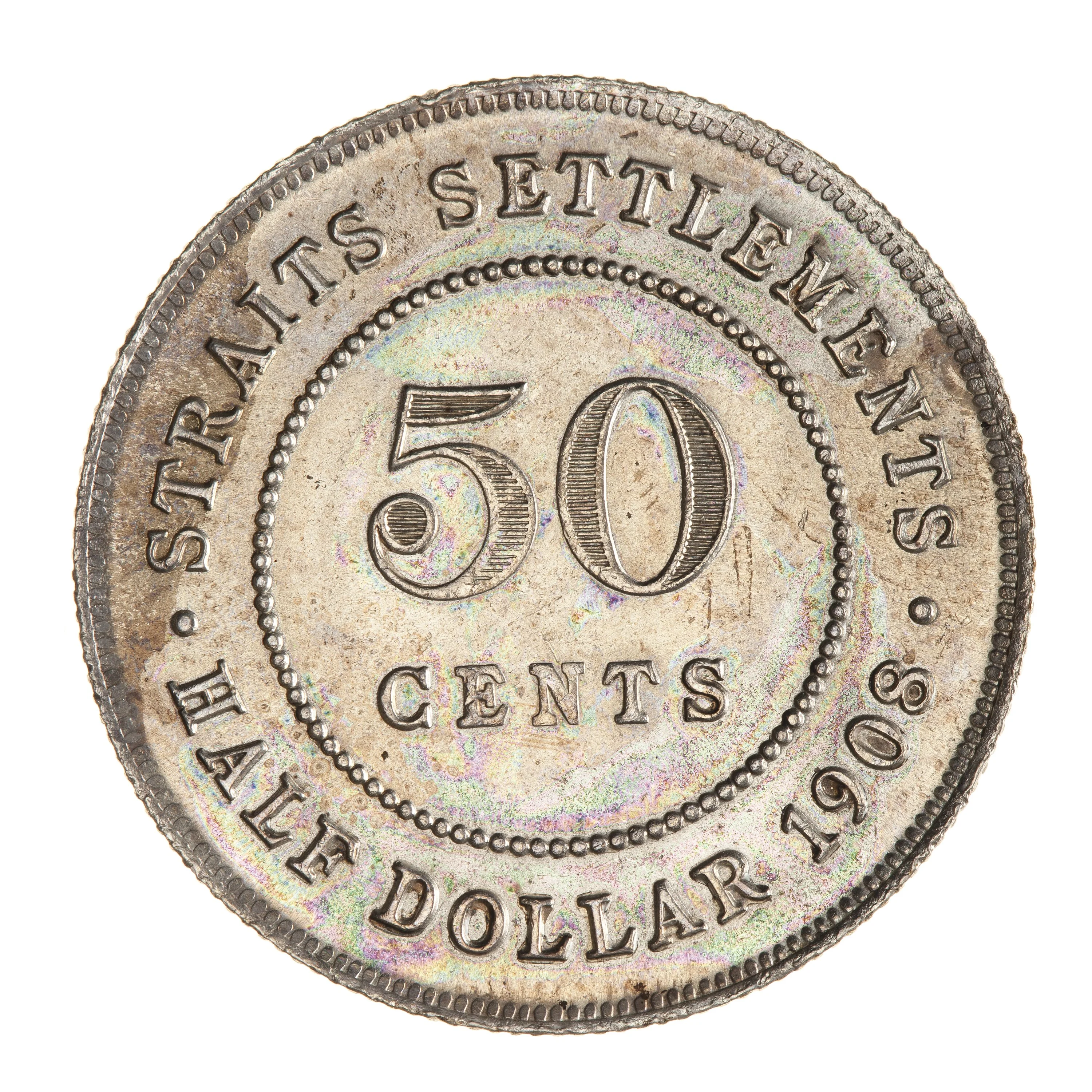
Description:
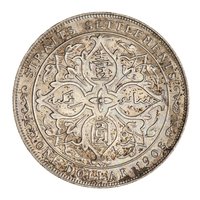
Denomination in beaded circle, date at lower right.
Inscription:
STRAITS SETTLEMENTS
50
CENTS
HALF DOLLAR 1907
50
CENTS
HALF DOLLAR 1907
Script: Latin
Edge
Reeded
Mints
| Name | Mark |
|---|---|
| Royal Mint (Tower Hill) | — |
| Heaton and Sons / The Mint Birmingham | H |
Historical background
In 1907, the Straits Settlements operated under a unique currency system anchored to the British sterling standard but physically dominated by the silver dollar. The official currency was the Straits dollar, first issued by the Board of Commissioners of Currency in 1903, which replaced the earlier variety of silver trade dollars from Hong Kong, Mexico, and other regions. This move was a deliberate colonial policy to create monetary uniformity and stability, as the Straits dollar was pegged at a fixed value of two shillings and four pence sterling.
However, the period was one of transition and tension within the broader international monetary context. The Straits dollar was a silver coin, yet its value was legally tied to gold-based sterling. This created vulnerability to fluctuations in the global price of silver, which had been declining for decades. To manage this, the Currency Commissioners maintained a substantial gold reserve in London, ensuring the convertibility and stability of the local currency. The system functioned as a successful gold-exchange standard, where local transactions used silver coins, but the ultimate guarantee was gold held abroad.
Consequently, the currency situation in 1907 reflected a colony deeply integrated into the British imperial economy. The stable Straits dollar facilitated the booming trade in tin, rubber, and other commodities, underpinning Singapore's role as a key entrepôt. While the physical currency in circulation was largely silver (including subsidiary coinage), the financial architecture was firmly gold-based, ensuring credibility with international merchants and aligning the Settlements' economic fortunes directly with the financial policies of the British Empire.
However, the period was one of transition and tension within the broader international monetary context. The Straits dollar was a silver coin, yet its value was legally tied to gold-based sterling. This created vulnerability to fluctuations in the global price of silver, which had been declining for decades. To manage this, the Currency Commissioners maintained a substantial gold reserve in London, ensuring the convertibility and stability of the local currency. The system functioned as a successful gold-exchange standard, where local transactions used silver coins, but the ultimate guarantee was gold held abroad.
Consequently, the currency situation in 1907 reflected a colony deeply integrated into the British imperial economy. The stable Straits dollar facilitated the booming trade in tin, rubber, and other commodities, underpinning Singapore's role as a key entrepôt. While the physical currency in circulation was largely silver (including subsidiary coinage), the financial architecture was firmly gold-based, ensuring credibility with international merchants and aligning the Settlements' economic fortunes directly with the financial policies of the British Empire.
🌟 Limited