

½ cent – Straits Settlements
Add to wishlist
Malaysia
Context
Years: 1904–1908
Country: Malaysia
Issuer: Straits Settlements
Ruler: Edward VII
Currency:
(1845—1939)
Demonetized: Yes
Total mintage: 2,000,000
Material
References
KM: #
Numista: #15530
Obverse
Description:
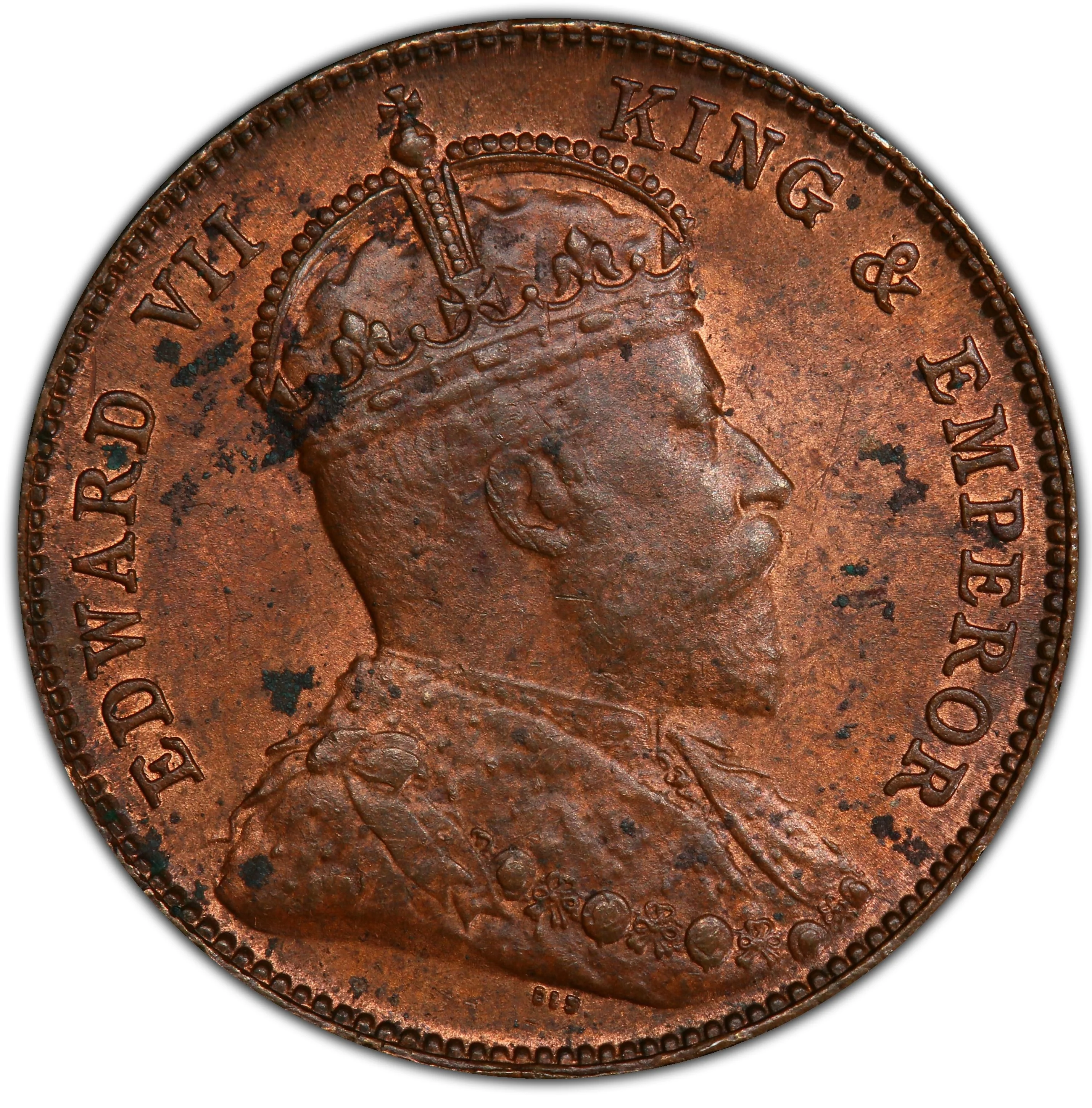
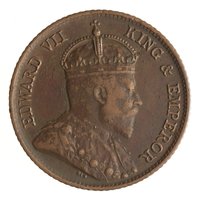
Right-facing crowned bust.
Inscription:
EDWARD VII KING & EMPEROR
DES
DES
Translation:
Edward VII King and Emperor
God [is] with us
God [is] with us
Script: Latin
Engraver: George William de Saulles
Reverse
Description:
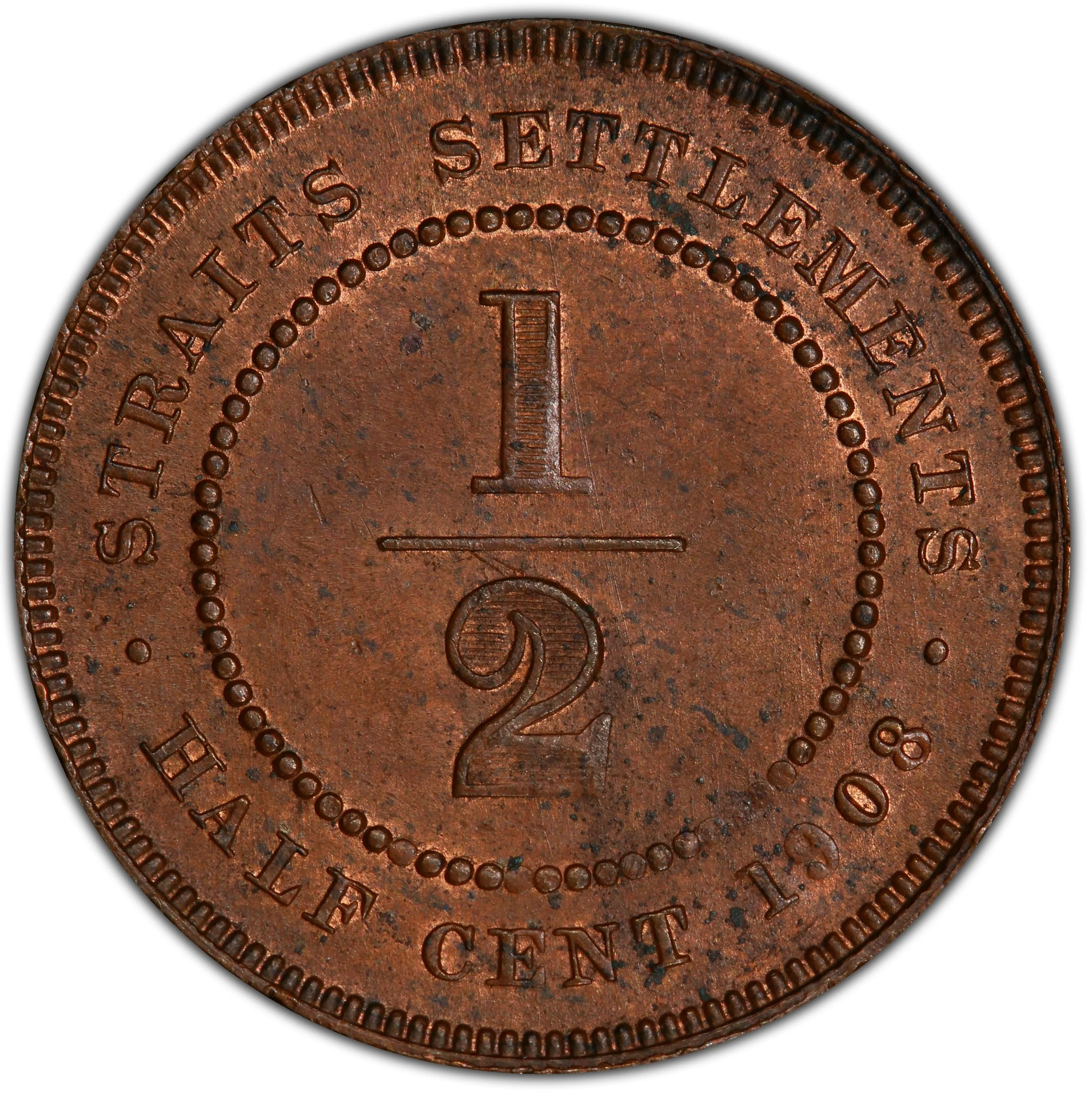
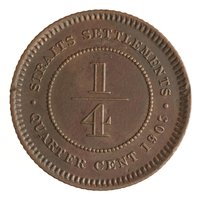
Denomination in beaded circle, date at lower right.
Inscription:
· STRAITS SETTLEMENTS ·
1
2
HALF CENT 1908
1
2
HALF CENT 1908
Script: Latin
Edge
Reeded
Mints
| Name | Mark |
|---|---|
| Kolkata / Calcutta / Murshidabad | — |
Mintings
| Year | Mint Mark | Mintage | Quality | Collection |
|---|---|---|---|---|
| 1904 | — | — | Proof | |
| 1908 | — | 2,000,000 |
Historical background
In 1904, the currency situation in the Straits Settlements (comprising Singapore, Penang, and Malacca) was defined by the dominance of the Straits dollar, a silver-based currency established by the Currency Ordinance of 1899. This system was a direct response to the chronic instability caused by the circulation of various foreign silver coins, primarily the Mexican and Spanish-American dollars, which fluctuated in value with the global price of silver. The Straits dollar, issued by a government-authorized Board of Commissioners of Currency, provided a uniform, stable legal tender, with its value firmly pegged at two shillings and four pence sterling.
However, this sterling peg existed within the context of the international gold standard, creating a complex and often strained monetary environment. As a silver coin, the Straits dollar's intrinsic value was subject to the volatile silver market, while its fixed exchange rate to gold-backed sterling required constant management. The government maintained this parity through a system of "exchange certificates," effectively controlling the flow of coins and ensuring that the currency circulated at its mandated value rather than its potentially lower bullion value. This made the Straits Settlements a "managed" or "gold-exchange" standard, where local currency was convertible into sterling drafts on London, not directly into gold.
The system in 1904 was generally successful in facilitating the booming trade of the entrepôt ports, providing the stability required by British and international merchants. Yet, it was inherently dependent on the colony's substantial sterling reserves and the fiscal discipline of the Currency Commissioners. The arrangement also tightly bound the Straits Settlements' economy to British financial policy, a relationship that would be tested in the coming decades as the global move away from silver accelerated, ultimately leading to the replacement of the silver Straits dollar with a gold-backed currency in 1906.
However, this sterling peg existed within the context of the international gold standard, creating a complex and often strained monetary environment. As a silver coin, the Straits dollar's intrinsic value was subject to the volatile silver market, while its fixed exchange rate to gold-backed sterling required constant management. The government maintained this parity through a system of "exchange certificates," effectively controlling the flow of coins and ensuring that the currency circulated at its mandated value rather than its potentially lower bullion value. This made the Straits Settlements a "managed" or "gold-exchange" standard, where local currency was convertible into sterling drafts on London, not directly into gold.
The system in 1904 was generally successful in facilitating the booming trade of the entrepôt ports, providing the stability required by British and international merchants. Yet, it was inherently dependent on the colony's substantial sterling reserves and the fiscal discipline of the Currency Commissioners. The arrangement also tightly bound the Straits Settlements' economy to British financial policy, a relationship that would be tested in the coming decades as the global move away from silver accelerated, ultimately leading to the replacement of the silver Straits dollar with a gold-backed currency in 1906.
🌟 Limited