

¼ cent – Straits Settlements
Add to wishlist
Malaysia
Context
Year: 1884
Country: Malaysia
Issuer: Straits Settlements
Ruler: Victoria
Currency:
(1845—1939)
Demonetized: Yes
Total mintage: 8,000,000
Material
References
KM: #
Numista: #15526
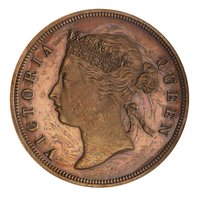
Obverse
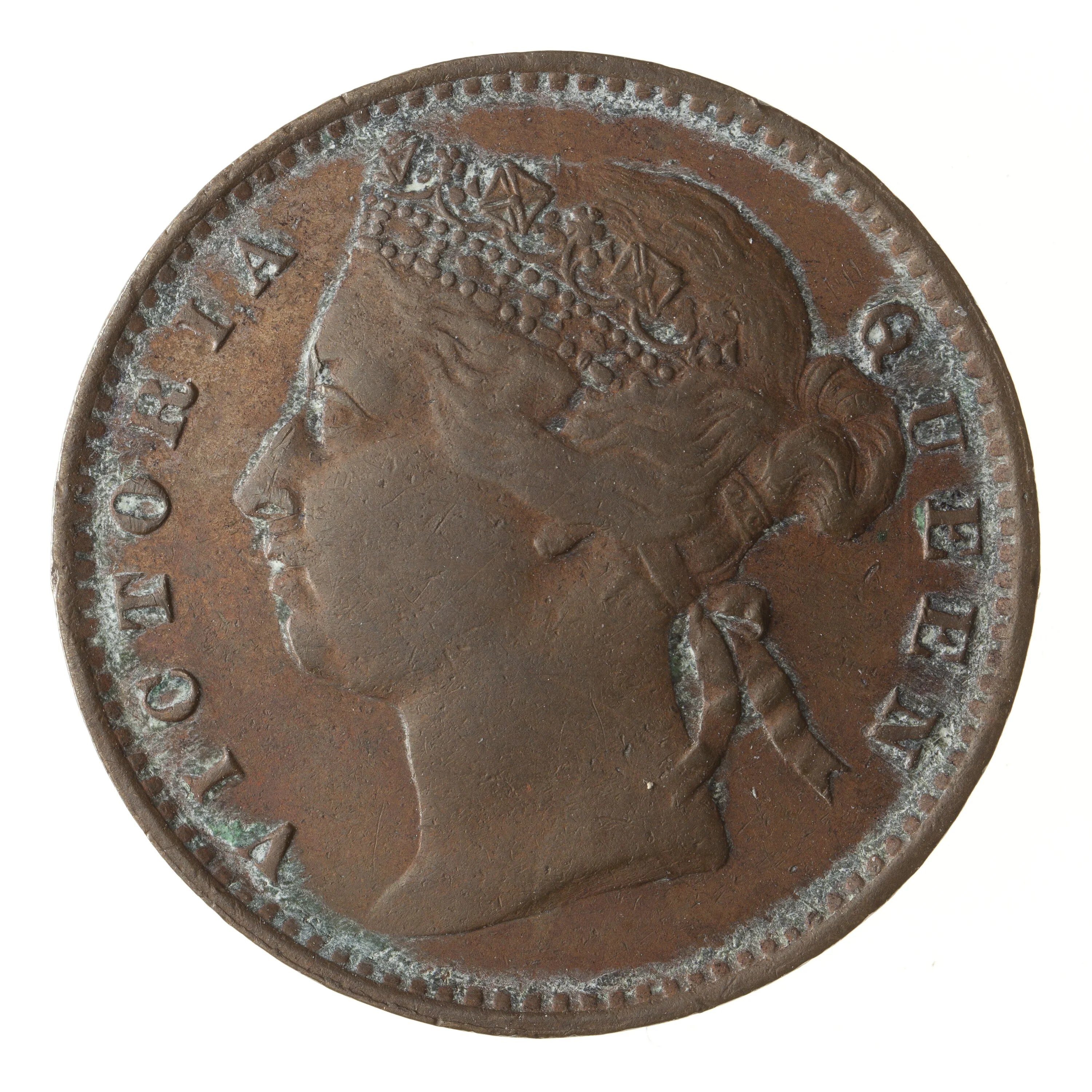
Description:
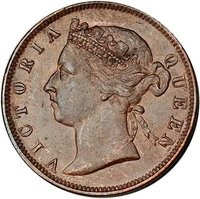
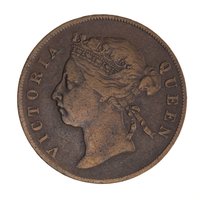
Crowned left-facing bust.
Inscription:
VICTORIA QUEEN
Script: Latin
Engraver: Leonard Charles Wyon
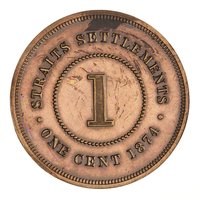
Reverse
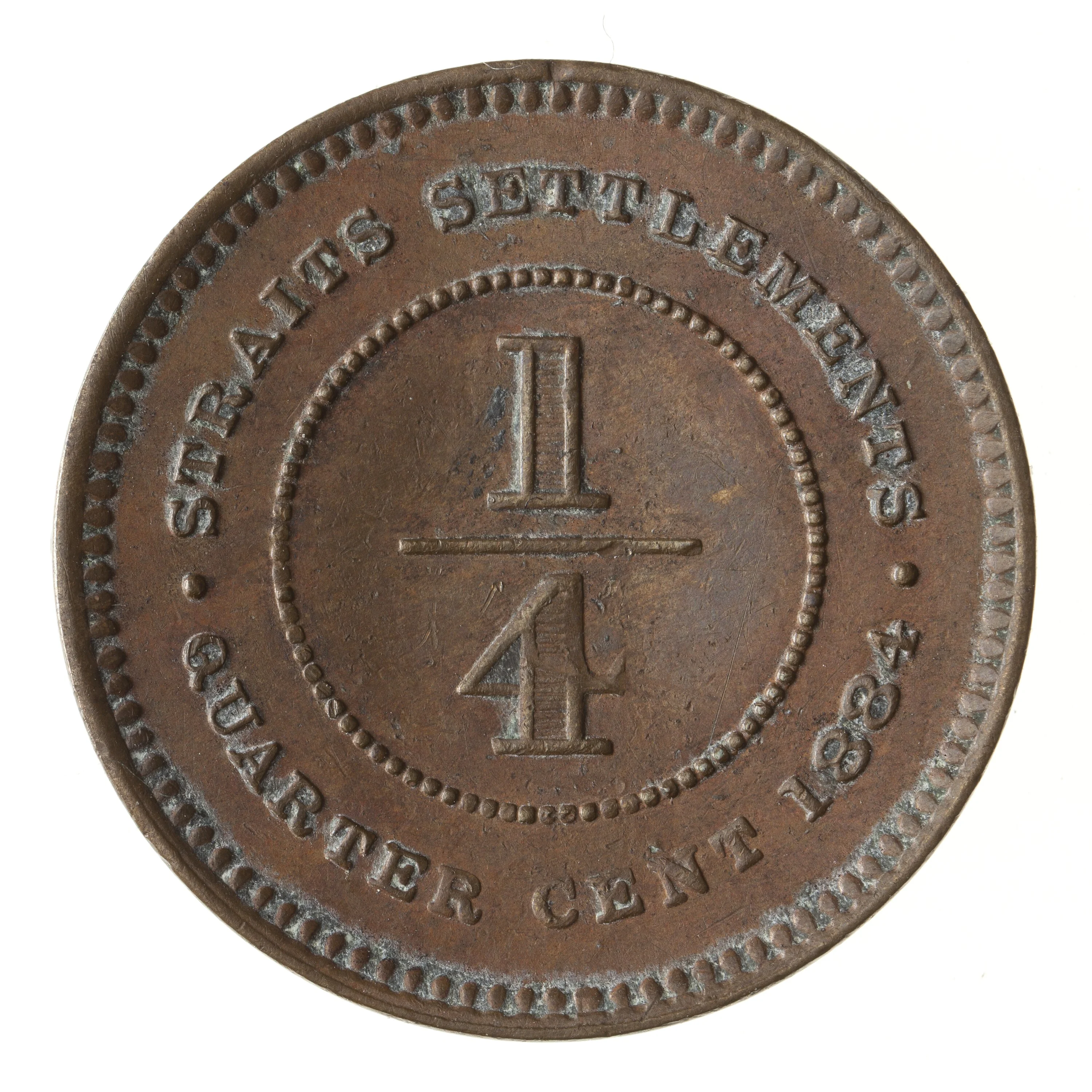
Description:
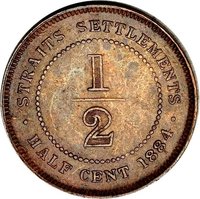
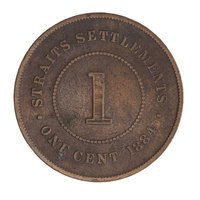
Denomination in beaded circle, date at lower right.
Inscription:
· STRAITS SETTLEMENTS ·
1
4
QUARTER CENT 1884
1
4
QUARTER CENT 1884
Script: Latin
Edge
Plain
Mintings
| Year | Mint Mark | Mintage | Quality | Collection |
|---|---|---|---|---|
| 1884 | — | 8,000,000 | ||
| 1884 | — | — | Proof |
Historical background
In 1884, the Straits Settlements—comprising Singapore, Penang, and Malacca—operated under a complex and often chaotic currency system. The official currency was the Indian Rupee, a legacy of the Settlements' administration from British India until 1867. However, this official standard clashed with commercial reality, as the Spanish or Mexican silver dollar (and its subsequent trade derivatives) remained the dominant medium for local and regional trade. This created a dual-currency environment where government accounts were kept in rupees, but most business was conducted in dollars, leading to constant exchange rate fluctuations and accounting difficulties.
The situation was further complicated by the circulation of a multitude of other silver coins from neighbouring regions, including the British trade dollar and various issues from the Dutch East Indies and Hong Kong. The value of these coins was determined by their intrinsic silver content, leading to volatility whenever global silver prices shifted. A significant problem was the persistent outflow of full-weight silver coins, which were often melted down or exported for bullion, leaving behind a degraded and insufficient coinage for daily use. This scarcity of small change hampered everyday commerce and was a source of continual complaint from the merchant community.
Recognising the economic inefficiency, the Straits Settlements government had been advocating for a change. The year 1884 fell within a critical period of transition, as authorities were actively pushing the Colonial Office in London to authorise a switch to a dollar-based, gold-standard currency. This effort would culminate, after much delay, in the establishment of the Board of Commissioners of Currency in 1899 and the issuance of the first Straits Settlements dollar. Thus, 1884 represents a late stage of a problematic monetary regime, with growing institutional pressure for the reform that would finally bring order to the colony's finances.
The situation was further complicated by the circulation of a multitude of other silver coins from neighbouring regions, including the British trade dollar and various issues from the Dutch East Indies and Hong Kong. The value of these coins was determined by their intrinsic silver content, leading to volatility whenever global silver prices shifted. A significant problem was the persistent outflow of full-weight silver coins, which were often melted down or exported for bullion, leaving behind a degraded and insufficient coinage for daily use. This scarcity of small change hampered everyday commerce and was a source of continual complaint from the merchant community.
Recognising the economic inefficiency, the Straits Settlements government had been advocating for a change. The year 1884 fell within a critical period of transition, as authorities were actively pushing the Colonial Office in London to authorise a switch to a dollar-based, gold-standard currency. This effort would culminate, after much delay, in the establishment of the Board of Commissioners of Currency in 1899 and the issuance of the first Straits Settlements dollar. Thus, 1884 represents a late stage of a problematic monetary regime, with growing institutional pressure for the reform that would finally bring order to the colony's finances.
🌟 Limited