

5 pesos – Argentina
Add to wishlist
Argentina
Context
Years: 1961–1968
Issuer: Argentina
Period:
(since 1861)
Currency:
(1881—1969)
Demonetization: 1 January 1970
Total mintage: 231,005,566
Material
Diameter: 21.1 mm
Weight: 4 g
Thickness: 1.9 mm
Shape: Dodecagonal
Technique: Milled
Alignment: Coin alignment
flip
References
KM: #
Numista: #1015
Value
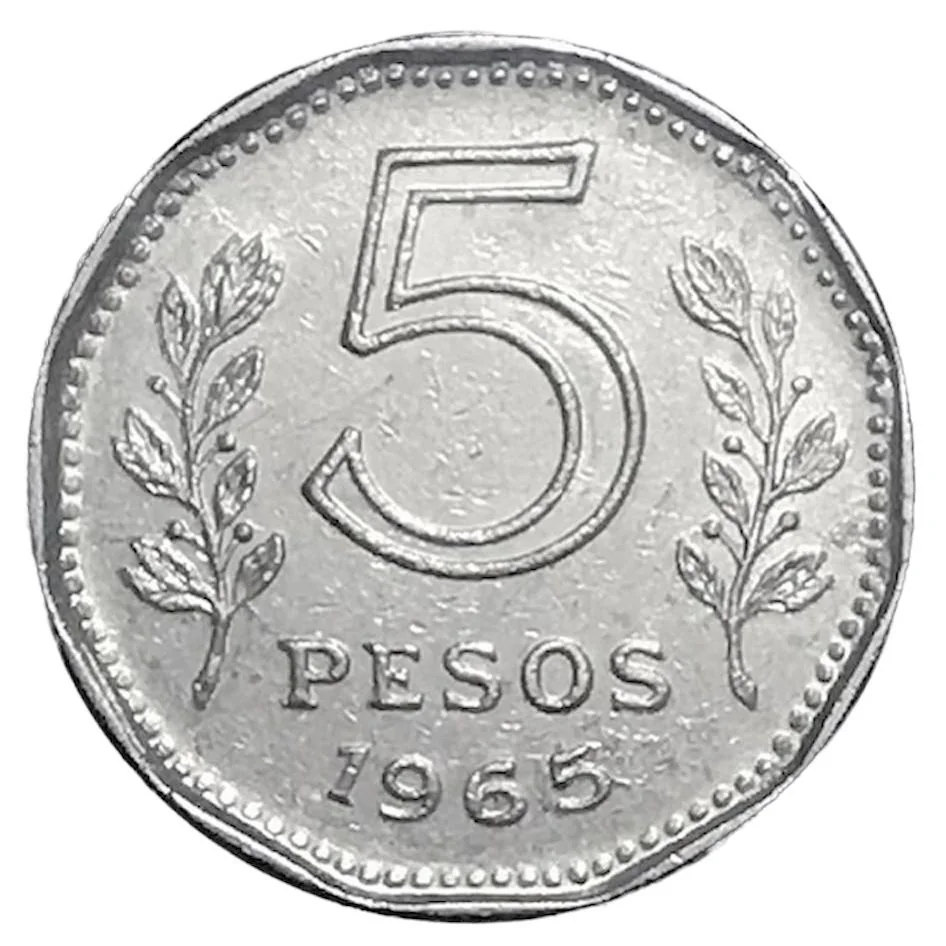
Exchange value: 5 ARM
Obverse
Description:
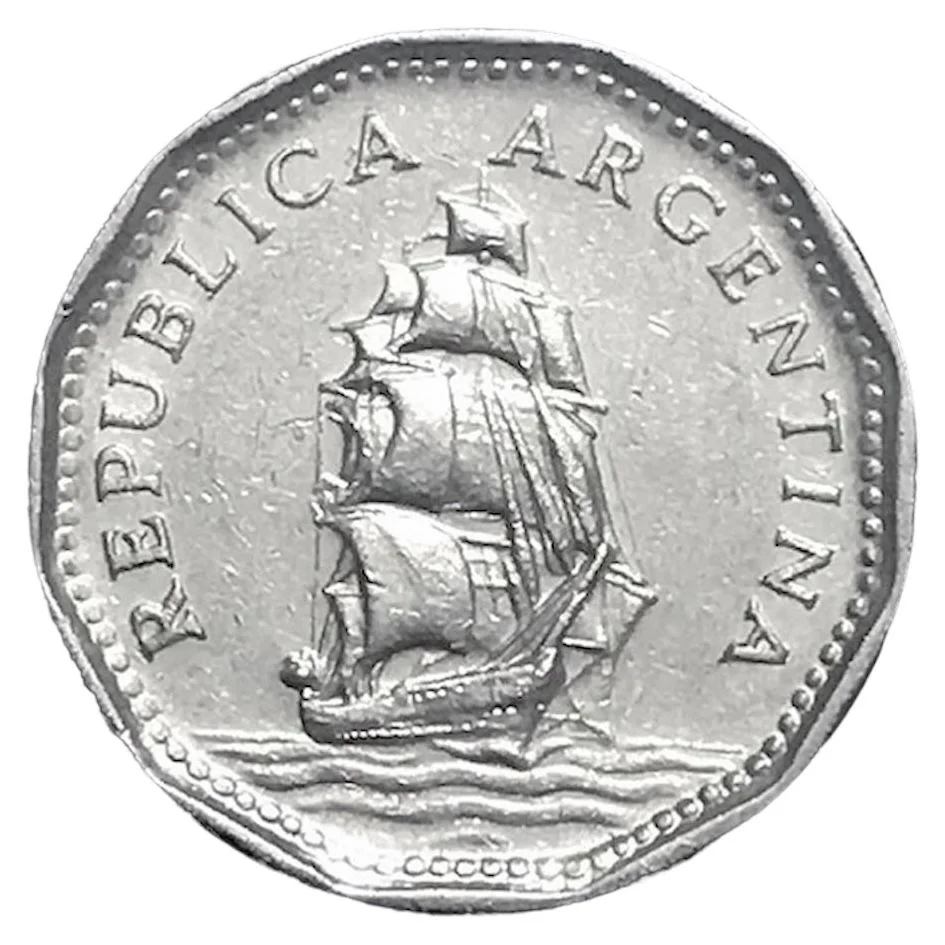
The Presidente Sarmiento, a former naval training frigate, is now an Argentine Navy museum ship.
Inscription:
REPUBLICA ARGENTINA
Translation:
Argentine Republic
Script: Latin
Language: Spanish
Engraver: Jorge Nicastro
Reverse
Edge
Plain
Categories
| Transportation> Watercraft |
Mintings
| Year | Mint Mark | Mintage | Quality | Collection |
|---|---|---|---|---|
| 1961 | — | 37,423,464 | ||
| 1962 | — | 42,361,657 | ||
| 1963 | — | 71,769,406 | ||
| 1964 | — | 12,302,000 | ||
| 1965 | — | 19,450,000 | ||
| 1966 | — | 17,259,472 | ||
| 1967 | — | 17,806,000 | ||
| 1968 | — | 12,633,567 |
Historical background
In 1961, Argentina was in the grip of a profound and recurring economic crisis, characterized by chronic inflation, fiscal deficits, and a severe shortage of foreign exchange. The period followed the tumultuous presidency of Juan Perón, whose policies of state-led industrialization and social spending had left a legacy of economic imbalances. The government of President Arturo Frondizi, who took office in 1958, was attempting a difficult stabilization program under guidance from the International Monetary Fund (IMF). This program aimed to curb inflation and attract foreign investment, but it operated within a complex system of multiple exchange rates designed to control the flow of dollars and protect specific sectors.
The currency situation was defined by a strict exchange control regime. The Central Bank maintained an overvalued official exchange rate for essential imports and debt servicing, while a parallel "free" market existed for most other transactions, where the Argentine peso traded at a significant discount. This created a powerful incentive for capital flight, as individuals and businesses sought to move money abroad at the more favorable parallel rate. The scarcity of U.S. dollars in the official market led to frequent devaluations and rationing, stifling industrial growth that relied on imported machinery and creating a booming black market for foreign currency.
Despite Frondizi's efforts to restore confidence through agreements with the IMF and foreign oil companies, the underlying structural problems persisted. Inflation remained high, eroding purchasing power, and political resistance to austerity measures grew. The year 1961 saw continued pressure on the peso, with the gap between the official and parallel rates exposing the lack of confidence in government policy. This fragile currency environment set the stage for the deeper crises that would follow, culminating in a major devaluation in 1962 and contributing to Frondizi's overthrow by the military in March of that year.
The currency situation was defined by a strict exchange control regime. The Central Bank maintained an overvalued official exchange rate for essential imports and debt servicing, while a parallel "free" market existed for most other transactions, where the Argentine peso traded at a significant discount. This created a powerful incentive for capital flight, as individuals and businesses sought to move money abroad at the more favorable parallel rate. The scarcity of U.S. dollars in the official market led to frequent devaluations and rationing, stifling industrial growth that relied on imported machinery and creating a booming black market for foreign currency.
Despite Frondizi's efforts to restore confidence through agreements with the IMF and foreign oil companies, the underlying structural problems persisted. Inflation remained high, eroding purchasing power, and political resistance to austerity measures grew. The year 1961 saw continued pressure on the peso, with the gap between the official and parallel rates exposing the lack of confidence in government policy. This fragile currency environment set the stage for the deeper crises that would follow, culminating in a major devaluation in 1962 and contributing to Frondizi's overthrow by the military in March of that year.
🌱 Very Common