

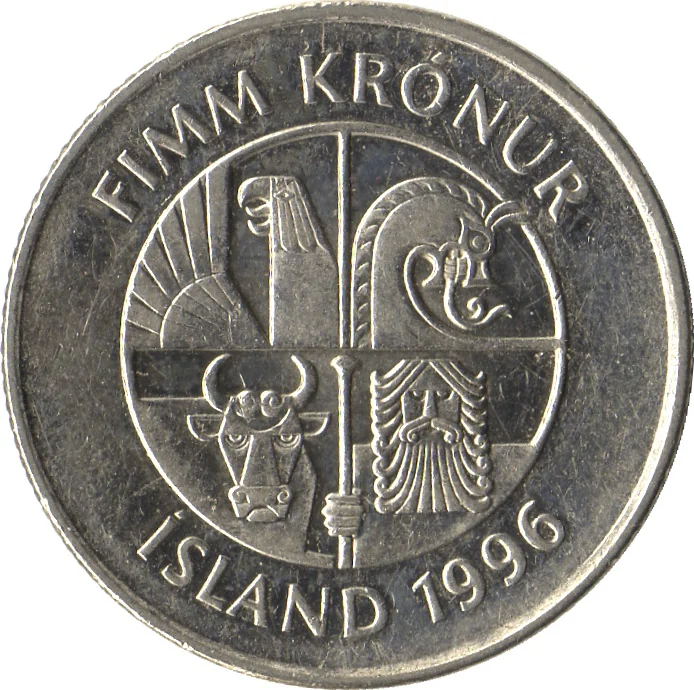
Obverse
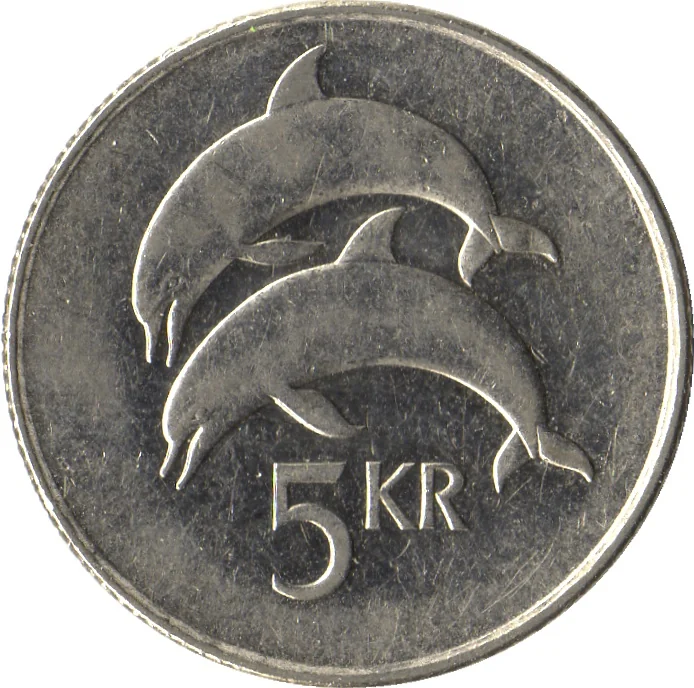
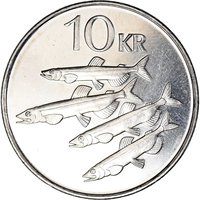
Reverse
Edge
Reeded
Categories
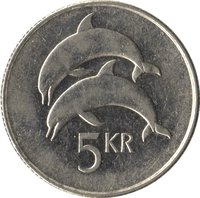
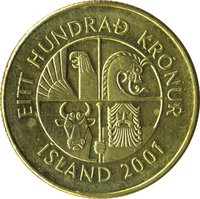
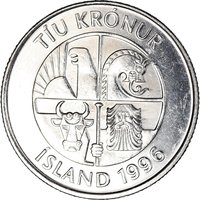
| Animal> Bird |
| Animal> Cow |
| Animal> Marine mammal |
| Mythology> Fantastic animal |
Mintings
| Year | Mint Mark | Mintage | Quality | Collection |
|---|---|---|---|---|
| 1996 | — | 1,500,000 | ||
| 1999 | — | 2,000,000 | ||
| 2000 | — | 10,000 | BU | |
| 2000 | — | 10,000 | In sets | |
| 2005 | — | 2,000,000 | ||
| 2007 | — | 10,000,000 | ||
| 2008 | — | 1,900,000 |
Historical background
In 1996, Iceland's currency situation was defined by a tightly controlled exchange rate regime and the ongoing challenge of managing persistent inflation. The Icelandic króna (ISK) was pegged to a trade-weighted basket of currencies, a policy maintained by the Central Bank of Iceland to provide stability and anchor expectations. However, this stability came at a cost. To defend the peg, the central bank was forced to maintain high interest rates, which in turn attracted speculative capital inflows and contributed to a significant appreciation of the real exchange rate. This overvaluation hurt the competitiveness of Iceland's vital export sectors, particularly the fisheries industry.
The period was marked by a difficult balancing act for monetary authorities. While the peg had helped to lower inflation from the extreme highs of the 1980s, it still remained stubbornly high by international standards, often exceeding the government's targets. This created a policy dilemma: the tools needed to defend the fixed exchange rate (high interest rates) were at odds with the need to support economic growth and export competitiveness. Furthermore, the financial system was still relatively regulated and underdeveloped, with capital controls limiting the free flow of money in and out of the country.
The situation in 1996 can be seen as the calm before a significant transformation. The pressures built into the system—the overvalued króna, the tension between internal and external stability, and the constraints of capital controls—set the stage for major changes in the following decade. Within a few years, Iceland would embark on a path of rapid financial liberalization, dismantling the very controls that defined the 1996 landscape and ultimately moving to a free-floating exchange rate in 2001, which unleashed a new era of economic volatility and, eventually, crisis.
The period was marked by a difficult balancing act for monetary authorities. While the peg had helped to lower inflation from the extreme highs of the 1980s, it still remained stubbornly high by international standards, often exceeding the government's targets. This created a policy dilemma: the tools needed to defend the fixed exchange rate (high interest rates) were at odds with the need to support economic growth and export competitiveness. Furthermore, the financial system was still relatively regulated and underdeveloped, with capital controls limiting the free flow of money in and out of the country.
The situation in 1996 can be seen as the calm before a significant transformation. The pressures built into the system—the overvalued króna, the tension between internal and external stability, and the constraints of capital controls—set the stage for major changes in the following decade. Within a few years, Iceland would embark on a path of rapid financial liberalization, dismantling the very controls that defined the 1996 landscape and ultimately moving to a free-floating exchange rate in 2001, which unleashed a new era of economic volatility and, eventually, crisis.
🌱 Very Common