

45 piastres (Cyprus under British Rule) – Cyprus
Add to wishlist
Circulating commemorative coins
Commemoration: 50 Years of Cyprus under British Rule
Cyprus
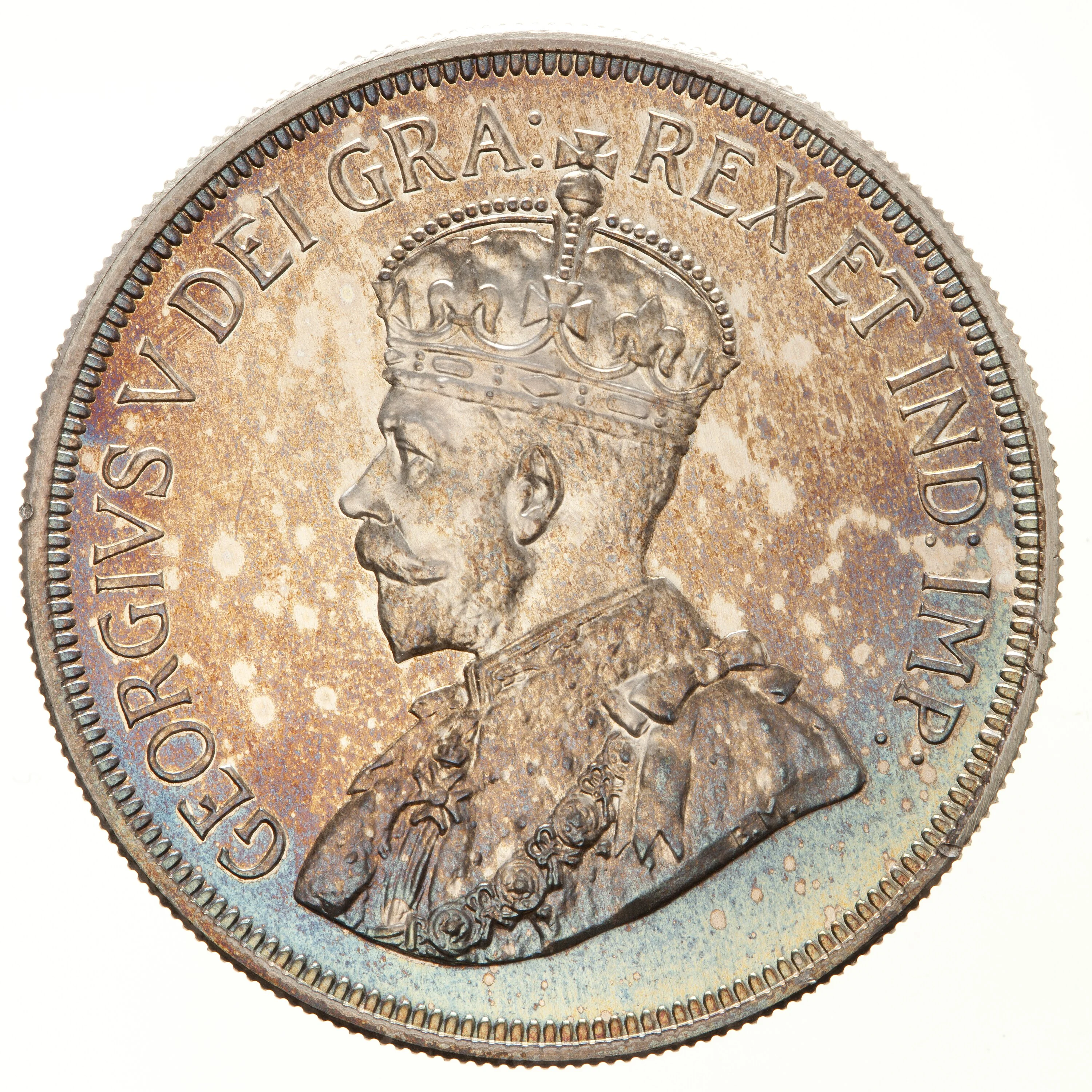
Obverse
Description:
King George V, left-facing portrait with his royal title.
Inscription:
GEORGIVS V DEI GRA: REX ET IND: IMP:
Translation:
George V by the Grace of God: King and Emperor of India.
Script: Latin
Language: Latin
Designer: Edgar Bertram MacKennal
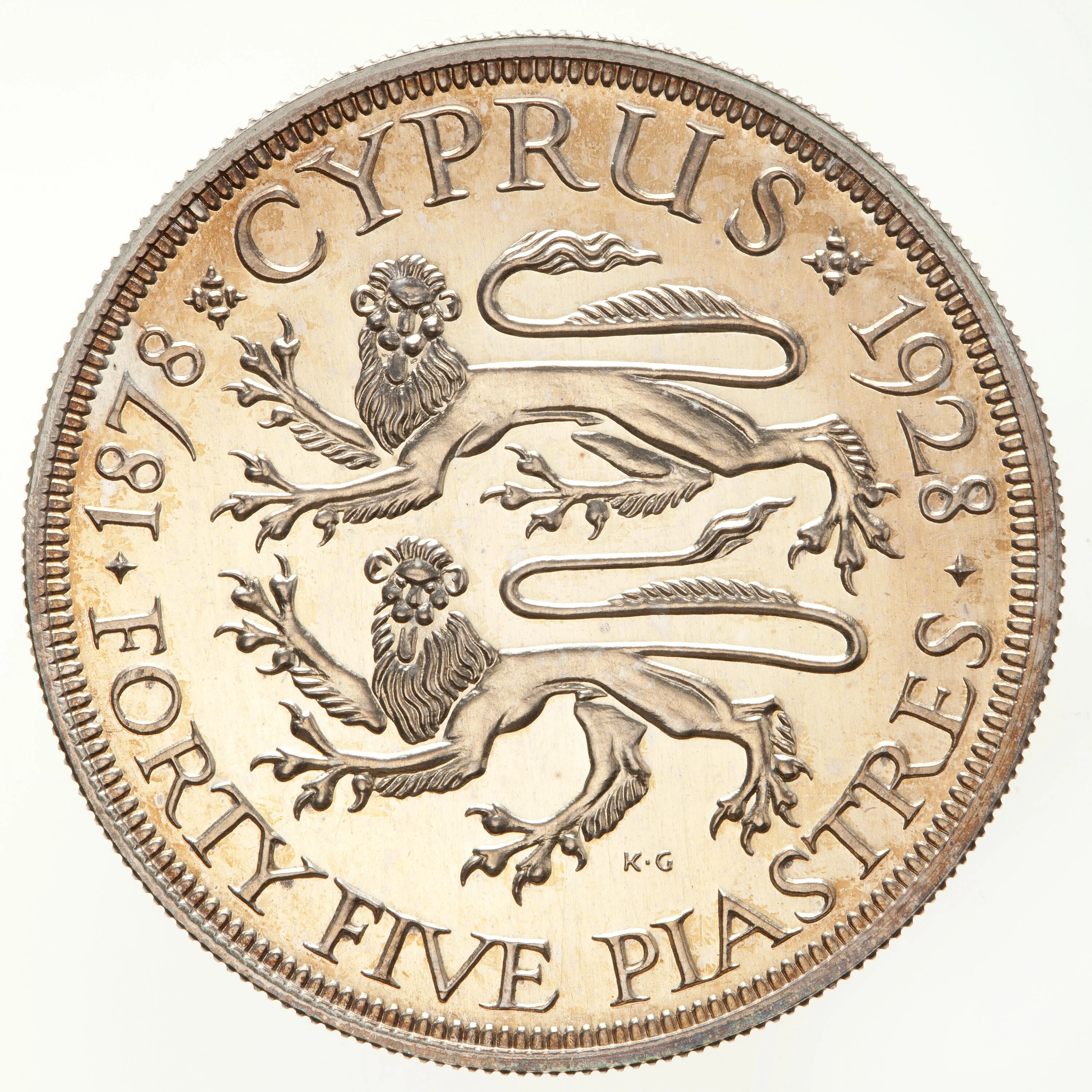
Reverse
Description:
Two lions from the Lusignan Cypriot coat of arms.
Inscription:
1878 * CYPRUS * 1928
K·G
·FORTY FIVE PIASTRES·
K·G
·FORTY FIVE PIASTRES·
Script: Latin
Designer: George Kruger Gray
Edge
Milled
Mints
| Name | Mark |
|---|---|
| Royal Mint (Tower Hill) | — |
Mintings
| Year | Mint Mark | Mintage | Quality | Collection |
|---|---|---|---|---|
| 1928 | — | 80,000 | ||
| 1928 | — | 517 | Proof |
Historical background
In 1928, Cyprus was under British colonial administration, having been formally annexed in 1914. The island's currency situation was complex, reflecting its historical ties and contemporary governance. Since 1879, the official currency had been the Cypriot pound (£C), which was pegged at par with the British pound sterling. However, in practice, a multitude of currencies circulated, including British gold sovereigns, Turkish gold liras, and French francs, a legacy of the island's Ottoman past and its Mediterranean trade.
The year 1928 marked a pivotal legislative change aimed at simplifying and modernizing this system. The British colonial government passed the Currency Law of 1928, which demonetized the remaining Ottoman gold coins and formally established a new, distinct Cypriot currency. While still called the pound and pegged to sterling, the new banknotes and coins were issued by a Cyprus Currency Board established in London, ensuring full convertibility with sterling held in reserve. This move effectively integrated Cyprus into the sterling area, providing monetary stability and facilitating trade with Britain.
This reform was a significant step in consolidating British economic control and streamlining the island's fiscal administration. It replaced a heterogeneous system with a unified, colonial currency managed from the metropole. The 1928 law laid the foundation for Cyprus's currency regime for decades, lasting through the remainder of British rule and beyond independence in 1960 until the Cypriot pound was eventually replaced by the euro in 2008.
The year 1928 marked a pivotal legislative change aimed at simplifying and modernizing this system. The British colonial government passed the Currency Law of 1928, which demonetized the remaining Ottoman gold coins and formally established a new, distinct Cypriot currency. While still called the pound and pegged to sterling, the new banknotes and coins were issued by a Cyprus Currency Board established in London, ensuring full convertibility with sterling held in reserve. This move effectively integrated Cyprus into the sterling area, providing monetary stability and facilitating trade with Britain.
This reform was a significant step in consolidating British economic control and streamlining the island's fiscal administration. It replaced a heterogeneous system with a unified, colonial currency managed from the metropole. The 1928 law laid the foundation for Cyprus's currency regime for decades, lasting through the remainder of British rule and beyond independence in 1960 until the Cypriot pound was eventually replaced by the euro in 2008.
🌱 Fairly Common