

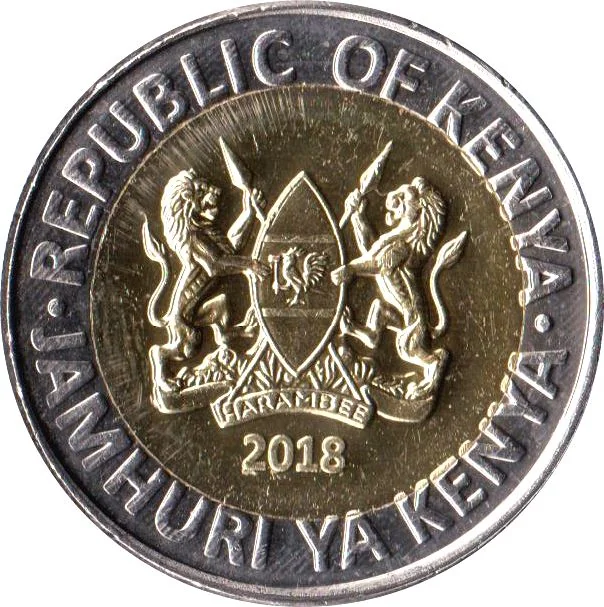
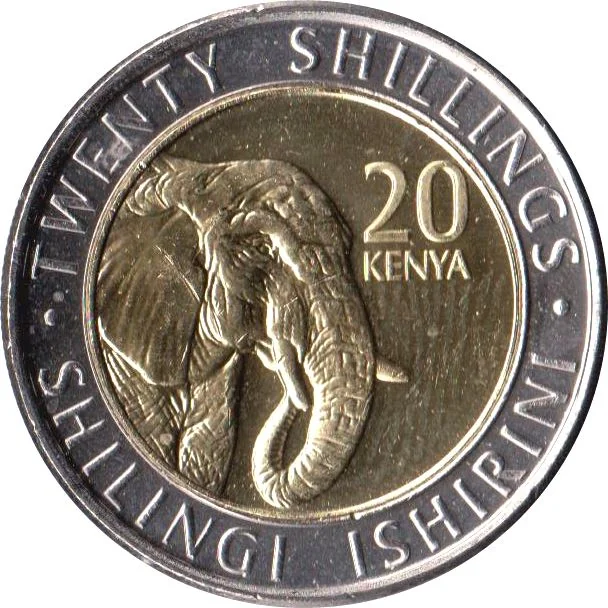
20 shillings – Kenya
Add to wishlist
Kenya
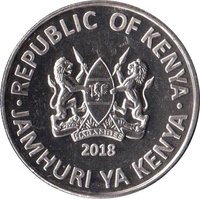
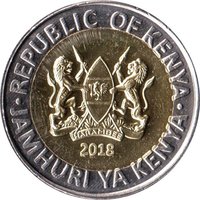
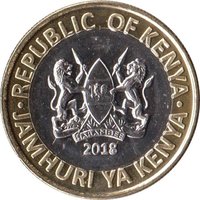
Obverse
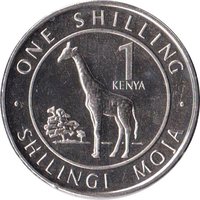
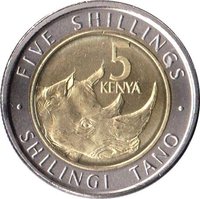
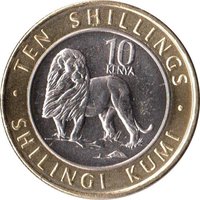
Reverse
Edge
Alternate: Plain/Reeded.
Categories
| Animal> Elephant |
| Symbols> Coat of Arms |
Mints
| Name | Mark |
|---|---|
| Royal Mint | — |
Mintings
| Year | Mint Mark | Mintage | Quality | Collection |
|---|---|---|---|---|
| 2018 | — | — |
Historical background
In 2018, Kenya's currency situation was characterized by significant volatility and sustained pressure on the Kenyan Shilling (KES). The year began with the shilling trading at around 102.5 against the US dollar, but it faced consistent depreciation pressures throughout, occasionally breaching the 104 mark. This weakness was primarily driven by a strong US dollar globally, a widening current account deficit, and heightened importer demand for foreign currency, particularly from the energy sector. Furthermore, investor sentiment was cautious in the lead-up to the repeat presidential election in late 2017, the effects of which lingered into early 2018, contributing to uncertainty.
The Central Bank of Kenya (CBK) actively intervened to stabilize the shilling, utilizing its foreign exchange reserves. Reserves were maintained above the statutory requirement of 4 months of import cover, often hovering around USD 8 billion, which provided a buffer. The CBK's monetary policy committee also held the benchmark interest rate steady at 9.5% for most of the year to anchor inflation and support the currency. Despite these measures, the shilling's depreciation contributed to imported inflation, though overall inflation remained within the government's target range of 2.5%-7.5%, averaging about 4.7% for the year, partly due to lower food prices.
Underlying structural issues in the economy exacerbated the currency pressures. Kenya's current account deficit remained high, estimated at 5.4% of GDP, fueled by a large trade imbalance. While remittances from the diaspora, tourism earnings, and tea exports provided crucial inflows, they were insufficient to fully offset the cost of importing machinery, petroleum, and consumer goods. Consequently, 2018 ended with a shilling that was noticeably weaker than at the start of the year, reflecting the ongoing challenge of balancing external deficits with the need for currency stability in an emerging market economy.
The Central Bank of Kenya (CBK) actively intervened to stabilize the shilling, utilizing its foreign exchange reserves. Reserves were maintained above the statutory requirement of 4 months of import cover, often hovering around USD 8 billion, which provided a buffer. The CBK's monetary policy committee also held the benchmark interest rate steady at 9.5% for most of the year to anchor inflation and support the currency. Despite these measures, the shilling's depreciation contributed to imported inflation, though overall inflation remained within the government's target range of 2.5%-7.5%, averaging about 4.7% for the year, partly due to lower food prices.
Underlying structural issues in the economy exacerbated the currency pressures. Kenya's current account deficit remained high, estimated at 5.4% of GDP, fueled by a large trade imbalance. While remittances from the diaspora, tourism earnings, and tea exports provided crucial inflows, they were insufficient to fully offset the cost of importing machinery, petroleum, and consumer goods. Consequently, 2018 ended with a shilling that was noticeably weaker than at the start of the year, reflecting the ongoing challenge of balancing external deficits with the need for currency stability in an emerging market economy.
🌱 Common