

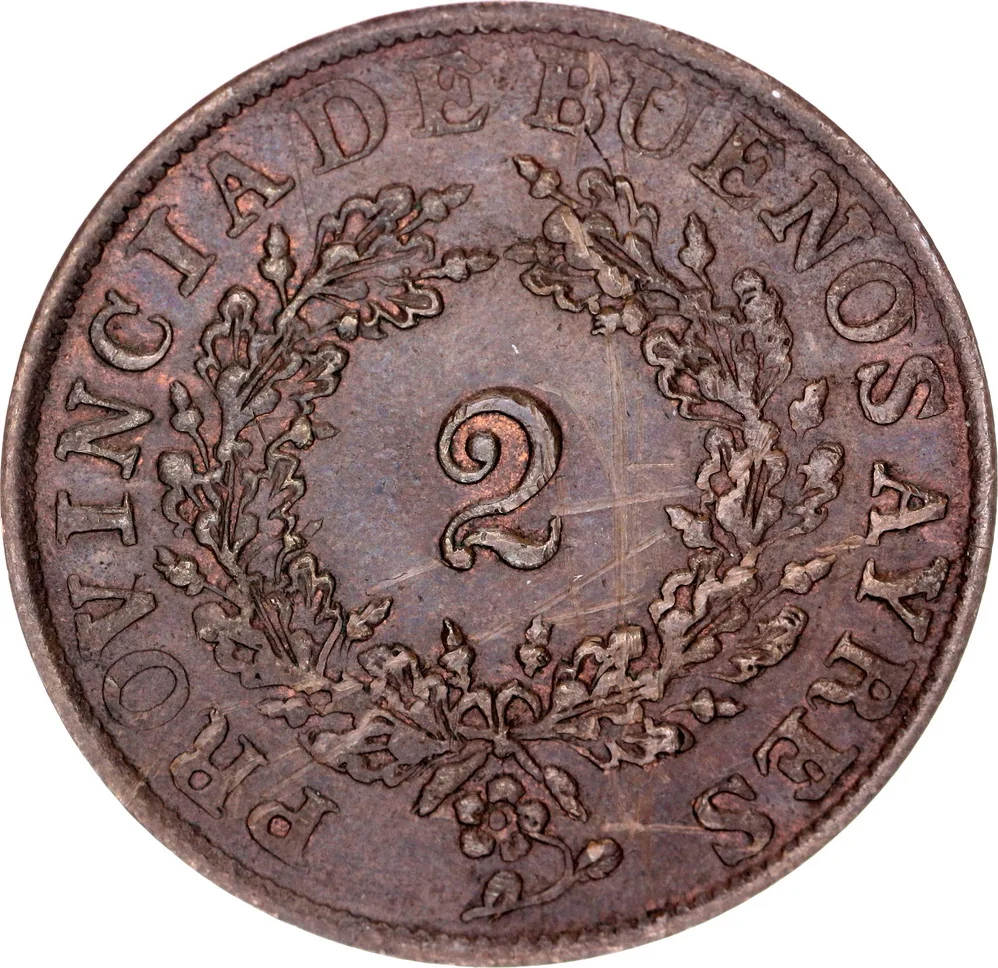
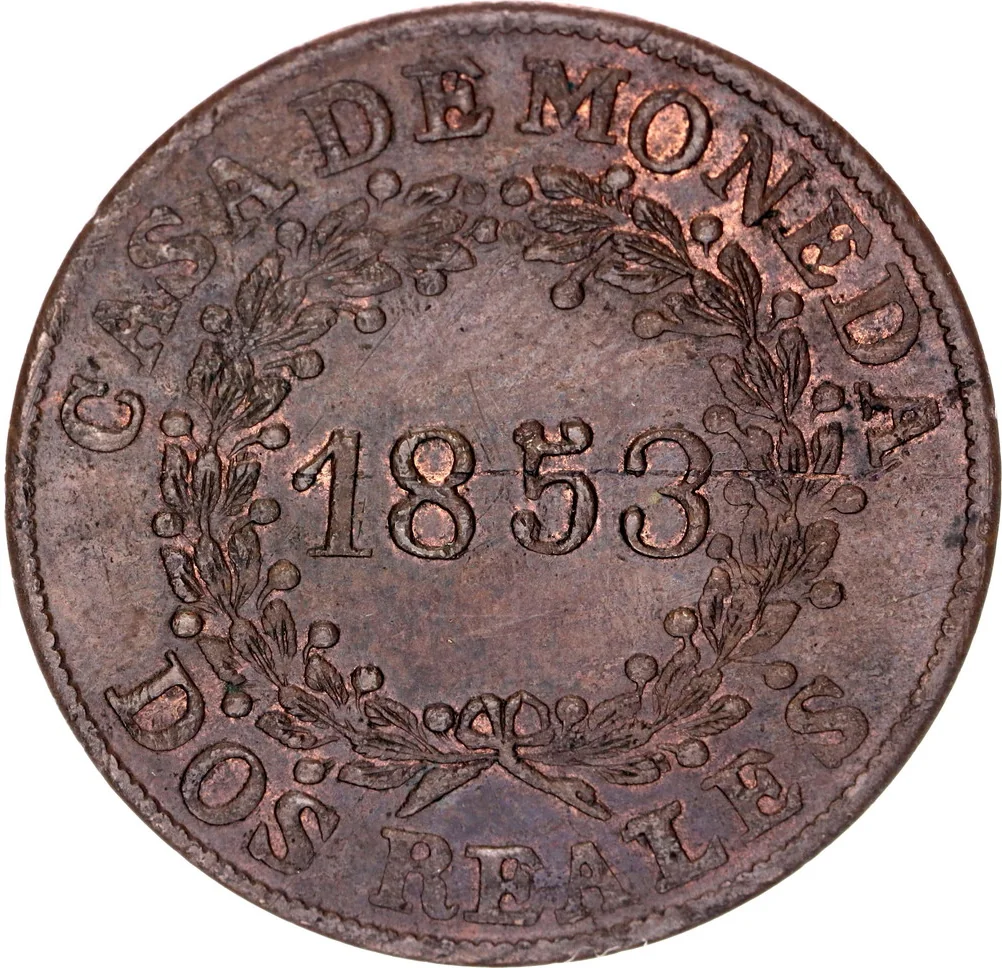
2 reales – Buenos Aires
Add to wishlist
Argentina
Context
Years: 1853–1856
Country: Argentina
Issuer: Buenos Aires
Period:
(1853—1861)
Currency:
(1822—1861)
Demonetized: Yes
Material
References
KM: #
Numista: #15454
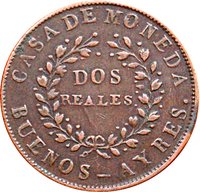
Obverse
Reverse
Edge
Plain
Mints
| Name | Mark |
|---|---|
| Buenos Aires | — |
Mintings
| Year | Mint Mark | Mintage | Quality | Collection |
|---|---|---|---|---|
| 1853 | — | — | ||
| 1854 | — | — | ||
| 1855 | — | — | ||
| 1856 | — | — |
Historical background
In 1853, Buenos Aires found itself in a complex and precarious currency situation, caught between its political secession from the Argentine Confederation and the lingering economic chaos of the Rosas era. Following the Battle of Caseros in 1852 and the fall of Juan Manuel de Rosas, the province rejected the federal constitution and became a separate state. This political isolation exacerbated existing monetary disorders. The circulating medium was a bewildering mixture of pesos fuertes (hard silver pesos), heavily devalued paper money from the Rosas period, and a multitude of foreign coins, primarily from Bolivia, Chile, and Peru, all circulating at fluctuating and arbitrary values.
The core of the problem was the province's own paper currency, the peso moneda corriente, which was inconvertible and not backed by specie. Issued abundantly to finance the state's deficits, especially military costs, it suffered from severe inflation and lack of public confidence. Meanwhile, the peso fuerte (a silver coin worth 17 reales) became the stable unit of account for major transactions and international trade, creating a dual-system where prices were often quoted in both currencies with a wide and volatile gap. This "agio," or premium on silver over paper, was a daily economic fact, eroding purchasing power and complicating all commerce.
Recognizing this instability as a barrier to progress and foreign investment, the government of Pastor Obligado took decisive action in 1853. It initiated a monetary reform by founding the Casa de Moneda de Buenos Aires (Buenos Aires Mint) in 1854, with the aim of issuing its own standardized silver and gold coins to displace the chaotic foreign specie. More importantly, it granted a concession to a private consortium, which would establish the Banco de la Provincia de Buenos Aires in 1855. This bank was tasked with issuing a new, convertible paper currency, a bold step intended to restore fiscal order and lay the financial foundation for the province's independent growth during its decade of separation.
The core of the problem was the province's own paper currency, the peso moneda corriente, which was inconvertible and not backed by specie. Issued abundantly to finance the state's deficits, especially military costs, it suffered from severe inflation and lack of public confidence. Meanwhile, the peso fuerte (a silver coin worth 17 reales) became the stable unit of account for major transactions and international trade, creating a dual-system where prices were often quoted in both currencies with a wide and volatile gap. This "agio," or premium on silver over paper, was a daily economic fact, eroding purchasing power and complicating all commerce.
Recognizing this instability as a barrier to progress and foreign investment, the government of Pastor Obligado took decisive action in 1853. It initiated a monetary reform by founding the Casa de Moneda de Buenos Aires (Buenos Aires Mint) in 1854, with the aim of issuing its own standardized silver and gold coins to displace the chaotic foreign specie. More importantly, it granted a concession to a private consortium, which would establish the Banco de la Provincia de Buenos Aires in 1855. This bank was tasked with issuing a new, convertible paper currency, a bold step intended to restore fiscal order and lay the financial foundation for the province's independent growth during its decade of separation.
🌱 Fairly Common