

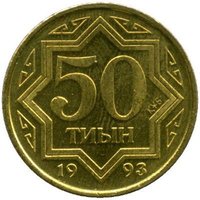
50 Tyin – Kazakhstan
Kazakhstan
Context
Material
References
KM: #Click to copy to clipboard5
Numista: #1542
Value
Exchange value: 0.50 KZT
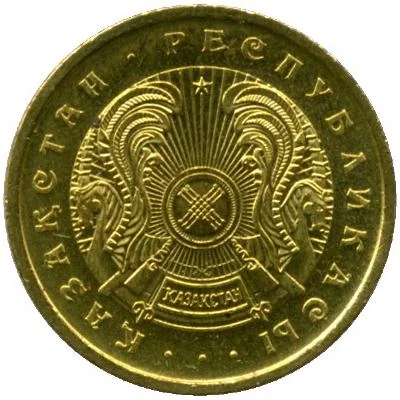
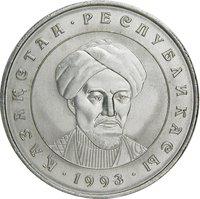
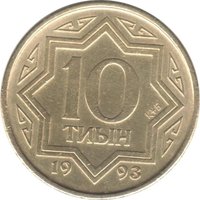
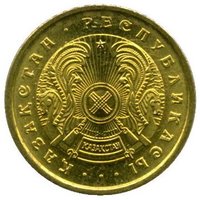
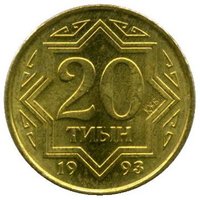
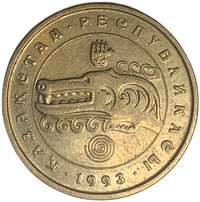
Obverse
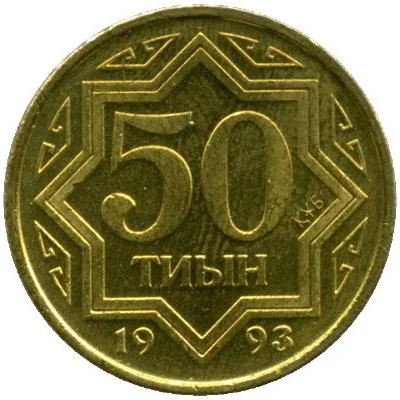
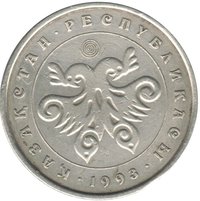
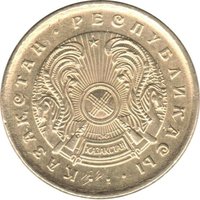
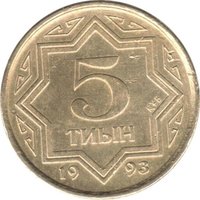
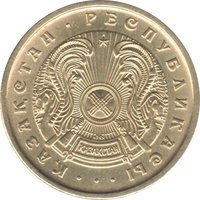
Reverse
Edge
Plain
Categories
| Symbols> Coat of Arms |
Mints
| Name | Mark |
|---|---|
| Kazakhstan Mint | (ҚҰБ) |
Mintings
| Year | Mint Mark | Mintage | Quality | Collection |
|---|---|---|---|---|
| 1993 | ҚҰБ | — | ||
| 1993 | ҚҰБ | 50,000 | Proof |
Historical background
In 1993, Kazakhstan faced a profound currency crisis stemming directly from the dissolution of the Soviet Union. As a newly independent state, it initially remained within the "Ruble Zone," using the Russian ruble as its currency. This arrangement quickly proved untenable, as Russia’s own aggressive economic reforms and loose monetary policy led to hyperinflation across the ruble zone. Kazakhstan had no control over the money supply flooding its economy, resulting in skyrocketing prices, wiped-out savings, and severe economic instability, while Russia began to pressure former Soviet states to exit the shared currency.
The situation culminated on November 15, 1993, when President Nursultan Nazarbayev took the decisive step of introducing the national currency, the tenge. This was a monumental logistical undertaking, planned in secrecy and executed in a remarkably short period. The tenge was not introduced at a fixed parity with the ruble but was instead allowed to float, initially valued significantly higher in an effort to combat inflation and assert monetary sovereignty. The transition effectively ended Kazakhstan’s dependence on Russia’s central bank and was a critical assertion of national economic independence.
The immediate aftermath was challenging, as the population grappled with the exchange process and the new currency initially faced volatility and continued inflationary pressures. However, the introduction of the tenge provided the foundational tool for Kazakhstan to pursue its own independent monetary and fiscal policies. It marked the definitive end of the Soviet economic space for the republic and laid the essential groundwork for future macroeconomic stabilization and reform in the years that followed.
The situation culminated on November 15, 1993, when President Nursultan Nazarbayev took the decisive step of introducing the national currency, the tenge. This was a monumental logistical undertaking, planned in secrecy and executed in a remarkably short period. The tenge was not introduced at a fixed parity with the ruble but was instead allowed to float, initially valued significantly higher in an effort to combat inflation and assert monetary sovereignty. The transition effectively ended Kazakhstan’s dependence on Russia’s central bank and was a critical assertion of national economic independence.
The immediate aftermath was challenging, as the population grappled with the exchange process and the new currency initially faced volatility and continued inflationary pressures. However, the introduction of the tenge provided the foundational tool for Kazakhstan to pursue its own independent monetary and fiscal policies. It marked the definitive end of the Soviet economic space for the republic and laid the essential groundwork for future macroeconomic stabilization and reform in the years that followed.
🌱 Very Common