

1 Crown (Sir Winston Churchill's death) – Gibraltar
Non-circulating coins
Commemoration: 50 Years of the death of Sir Winston Churchill
United Kingdom
Context
Year: 2015
Country: United Kingdom 
Issuer: Gibraltar 
Ruler: Elizabeth II
Currency:
(since 1967)
Total mintage: 49,999
Material
References
KM: #Click to copy to clipboard1545b
Numista: #153983
Obverse
Description:
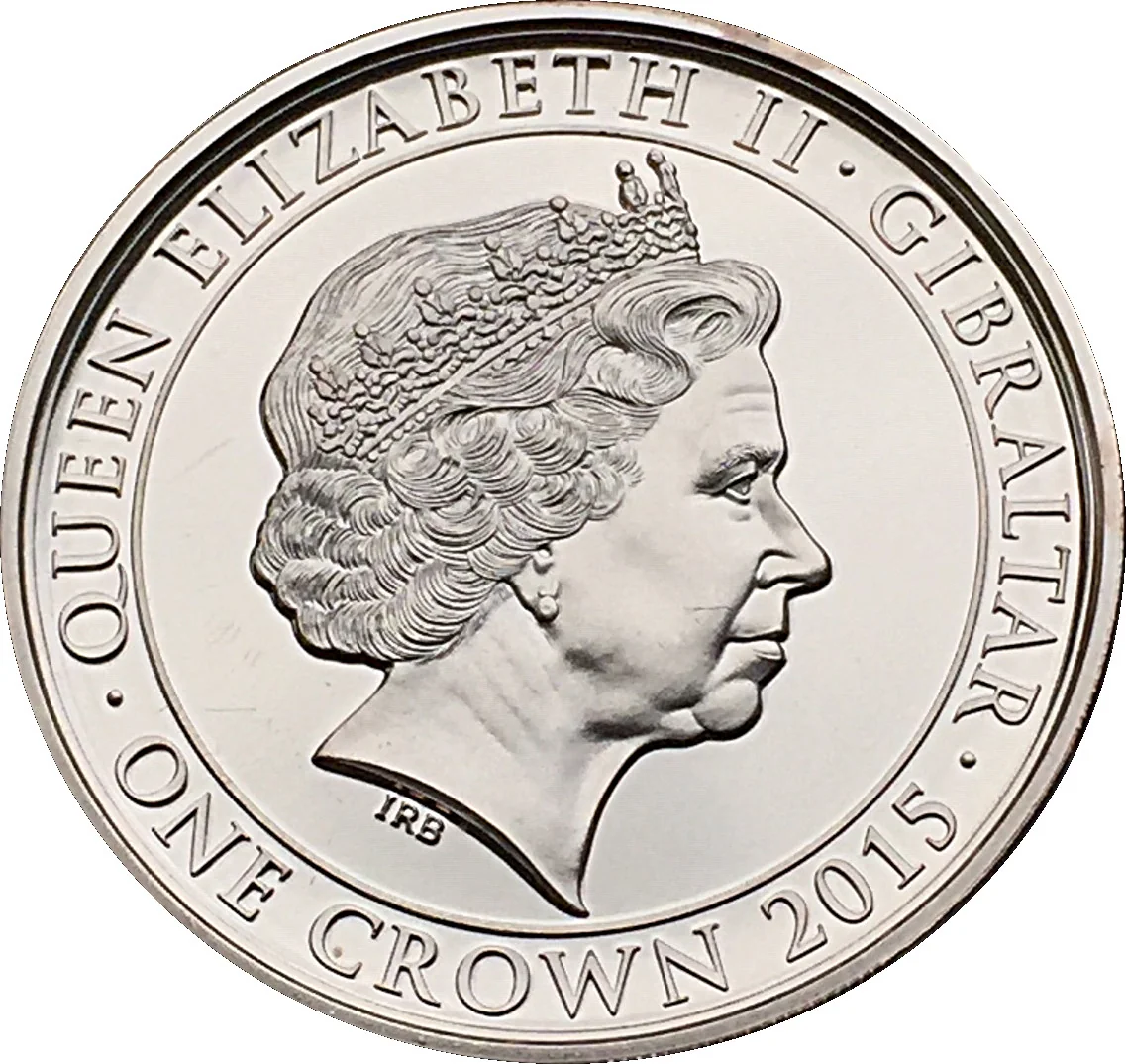
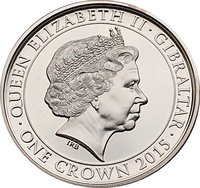
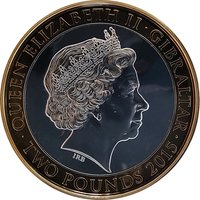
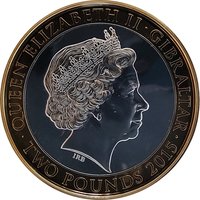
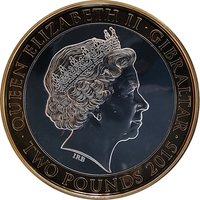
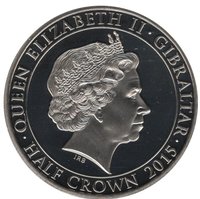
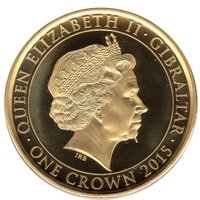
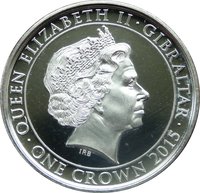
Queen Elizabeth II facing right, wearing the "Girls of Great Britain and Ireland" Tiara. Legend surrounds, with denomination and date below.
Inscription:
QUEEN ELIZABETH II
GIBRALTAR
ONE CROWN 2015
GIBRALTAR
ONE CROWN 2015
Script: Latin
Designer: Ian Rank-Broadley
Reverse
Description:
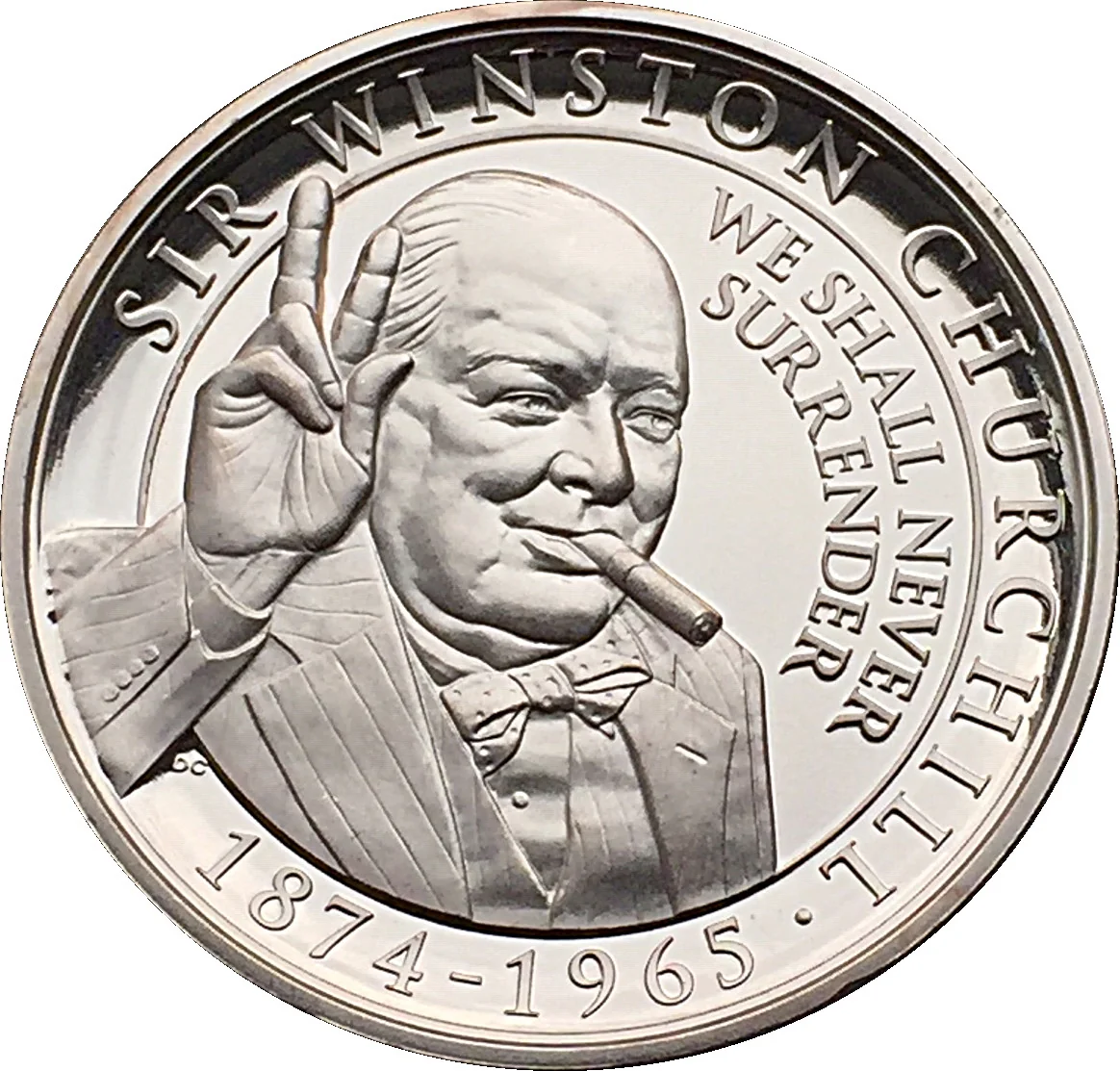
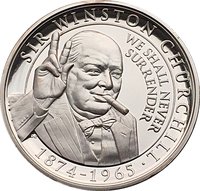
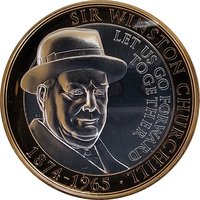
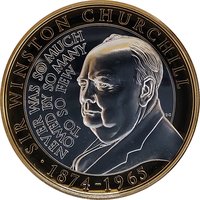
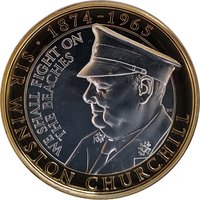
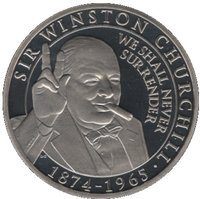
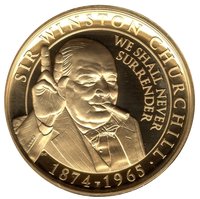
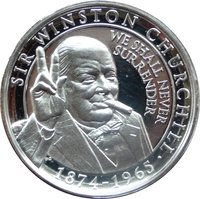
Churchill giving his V-sign, cigar in hand.
Inscription:
SIR WINSTON CHURCHILL
WE SHALL NEVER
SURRENDER
1874 - 1965
WE SHALL NEVER
SURRENDER
1874 - 1965
Script: Latin
Edge
Numbered
Categories
| Event> Death anniversary |
| Person> Military leader |
| Person> Politician |
Mintings
| Year | Mint Mark | Mintage | Quality | Collection |
|---|---|---|---|---|
| 2015 | — | 49,999 | BU |
Historical background
In 2015, Gibraltar's currency situation remained defined by its longstanding and unique dual-currency system, with both Pound Sterling (GBP) and its own Gibraltar pound (GIP) in circulation. The Gibraltar pound, issued by the Government of Gibraltar, is not legal tender in the United Kingdom but is pegged at par with Sterling and is freely interchangeable there in practice. This arrangement provided stability, with the UK pound serving as the de facto domestic currency for most significant transactions and savings, while locally issued notes and coins circulated for everyday use.
The year saw no major monetary policy shifts, as Gibraltar does not have an independent central bank; its currency board system and peg to Sterling meant its monetary conditions were directly anchored to the Bank of England's decisions. However, the broader economic context was influenced by the UK's continued recovery from the 2008 financial crisis and the looming political question of a potential British exit from the European Union ("Brexit"). As a British Overseas Territory outside the UK but inside the EU (through the UK's membership), Gibraltar's financial services sector—a pillar of its economy—was keenly aware of the currency and passporting risks a Brexit referendum could pose.
Consequently, while the day-to-day currency mechanics were stable and unchanged in 2015, underlying geopolitical concerns began to surface. The territory's reliance on the UK's monetary policy and its access to the EU single market meant that discussions in London and Brussels regarding a future referendum were watched closely. The currency peg itself was not in doubt, but the economic foundations that made Gibraltar an attractive location for banking and gaming—facilitated by its use of Sterling within the EU—were entering a period of profound uncertainty.
The year saw no major monetary policy shifts, as Gibraltar does not have an independent central bank; its currency board system and peg to Sterling meant its monetary conditions were directly anchored to the Bank of England's decisions. However, the broader economic context was influenced by the UK's continued recovery from the 2008 financial crisis and the looming political question of a potential British exit from the European Union ("Brexit"). As a British Overseas Territory outside the UK but inside the EU (through the UK's membership), Gibraltar's financial services sector—a pillar of its economy—was keenly aware of the currency and passporting risks a Brexit referendum could pose.
Consequently, while the day-to-day currency mechanics were stable and unchanged in 2015, underlying geopolitical concerns began to surface. The territory's reliance on the UK's monetary policy and its access to the EU single market meant that discussions in London and Brussels regarding a future referendum were watched closely. The currency peg itself was not in doubt, but the economic foundations that made Gibraltar an attractive location for banking and gaming—facilitated by its use of Sterling within the EU—were entering a period of profound uncertainty.
💎 Extremely Rare