

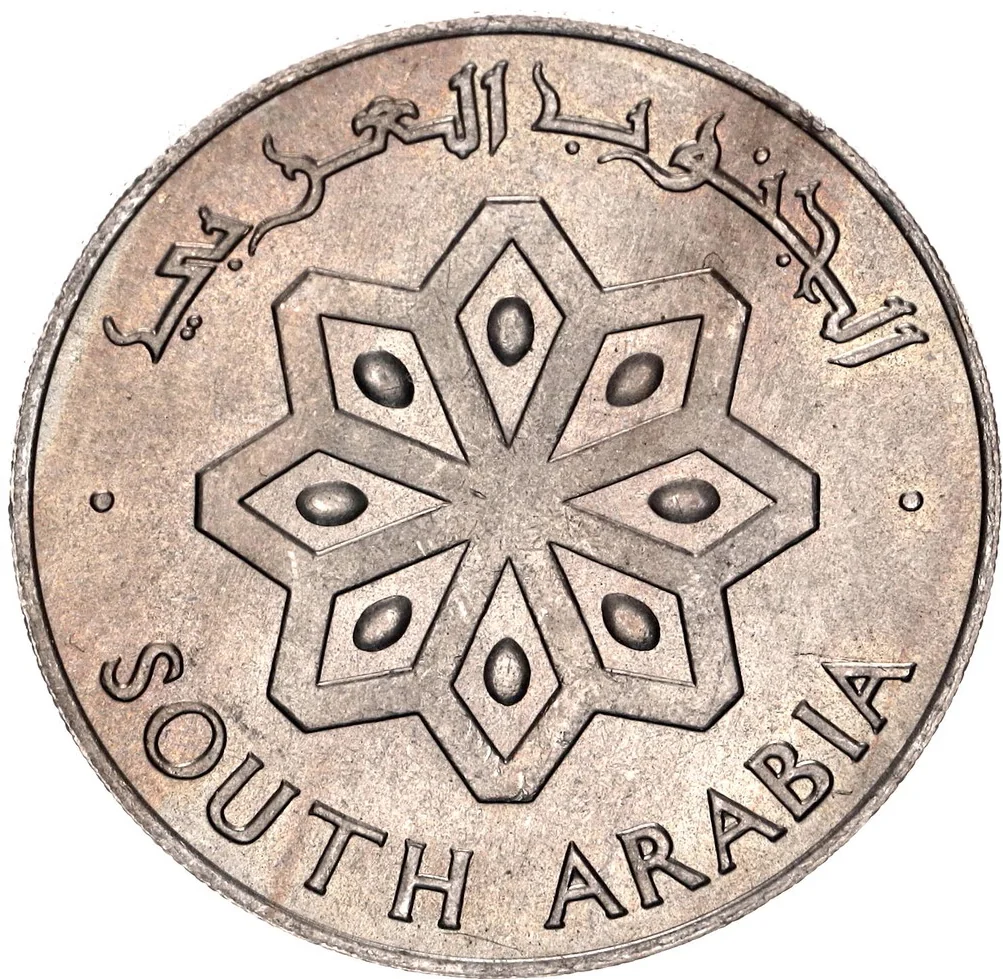
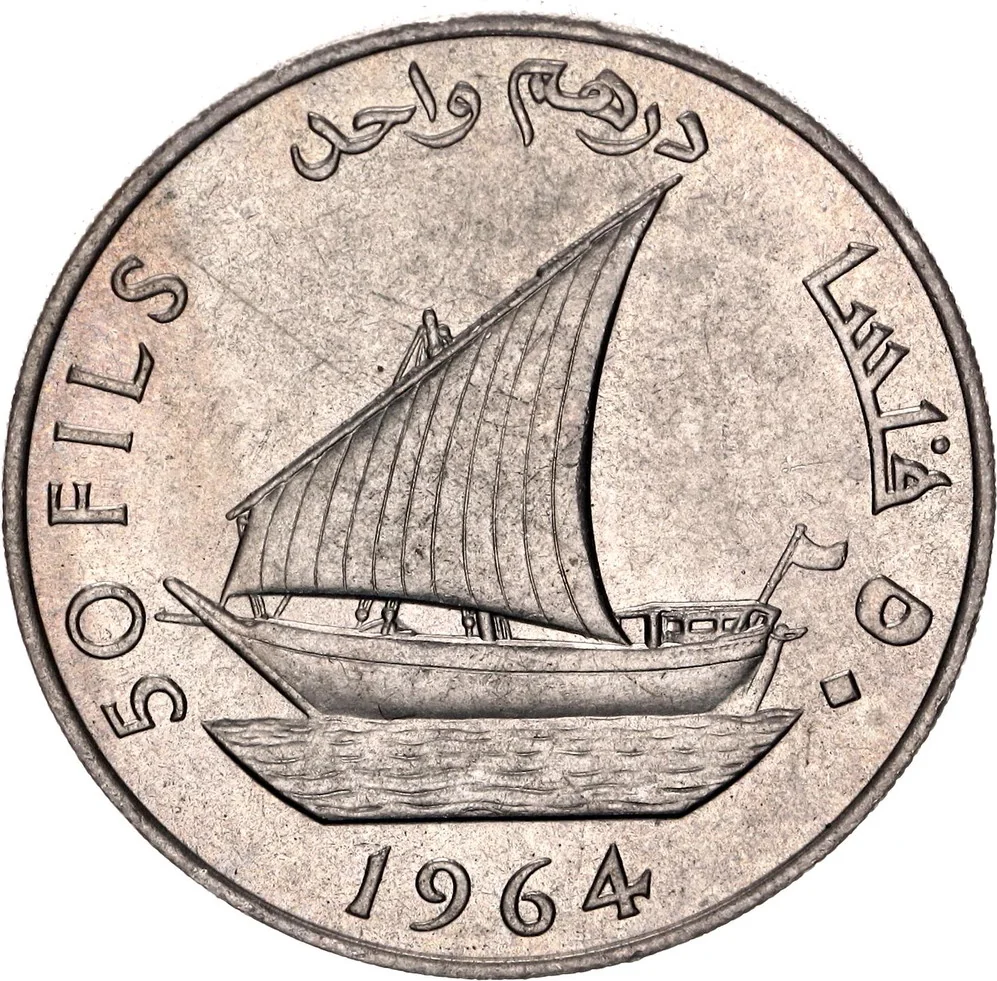
50 fils – South Arabia
Add to wishlist
Yemen
Context
Year: 1964
Country: Yemen
Issuer: South Arabia
Period:
(1962—1967)
Currency:
(1965—1967)
Demonetized: Yes
Total mintage: 6,010,500
Material
References
KM: #
Numista: #10524
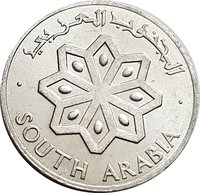
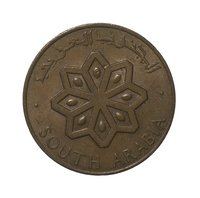
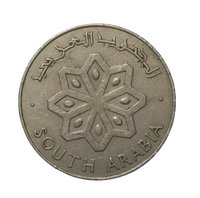
Obverse
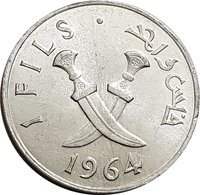
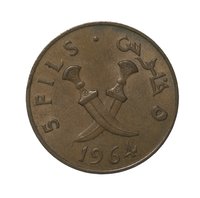
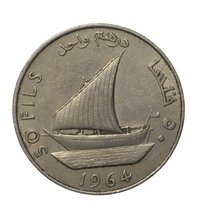
Reverse
Edge
Reeded
Categories
| Transportation> Watercraft |
Mints
| Name | Mark |
|---|---|
| Royal Mint (Tower Hill) | — |
Mintings
| Year | Mint Mark | Mintage | Quality | Collection |
|---|---|---|---|---|
| 1964 | — | 6,000,000 | ||
| 1964 | — | 10,500 | Proof |
Historical background
In 1964, the currency situation in South Arabia was complex and politically charged, reflecting the territory's transitional status. The region, then known as the Federation of South Arabia (comprising Aden Colony and the Aden Protectorate states), was under British administration and moving toward an uncertain independence. The official currency was the South Arabian dinar (SAD), introduced in 1965 to replace the East African shilling. However, in 1964, the shilling was still in active circulation, creating a dual-currency environment. The dinar was pegged to the British pound sterling at par, a move designed to ensure monetary stability and signal financial credibility to international markets as the federation sought to establish itself.
This currency structure was deeply intertwined with British colonial interests, particularly the strategic importance of the Aden port and military base. The peg to sterling facilitated trade and military expenditure but also tied the local economy directly to British monetary policy, limiting autonomous economic management. Furthermore, the system faced practical challenges, including public skepticism and the logistical difficulty of replacing the widely used shilling across a fragmented territory of sultanates and emirates with varying levels of administrative capacity.
Ultimately, the currency situation of 1964 was a microcosm of the broader political fragility of South Arabia. While intended as a tool for stability, the dinar's impending introduction occurred amidst rising nationalist fervor and anti-colonial insurgency, which would ultimately lead to the federation's collapse and the creation of the People's Republic of South Yemen in 1967. The new Marxist government would swiftly demonetize the South Arabian dinar, viewing it as a symbol of colonial rule, and replace it with the South Yemeni dinar, severing the peg to sterling.
This currency structure was deeply intertwined with British colonial interests, particularly the strategic importance of the Aden port and military base. The peg to sterling facilitated trade and military expenditure but also tied the local economy directly to British monetary policy, limiting autonomous economic management. Furthermore, the system faced practical challenges, including public skepticism and the logistical difficulty of replacing the widely used shilling across a fragmented territory of sultanates and emirates with varying levels of administrative capacity.
Ultimately, the currency situation of 1964 was a microcosm of the broader political fragility of South Arabia. While intended as a tool for stability, the dinar's impending introduction occurred amidst rising nationalist fervor and anti-colonial insurgency, which would ultimately lead to the federation's collapse and the creation of the People's Republic of South Yemen in 1967. The new Marxist government would swiftly demonetize the South Arabian dinar, viewing it as a symbol of colonial rule, and replace it with the South Yemeni dinar, severing the peg to sterling.
🌱 Very Common