

3 pence – Southern Rhodesia
Add to wishlist
Zimbabwe
Context
Years: 1932–1936
Country: Zimbabwe
Issuer: Southern Rhodesia
Ruler: George V
Currency:
(1932—1955)
Demonetization: 1 June 1965
Total mintage: 3,207,000
Material
References
KM: #
Numista: #15373
Value
Bullion value: $3.17
Obverse
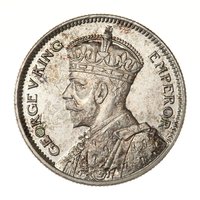
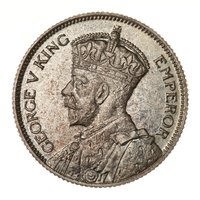
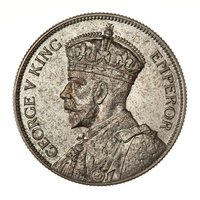
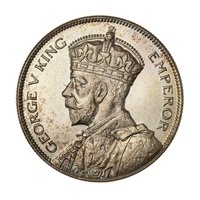
Description:
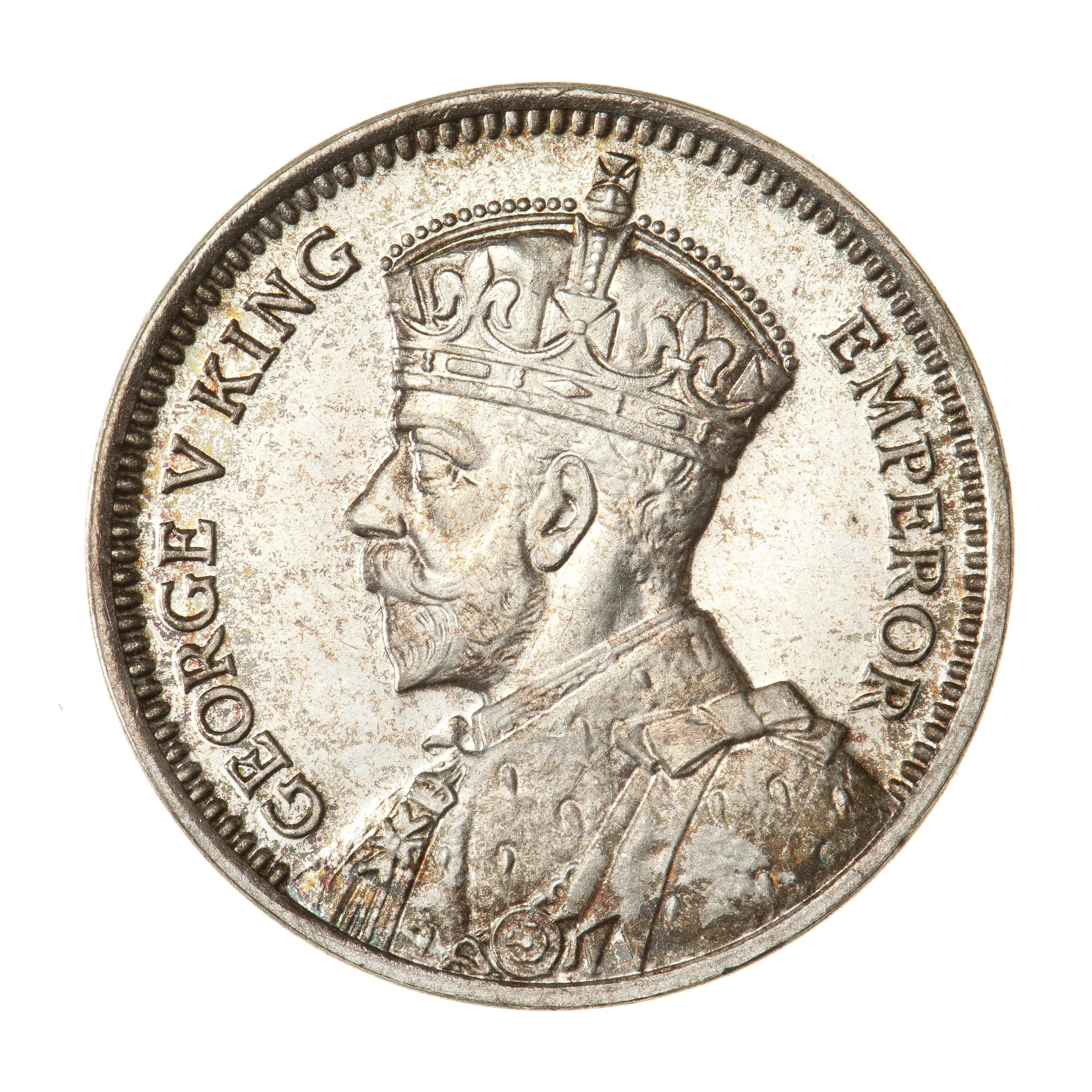
King George V left profile, surrounded by lettering.
Inscription:
GEORGE V KING EMPEROR
Translation:
GEORGE V KING EMPEROR
Script: Latin
Language: English
Engraver: Percy Metcalfe
Reverse
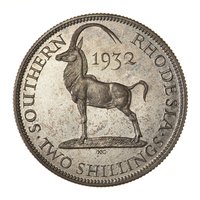
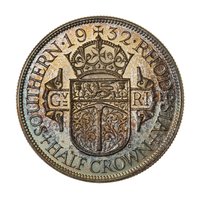
Description:
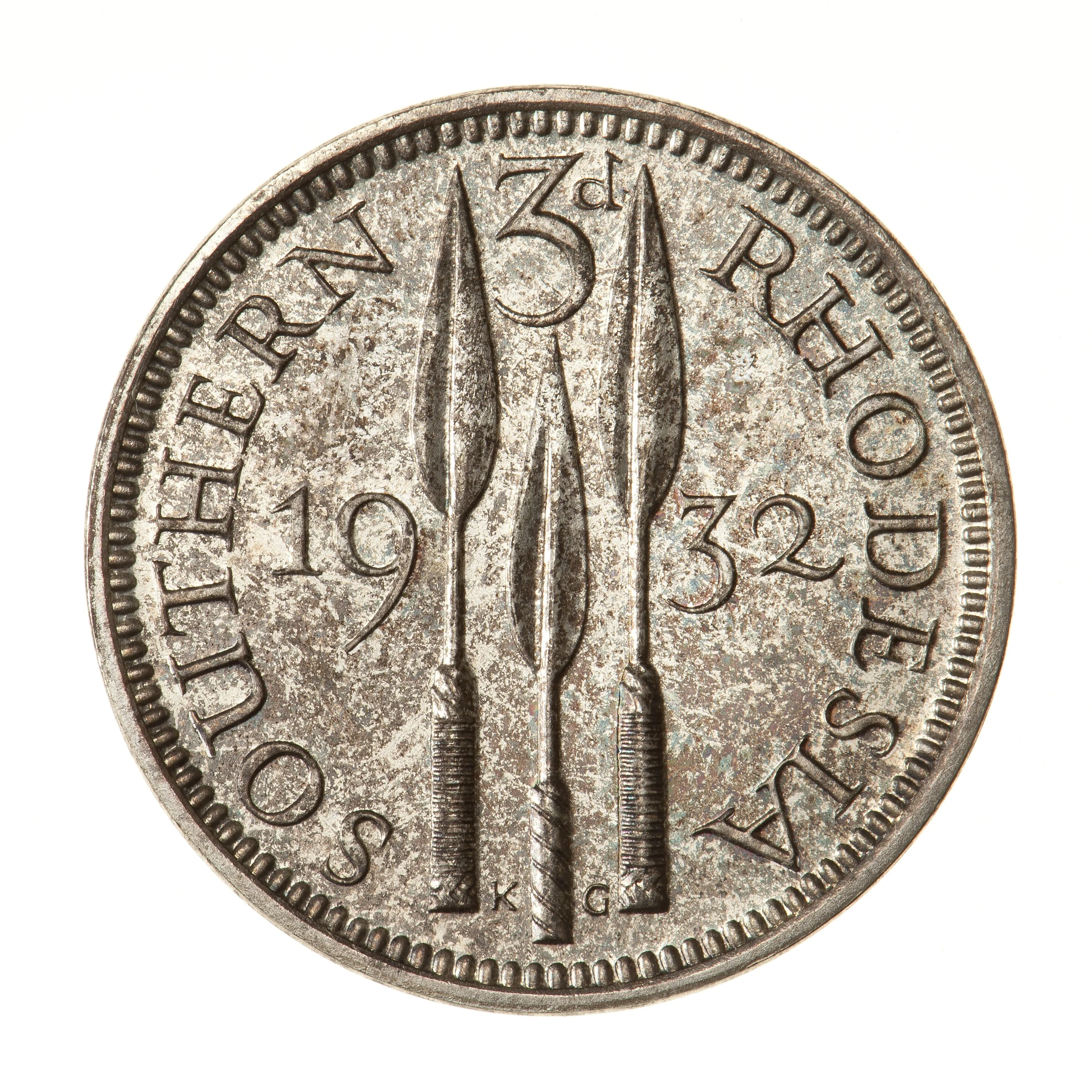
Date split by three spears, denomination above, name encircling.
Inscription:
SOUTHERN 3d RHODESIA
19 35
K G
19 35
K G
Script: Latin
Engraver: George Kruger Gray
Edge
Plain
Categories
| Symbol> Crown |
| Object> Cold weapons |
| Person> Monarch |
| Mustache/Beard |
Mints
| Name | Mark |
|---|---|
| Royal Mint (Tower Hill) | — |
Mintings
| Year | Mint Mark | Mintage | Quality | Collection |
|---|---|---|---|---|
| 1932 | — | — | Proof | |
| 1932 | — | 688,000 | ||
| 1934 | — | 628,000 | ||
| 1934 | — | — | Proof | |
| 1935 | — | 840,000 | ||
| 1935 | — | — | Proof | |
| 1936 | — | — | Proof | |
| 1936 | — | 1,051,000 |
Historical background
In 1932, Southern Rhodesia’s currency situation was fundamentally defined by its membership in the Sterling Area and its use of the Southern Rhodesian pound, which was pegged at par with the British pound sterling. This arrangement provided stability and facilitated trade with the United Kingdom, the colony's dominant economic partner. However, the global Great Depression, triggered by the 1929 Wall Street Crash, placed severe strain on this system. The colony's economy, heavily dependent on agricultural exports like tobacco and maize, suffered from collapsing commodity prices, leading to a sharp decline in government revenue and a balance of payments crisis.
The colonial government, led by Prime Minister Godfrey Huggins, faced difficult monetary policy choices. A key debate centred on whether to follow the United Kingdom, which had abandoned the gold standard in 1931 and allowed the pound to depreciate, or to maintain a harder currency link. Southern Rhodesia initially remained on the gold standard briefly after Britain left, but this threatened to make its exports even less competitive. Consequently, in early 1932, the colony aligned its currency policy with Britain’s, effectively taking the Southern Rhodesian pound off the gold standard and letting its value be determined by sterling's fluctuations on the foreign exchange market.
This decision to devalue alongside sterling provided some relief by making Rhodesian exports relatively cheaper and easing the debt burden for farmers and the government. However, the broader economic hardships of the Depression persisted throughout 1932, characterised by budget deficits, deflationary pressures, and significant unemployment. The currency situation thus reflected a pragmatic, if forced, choice to prioritise economic survival and imperial trade links over a rigid adherence to the pre-Depression monetary order, setting the stage for subsequent government interventions in the economy during the 1930s.
The colonial government, led by Prime Minister Godfrey Huggins, faced difficult monetary policy choices. A key debate centred on whether to follow the United Kingdom, which had abandoned the gold standard in 1931 and allowed the pound to depreciate, or to maintain a harder currency link. Southern Rhodesia initially remained on the gold standard briefly after Britain left, but this threatened to make its exports even less competitive. Consequently, in early 1932, the colony aligned its currency policy with Britain’s, effectively taking the Southern Rhodesian pound off the gold standard and letting its value be determined by sterling's fluctuations on the foreign exchange market.
This decision to devalue alongside sterling provided some relief by making Rhodesian exports relatively cheaper and easing the debt burden for farmers and the government. However, the broader economic hardships of the Depression persisted throughout 1932, characterised by budget deficits, deflationary pressures, and significant unemployment. The currency situation thus reflected a pragmatic, if forced, choice to prioritise economic survival and imperial trade links over a rigid adherence to the pre-Depression monetary order, setting the stage for subsequent government interventions in the economy during the 1930s.
🌱 Common