

½ penny – Southern Rhodesia
Add to wishlist
Zimbabwe
Context
Years: 1951–1952
Country: Zimbabwe
Issuer: Southern Rhodesia
Ruler: George VI
Currency:
(1932—1955)
Demonetization: 1 January 1973
Total mintage: 960,000
Material
Diameter: 21.1 mm
Weight: 2.92 g
Shape: Round with a round hole
Composition: Bronze
Magnetic: No
Technique: Milled
Alignment: Medal alignment
flip
References
KM: #
Numista: #15372
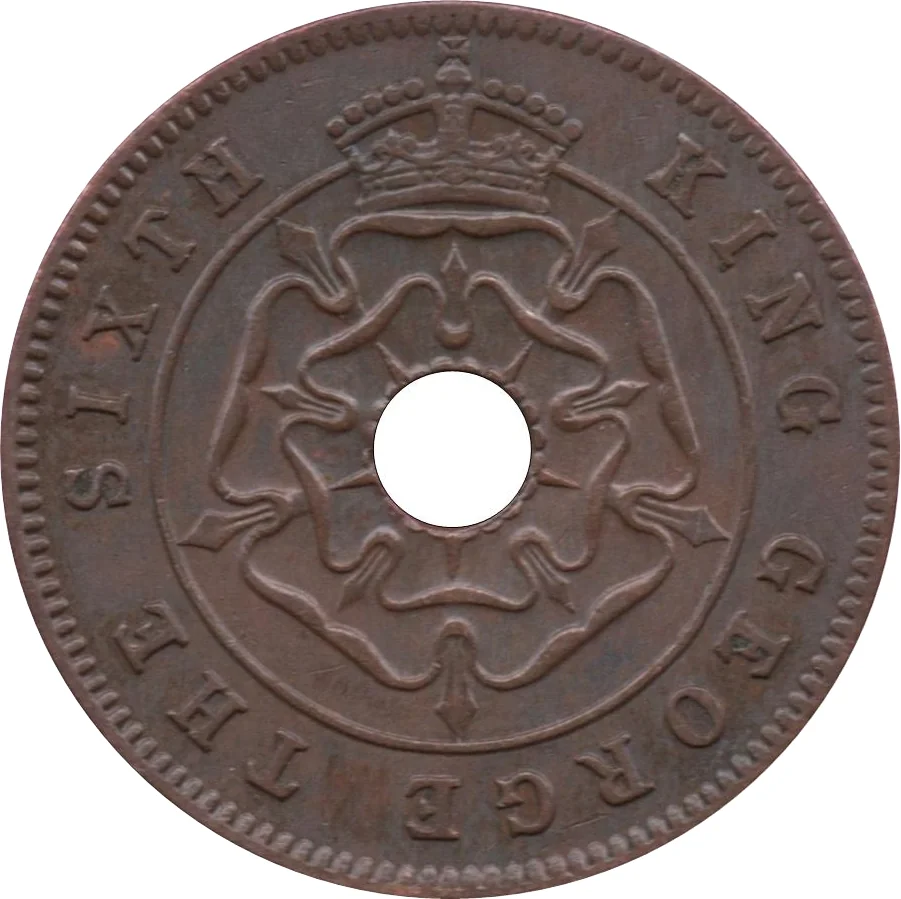
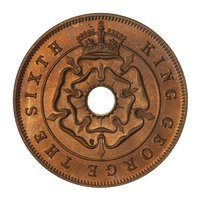
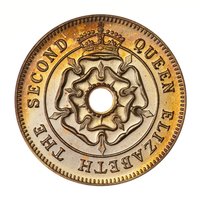
Obverse
Description:
Tudor rose emblem.
Inscription:
KING GEORGE THE SIXTH
Translation:
KING GEORGE THE SIXTH
Script: Latin
Language: English
Engraver: Derwent Wood
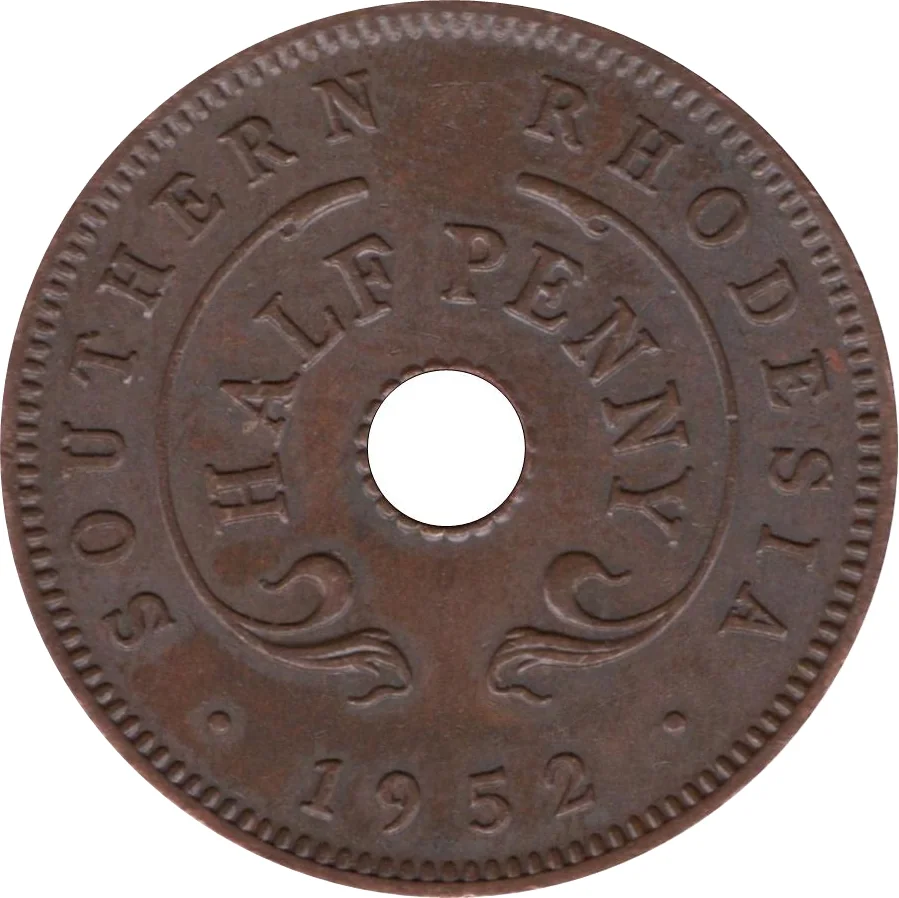
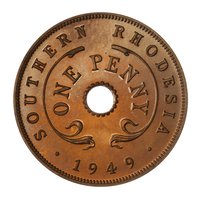
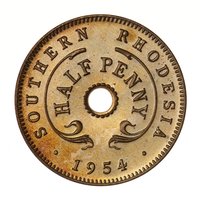
Reverse
Description:
Sprig design: name encircles, date below, value in sprigs, central hole.
Inscription:
SOUTHERN RHODESIA
HALF PENNY
1951
HALF PENNY
1951
Script: Latin
Engraver: Royal Mint Engravers
Edge
Plain
Mints
| Name | Mark |
|---|---|
| Royal Mint (Tower Hill) | — |
Mintings
| Year | Mint Mark | Mintage | Quality | Collection |
|---|---|---|---|---|
| 1951 | — | — | Proof | |
| 1951 | — | 480,000 | ||
| 1952 | — | 480,000 | ||
| 1952 | — | — | Proof |
Historical background
In 1951, Southern Rhodesia operated under a currency system directly tied to the British pound sterling as a member of the sterling area. The local currency was the Southern Rhodesian pound (£SR), which was issued by the Central African Currency Board (established in 1938) and maintained parity with the UK pound sterling (£1 SR = £1 UK). This arrangement provided monetary stability and facilitated trade and capital flows with Britain, the colony's dominant economic partner. The territory's economy was buoyant, driven by a post-World War II boom in tobacco and mineral exports, which bolstered its sterling reserves and reinforced confidence in the currency peg.
However, this sterling link also meant Southern Rhodesia had little independent monetary control, as its money supply and interest rates were largely dictated by British economic policy and the balance of payments of the wider sterling area. This became a point of growing discussion among local politicians and businessmen, who increasingly felt the needs of the expanding settler-led economy might be better served by a central bank with greater autonomy. The year 1951 fell within a period of transition, as the colony was moving toward federation with Northern Rhodesia and Nyasaland, a process that would directly impact monetary arrangements.
Consequently, 1951 can be seen as the final phase of a straightforward colonial currency board system. The impending creation of the Federation of Rhodesia and Nyasaland in 1953 would lead to the establishment of a new currency, the Rhodesia and Nyasaland pound, and the formation of the Central Bank of Rhodesia and Nyasaland in 1956. Therefore, while the currency situation in 1951 appeared stable and conventional on the surface, it was on the cusp of significant change driven by the political project of federation.
However, this sterling link also meant Southern Rhodesia had little independent monetary control, as its money supply and interest rates were largely dictated by British economic policy and the balance of payments of the wider sterling area. This became a point of growing discussion among local politicians and businessmen, who increasingly felt the needs of the expanding settler-led economy might be better served by a central bank with greater autonomy. The year 1951 fell within a period of transition, as the colony was moving toward federation with Northern Rhodesia and Nyasaland, a process that would directly impact monetary arrangements.
Consequently, 1951 can be seen as the final phase of a straightforward colonial currency board system. The impending creation of the Federation of Rhodesia and Nyasaland in 1953 would lead to the establishment of a new currency, the Rhodesia and Nyasaland pound, and the formation of the Central Bank of Rhodesia and Nyasaland in 1956. Therefore, while the currency situation in 1951 appeared stable and conventional on the surface, it was on the cusp of significant change driven by the political project of federation.
🌱 Fairly Common