

2 shillings – Southern Rhodesia
Add to wishlist
Zimbabwe
Context
Year: 1947
Country: Zimbabwe
Issuer: Southern Rhodesia
Ruler: George VI
Currency:
(1932—1955)
Demonetization: 1 June 1965
Total mintage: 3,750,000
Material
Diameter: 28.52 mm
Weight: 11.31 g
Thickness: 2.3 mm
Shape: Round
Composition: Copper-nickel
Technique: Milled
Alignment: Medal alignment
flip
References
KM: #
Numista: #15343
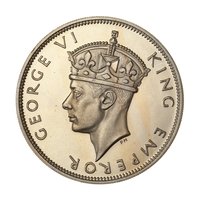
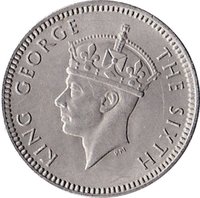
Obverse
Description:
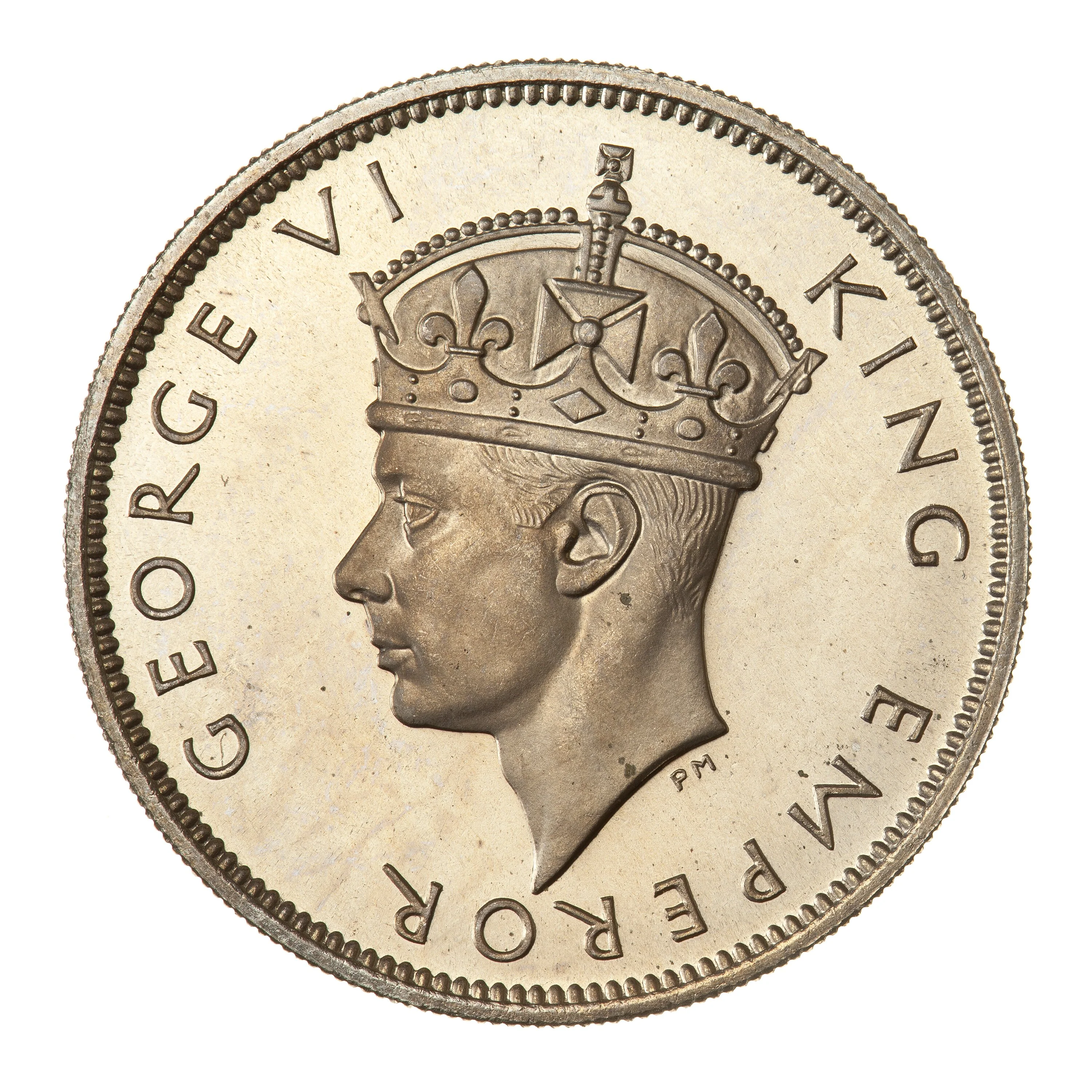
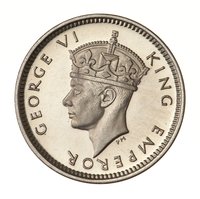
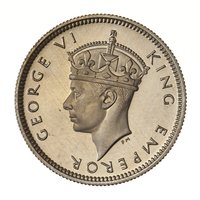
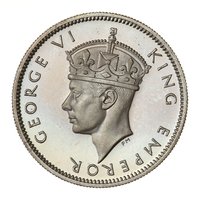
Portrait of George VI, King of the United Kingdom (1936–1952).
Inscription:
GEORGE VI KING EMPEROR
PM
PM
Translation:
GEORGE VI KING EMPEROR
PM
PM
Script: Latin
Language: English
Engraver: Percy Metcalfe
Reverse
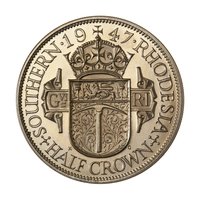
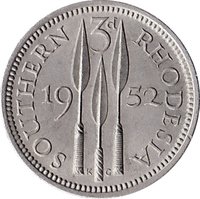
Description:
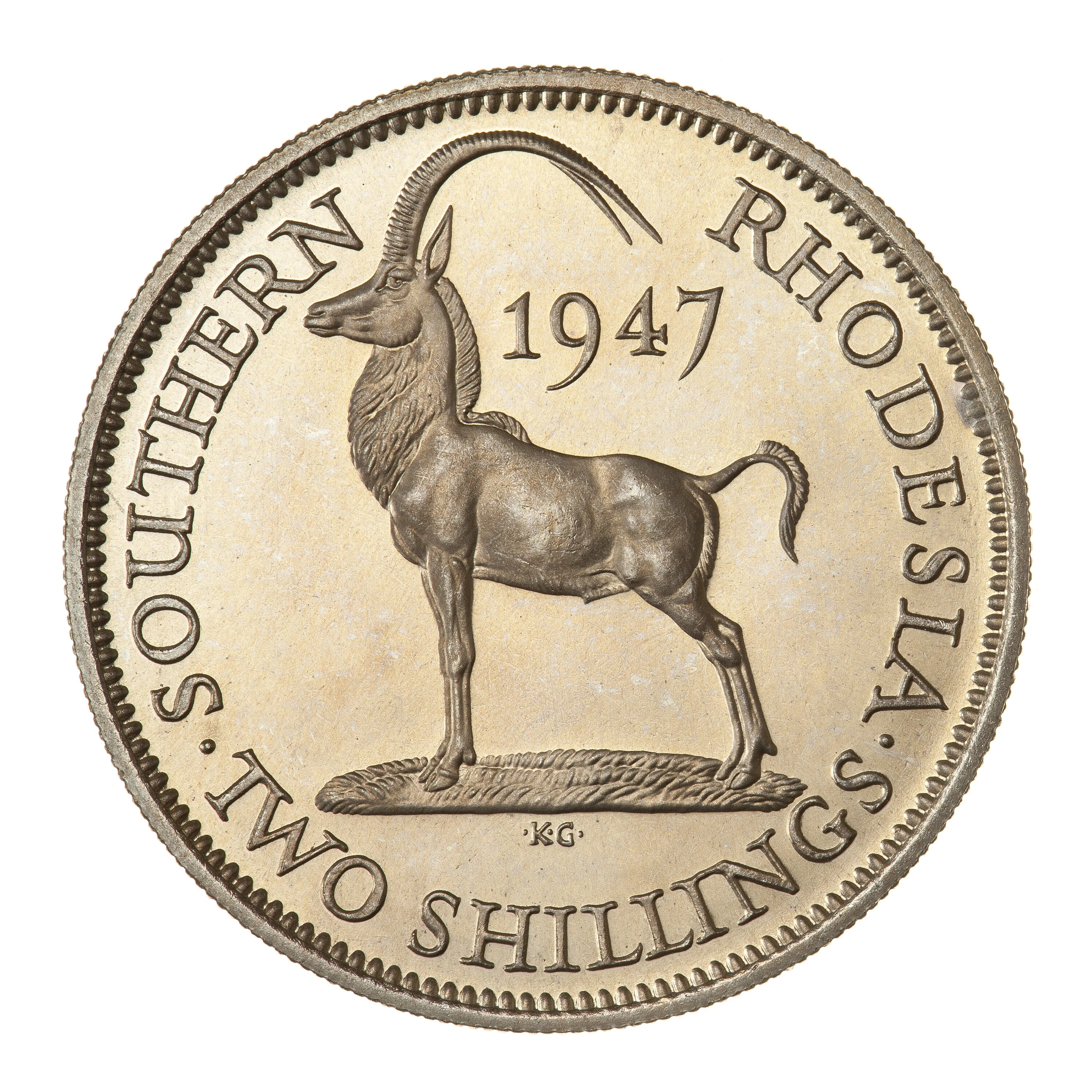
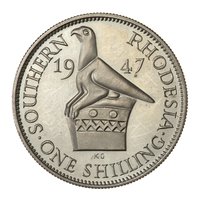
Sable Antelope (Hippotragus niger) facing left, with name and denomination.
Inscription:
SOUTHERN RHODESIA
1947
KG
· TWO SHILLINGS ·
1947
KG
· TWO SHILLINGS ·
Script: Latin
Engraver: George Kruger Gray
Edge
Reeded
Mints
| Name | Mark |
|---|---|
| Royal Mint (Tower Hill) | — |
Mintings
| Year | Mint Mark | Mintage | Quality | Collection |
|---|---|---|---|---|
| 1947 | — | 3,750,000 | ||
| 1947 | — | — | Proof |
Historical background
In 1947, Southern Rhodesia (present-day Zimbabwe) operated under a currency system directly tied to the British pound sterling. As a member of the sterling area, its currency, the Southern Rhodesian pound (£SR), was pegged at par with the UK pound. This meant its value and monetary policy were largely dictated by the British Treasury and the Bank of England, with the colony's currency board holding sterling reserves to fully back the local note issue. This arrangement provided stability and facilitated trade within the British Empire, but it also meant Southern Rhodesia had little independent control over its own money supply or interest rates.
The immediate post-war period presented significant economic challenges. Southern Rhodesia was experiencing rapid industrial and agricultural growth, fuelled in part by post-war commodity booms and immigration. This growth created a high demand for capital and imports, leading to a persistent balance of payments deficit with the rest of the sterling area. Consequently, the colony faced recurring shortages of sterling reserves, which triggered strict exchange controls to conserve hard currency. These controls, aligned with UK policy, prioritized essential imports and limited the outflow of capital, creating friction with local businesses and white settlers who desired more access to goods and investment opportunities.
Therefore, the currency situation in 1947 was one of formal stability but underlying strain. The peg to sterling provided a trusted monetary anchor, yet it was increasingly seen as restrictive by a growing economy with its own ambitions. The exchange controls highlighted the tension between the colony's integration into the sterling area and its desire for autonomous development. This period laid the groundwork for future monetary changes, culminating in the establishment of the Central African Currency Board in 1954 and, eventually, a fully independent central bank after the Federation of Rhodesia and Nyasaland dissolved.
The immediate post-war period presented significant economic challenges. Southern Rhodesia was experiencing rapid industrial and agricultural growth, fuelled in part by post-war commodity booms and immigration. This growth created a high demand for capital and imports, leading to a persistent balance of payments deficit with the rest of the sterling area. Consequently, the colony faced recurring shortages of sterling reserves, which triggered strict exchange controls to conserve hard currency. These controls, aligned with UK policy, prioritized essential imports and limited the outflow of capital, creating friction with local businesses and white settlers who desired more access to goods and investment opportunities.
Therefore, the currency situation in 1947 was one of formal stability but underlying strain. The peg to sterling provided a trusted monetary anchor, yet it was increasingly seen as restrictive by a growing economy with its own ambitions. The exchange controls highlighted the tension between the colony's integration into the sterling area and its desire for autonomous development. This period laid the groundwork for future monetary changes, culminating in the establishment of the Central African Currency Board in 1954 and, eventually, a fully independent central bank after the Federation of Rhodesia and Nyasaland dissolved.
🌱 Fairly Common