


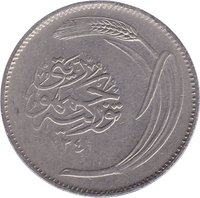
Obverse
Description:
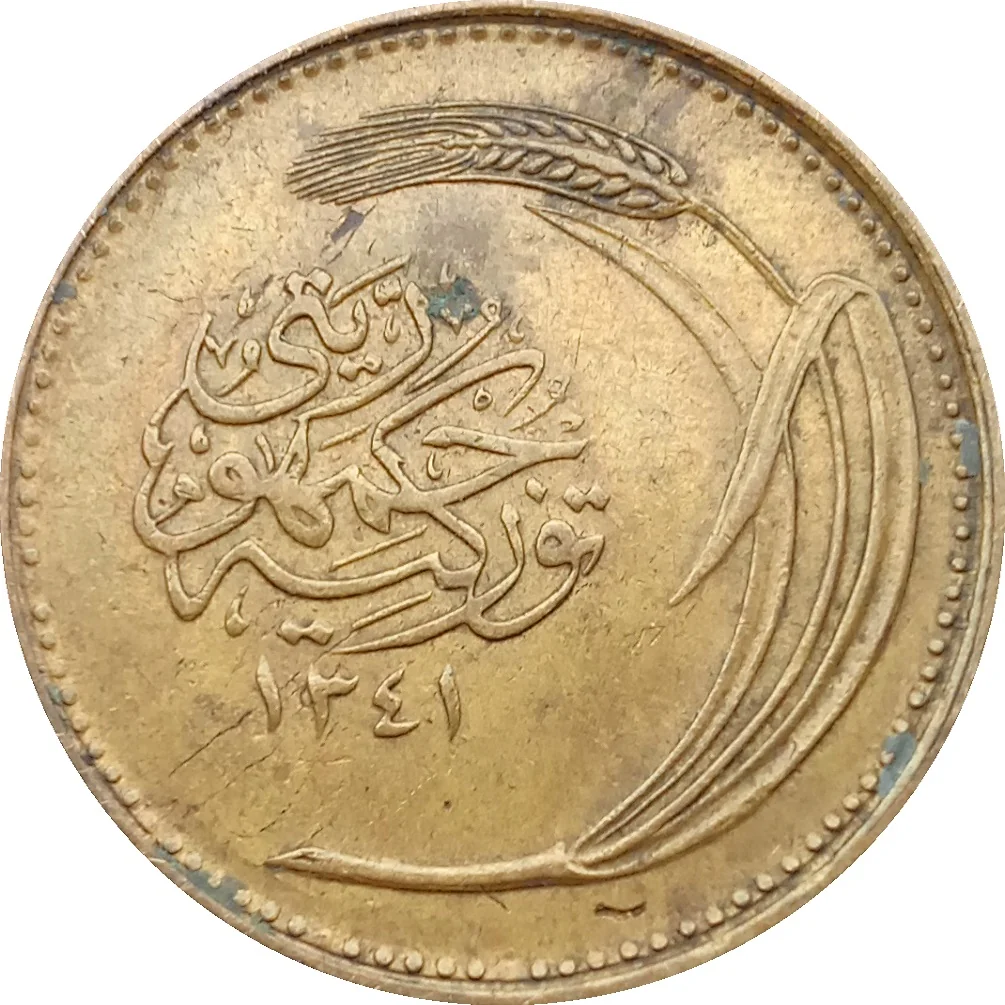
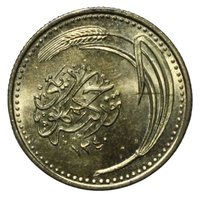
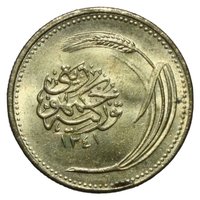
Inscription and date left of oat sprig.
Inscription:
جمهوريتي
توركيه
١٣٤١
توركيه
١٣٤١
Translation:
Republic of Turkey
1341
1341
Script: Arabic
Languages: Arabic, Ottoman Turkish
Engraver: Ahmet Mesrur Durum
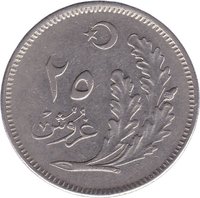
Reverse
Description:
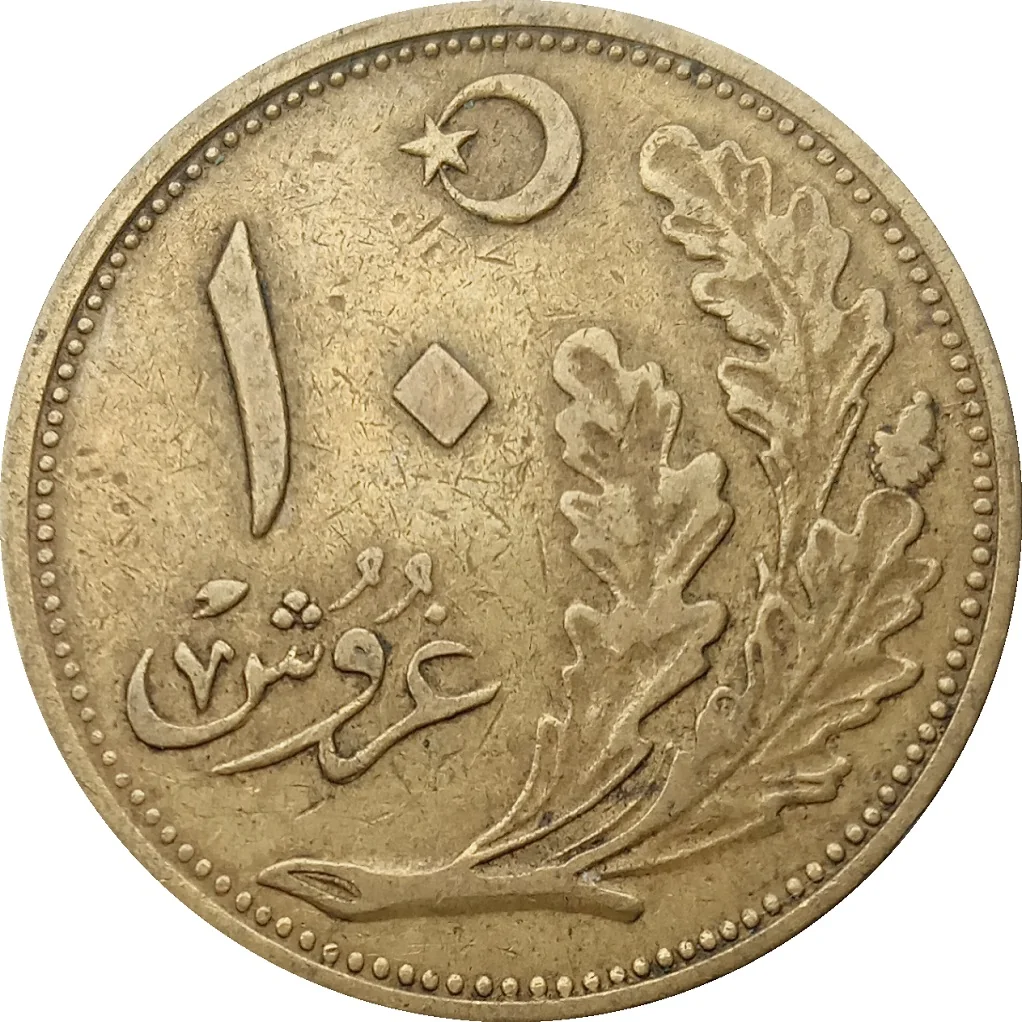
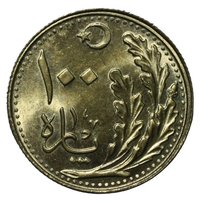
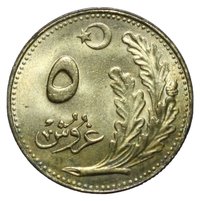
Left: sprig. Top: crescent and star.
Inscription:
١٠
غروش
غروش
Translation:
Ten Ghirsh
Script: Arabic
Language: Arabic
Engraver: Ahmet Mesrur Durum
Edge
Reeded
Mintings
| Year | Mint Mark | Mintage | Quality | Collection |
|---|---|---|---|---|
| 1924 | — | 4,836,483 | ||
| 1925 | — | 14,223,000 |
Historical background
Following the collapse of the Ottoman Empire and the establishment of the Republic of Turkey in 1923, the currency situation in 1924 was one of transition and symbolic nation-building. The new republic inherited a complex monetary system dominated by the Ottoman lira (lira-ı Osmani), but also featuring a plethora of foreign currencies and the unstable paper money of the defunct empire. This fragmentation reflected the economic disarray left by over a decade of war, including the Balkan Wars, World War I, and the Turkish War of Independence, which had devastated the economy and fueled high inflation.
The primary task in 1924 was to assert monetary sovereignty and stability. The government, under Mustafa Kemal Atatürk, took a decisive step by passing the Law on the Minting of the Turkish Lira in 1924, which formally established a new national currency. This law laid the groundwork for replacing the Ottoman lira with the Turkish lira (Türk Lirası), a move intended not just as an economic reform but as a powerful statement of independence and modern statehood. The new currency was initially pegged to the gold standard, with the lira valued at parity with the pre-war Ottoman gold lira, in an effort to instill confidence.
However, the introduction of the new Turkish lira in 1924 was largely a legislative and preparatory phase. The actual banknotes and coins did not enter widespread circulation until 1927, meaning that in practice, the old Ottoman notes and foreign currencies remained in daily use throughout 1924. Thus, the year represents a pivotal interim period where the legal framework for a stable, unified national currency was created, setting the course for the eventual consolidation of Turkey's monetary system in the late 1920s.
The primary task in 1924 was to assert monetary sovereignty and stability. The government, under Mustafa Kemal Atatürk, took a decisive step by passing the Law on the Minting of the Turkish Lira in 1924, which formally established a new national currency. This law laid the groundwork for replacing the Ottoman lira with the Turkish lira (Türk Lirası), a move intended not just as an economic reform but as a powerful statement of independence and modern statehood. The new currency was initially pegged to the gold standard, with the lira valued at parity with the pre-war Ottoman gold lira, in an effort to instill confidence.
However, the introduction of the new Turkish lira in 1924 was largely a legislative and preparatory phase. The actual banknotes and coins did not enter widespread circulation until 1927, meaning that in practice, the old Ottoman notes and foreign currencies remained in daily use throughout 1924. Thus, the year represents a pivotal interim period where the legal framework for a stable, unified national currency was created, setting the course for the eventual consolidation of Turkey's monetary system in the late 1920s.
🌱 Fairly Common