

1 Penny – Isle of Man
Context
Years: 1839–1859
Country: British Crown dependencies
Issuer: Isle of Man 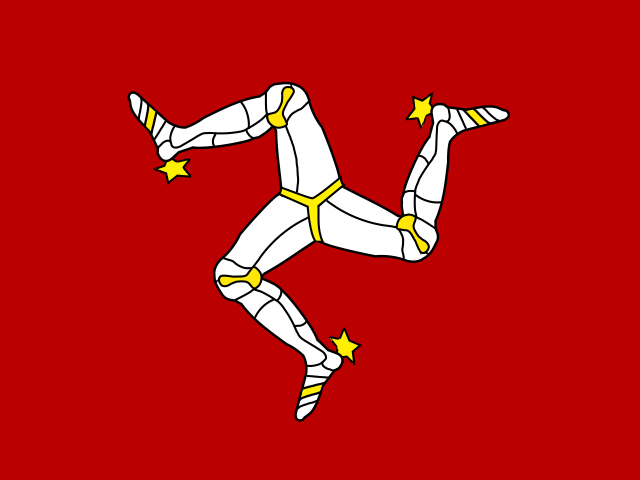
Ruler: Victoria
Currency:
(1839—1971)
Demonetization: 21 September 1840
Total mintage: 79,680
Material
References
KM: #Click to copy to clipboard14
Numista: #15309
Obverse
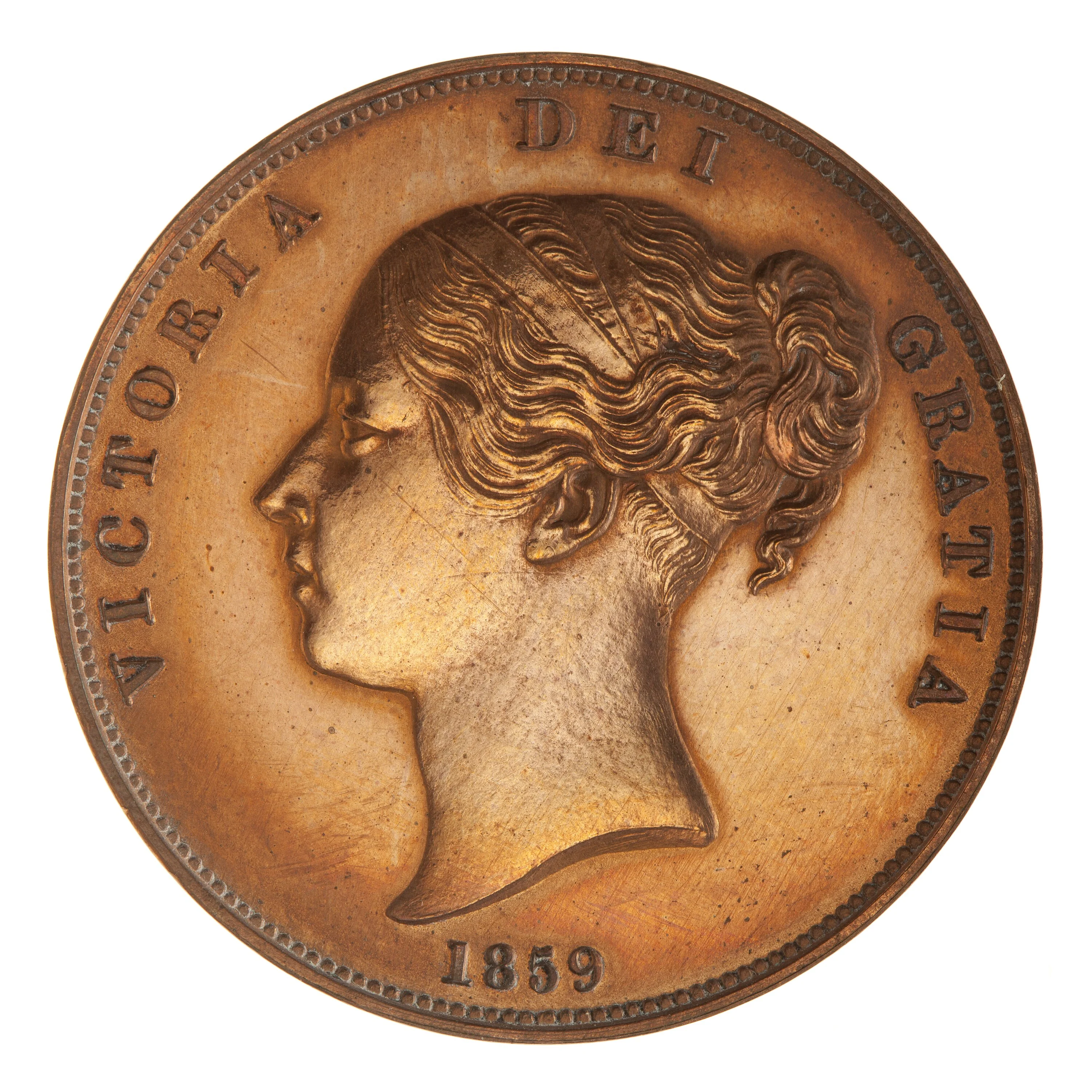
Description:
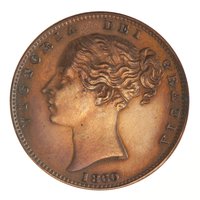
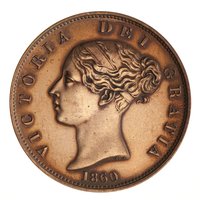
Young Queen Victoria, left-facing bust.
Inscription:
VICTORIA DEI GRATIA
1839
1839
Translation:
Victoria by the Grace of God
Script: Latin
Language: Latin
Designer and engraver: William Wyon
Reverse
Edge
Categories
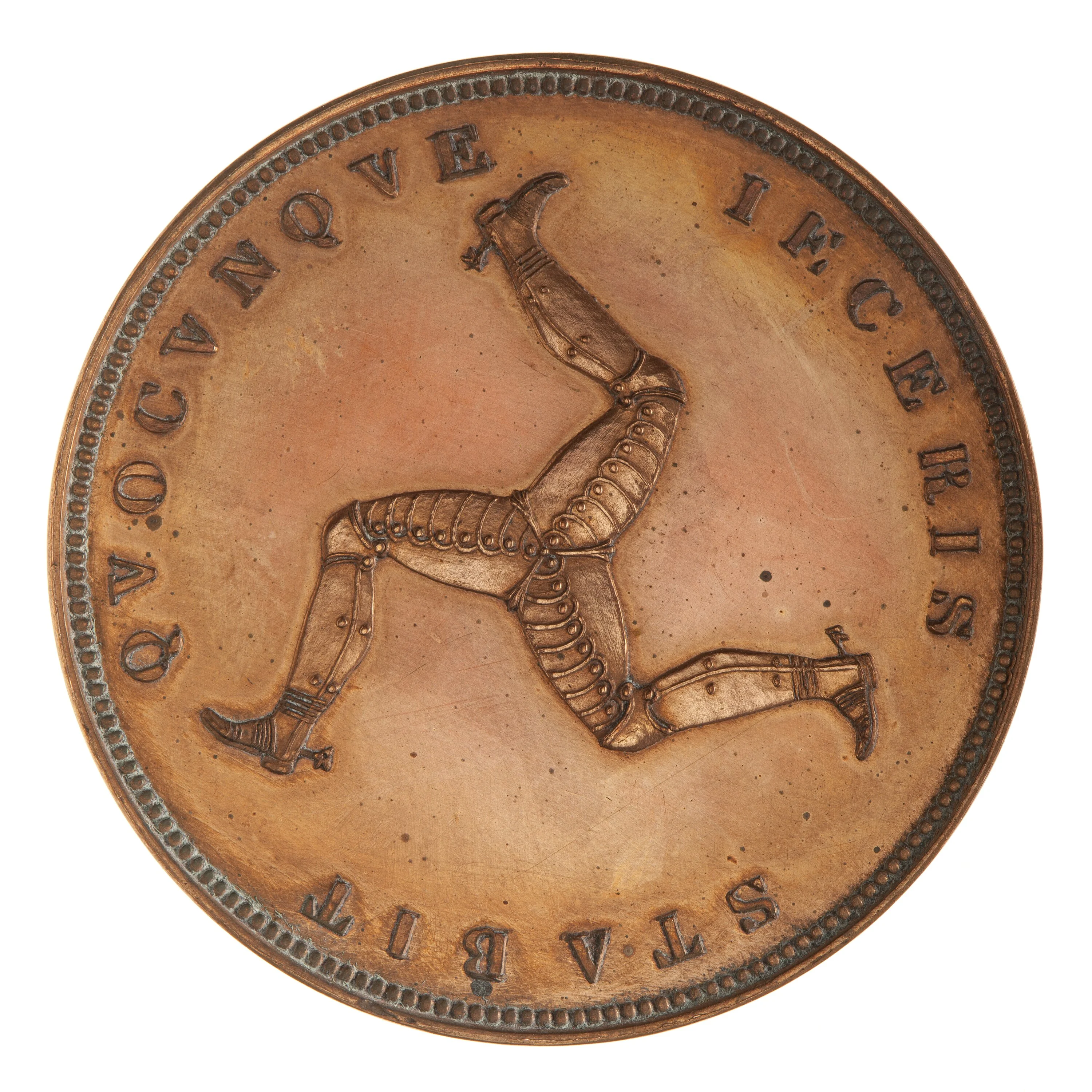
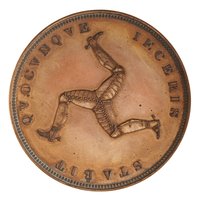
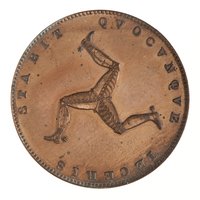
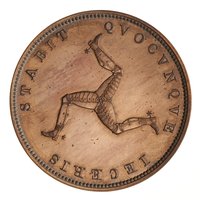
| Symbol> Triskelion |
Mints
| Name | Mark |
|---|---|
| Royal Mint (Tower Hill) | — |
Mintings
| Year | Mint Mark | Mintage | Quality | Collection |
|---|---|---|---|---|
| 1839 | — | 79,680 | ||
| 1839 | — | — | Proof | |
| 1841 | — | — | Proof | |
| 1859 | — | — | Proof |
Historical background
In 1839, the currency situation on the Isle of Man was complex and transitional, characterised by the circulation of a multitude of coinages alongside a persistent local issue. The island, while a British Crown Dependency, historically enjoyed significant fiscal autonomy. This allowed the continued production and use of its own distinctive copper coinage, minted by private individuals under license from the Tynwald, which bore the iconic "Manx" emblem of the triskelion. However, these tokens, denominated in pence, circulated alongside a jumble of official British sterling (gold guineas, silver shillings), Spanish dollars, and various other foreign and provincial coins, leading to frequent confusion and inconvenience in trade.
The year 1839 fell within a critical period of monetary reform driven by the British government, which sought to standardise currency across its spheres of influence. The Isle of Man was increasingly integrated into the wider UK economy, and the disorder of its mixed currency system was seen as an impediment. While the landmark Currency Act that formally demonetised the Manx token coinage and established sterling as the sole legal tender was still a few years away (passed in 1840 and enacted in 1841), the pressures leading to it were firmly in place by 1839. Discussions and preparations for this shift were undoubtedly underway, marking the end of an era for the island's semi-independent coinage.
Consequently, the background for 1839 is one of a system on the cusp of major change. The local populace and merchants operated with a heterogeneous mix of coins, but the legal and economic forces for standardisation with British sterling were becoming irresistible. The island's unique copper tokens, a symbol of its historic autonomy, were still in everyday use, but their status was increasingly anachronistic within the broader context of British imperial trade and monetary consolidation.
The year 1839 fell within a critical period of monetary reform driven by the British government, which sought to standardise currency across its spheres of influence. The Isle of Man was increasingly integrated into the wider UK economy, and the disorder of its mixed currency system was seen as an impediment. While the landmark Currency Act that formally demonetised the Manx token coinage and established sterling as the sole legal tender was still a few years away (passed in 1840 and enacted in 1841), the pressures leading to it were firmly in place by 1839. Discussions and preparations for this shift were undoubtedly underway, marking the end of an era for the island's semi-independent coinage.
Consequently, the background for 1839 is one of a system on the cusp of major change. The local populace and merchants operated with a heterogeneous mix of coins, but the legal and economic forces for standardisation with British sterling were becoming irresistible. The island's unique copper tokens, a symbol of its historic autonomy, were still in everyday use, but their status was increasingly anachronistic within the broader context of British imperial trade and monetary consolidation.
🌟 Uncommon