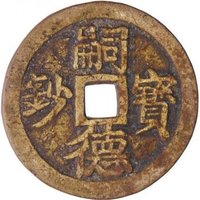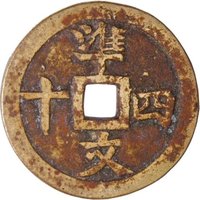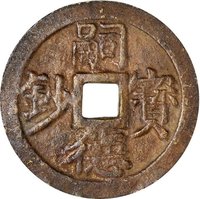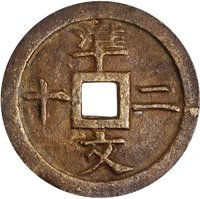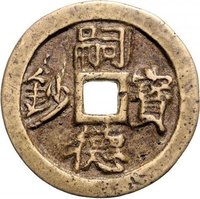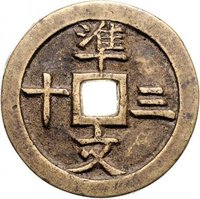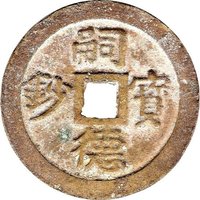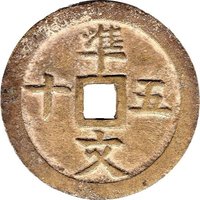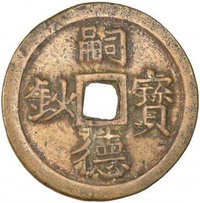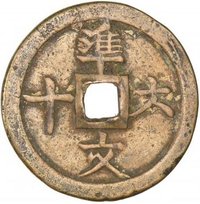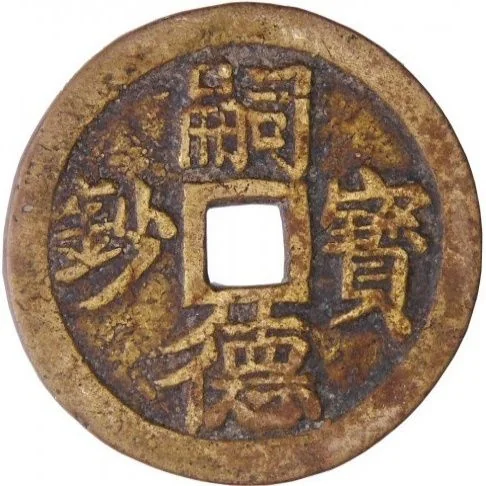
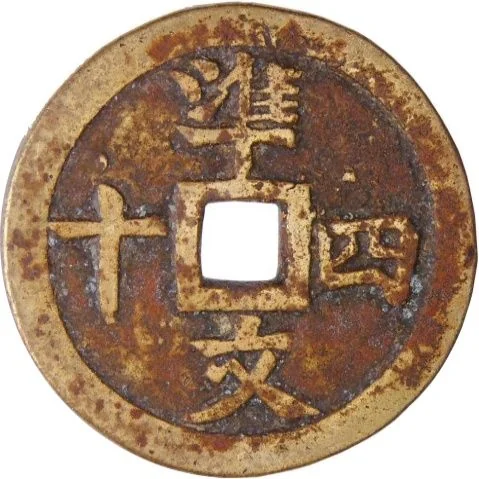
In 1861, the currency situation within the Empire of Vietnam was characterized by profound instability and fragmentation, a direct consequence of the political and military crisis engulfing the nation. The empire, under Emperor Tự Đức, was simultaneously grappling with a large-scale civil war (the Tây Sơn rebellion had ended decades prior, but regional revolts were common) and the escalating military invasion by France, which had captured Saigon and surrounding provinces in 1859. This dual crisis severely disrupted the central government's authority and its ability to manage the economy, leading to a breakdown in the standardized copper cash coin system that had traditionally underpinned Vietnamese currency.
The monetary landscape was a complex patchwork. The imperial mint in Huế struggled to produce sufficient quantities of standard
văn cash coins (zinc and copper-alloy coins with a square hole), leading to widespread shortages of legitimate currency. This vacuum was filled by a flood of debased and privately minted coins, as well as continued circulation of obsolete issues from previous reigns, all of varying weight and metal purity. Furthermore, the French occupation of Cochinchina introduced a new and competing currency system based on the Mexican silver piastre, which began to circulate in the south and further undermined the imperial currency's dominance, creating a de facto monetary divide within the country.
Consequently, the year 1861 represents a point of severe monetary transition and distress. The imperial court's efforts to maintain a unified currency were failing under the weight of war, territorial loss, and economic strain. The result was a period of high inflation, commercial confusion, and loss of public trust in the coinage, as merchants and officials had to constantly assess and negotiate the value of mixed bundles of coins. This chaotic currency situation mirrored the broader disintegration of imperial control and foreshadowed the deeper financial colonialism that would follow as France consolidated its hold over Vietnam in the coming decades.