

1 Anna – India - British
India
Context
Years: 1946–1947
Country: India 
Issuer: India - British
Ruler: George VI
Currency:
(1770—1947)
Demonetized: Yes
Total mintage: 381,624,000
Material
Diameter: 21.1 mm
Weight: 3.87 g
Thickness: 1.5 mm
Shape: Scalloped
Composition: Copper-nickel
Technique: Milled
Alignment: Medal alignment
flip
References
KM: #Click to copy to clipboard538
Numista: #15278
Obverse
Description:
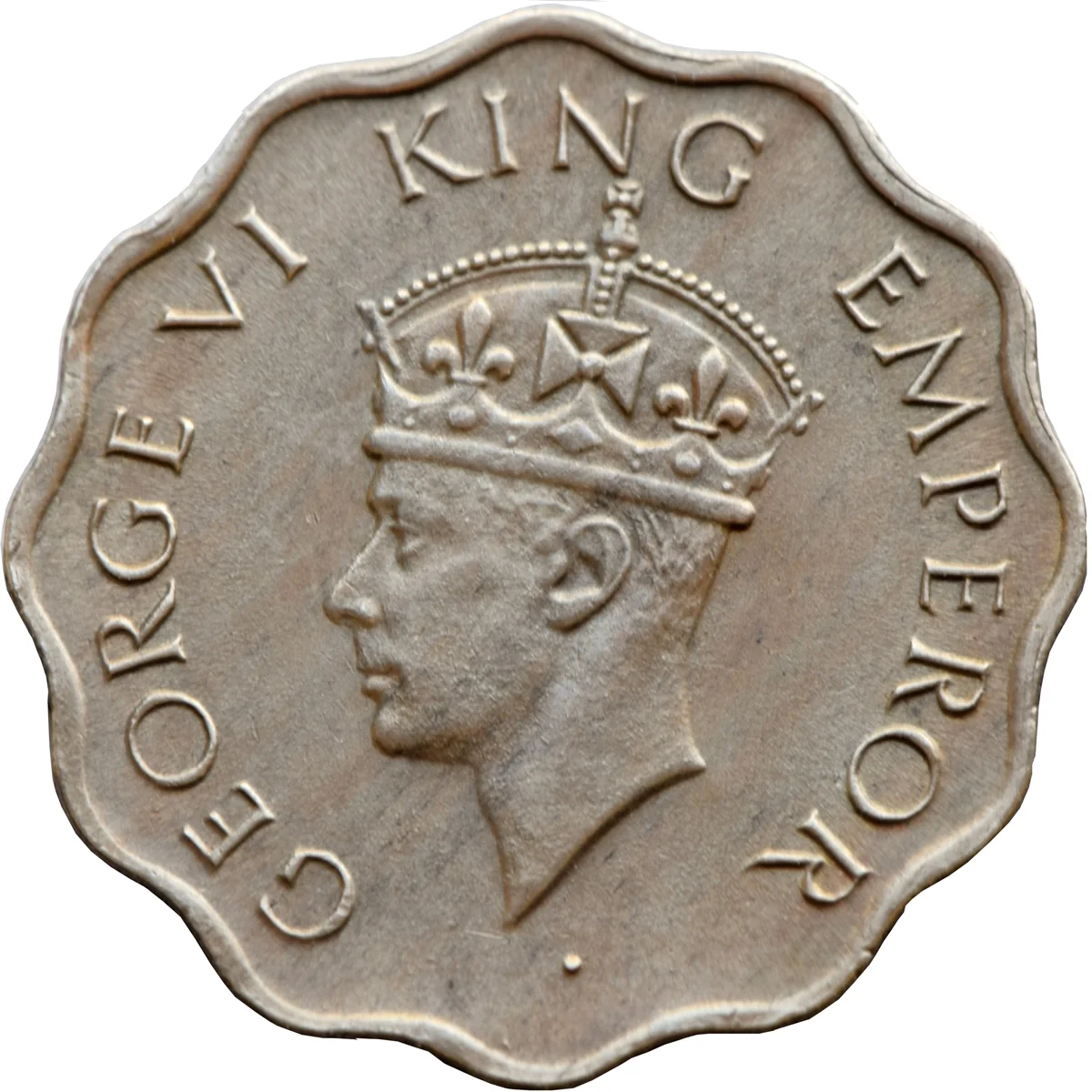
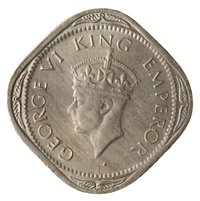
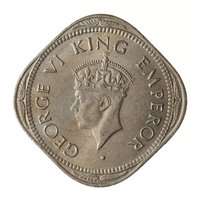
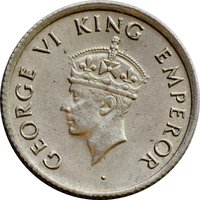
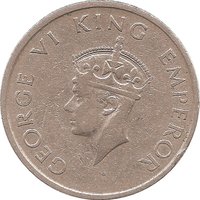
King George VI crowned, left. English legend surrounds.
Inscription:
GEORGE VI KING EMPEROR
Translation:
GEORGE VI KING EMPEROR
Script: Latin
Language: English
Engraver: Percy Metcalfe
Reverse
Description:
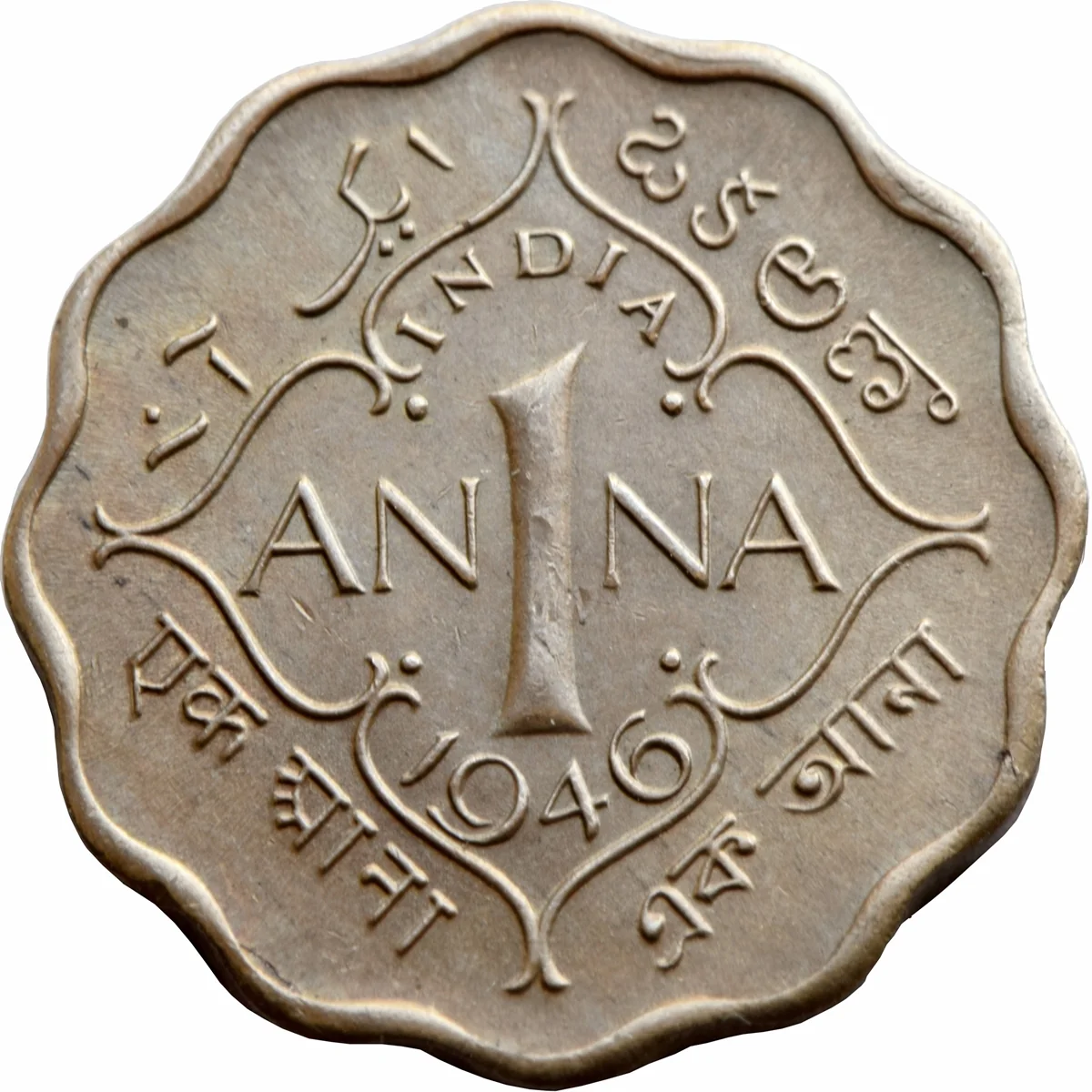
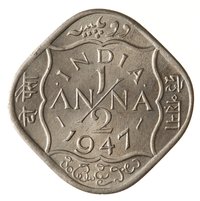
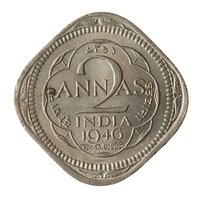
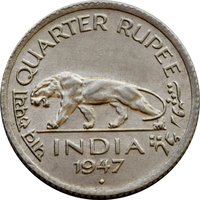
Denomination and date within floral pattern. Value in Urdu, Telugu, Bengali, and Devanagari around the border.
Inscription:
ایک آن ఒకఅణా
INDIA
AN 1 NA
1946
एक आना এক মানা
INDIA
AN 1 NA
1946
एक आना এক মানা
Translation:
One Anna One Anna
INDIA
ONE ANNA
1946
One Anna One Anna
INDIA
ONE ANNA
1946
One Anna One Anna
Edge
Plain
Mints
| Name | Mark |
|---|---|
| Kolkata / Calcutta / Murshidabad | — |
| Mumbai / Bombay | • |
Mintings
Historical background
In 1946, the currency situation in British India was a complex and strained system on the brink of monumental change. The official currency was the Indian Rupee, issued by the Reserve Bank of India (established in 1935), but its value and management were ultimately controlled by the British colonial government. The rupee was pegged to the British Pound Sterling under a "sterling exchange standard," meaning India's foreign reserves were held in London, directly linking the Indian economy to Britain's financial fortunes. This period followed the immense economic dislocation of World War II, which had drained India's resources, caused severe inflation, and accumulated massive sterling balances—credits owed by Britain for wartime expenses—creating a tense financial dependency.
The monetary landscape was physically dominated by notes and coins bearing the portrait of King George VI, symbols of imperial authority that were circulating in a nation simmering with the demand for independence. However, the system was also under pressure from practical shortages and political unrest. Wartime inflation had eroded the rupee's purchasing power, causing widespread hardship. Furthermore, the imminent departure of the British raised urgent questions about the management of the sterling balances, the future of the rupee's peg, and the very sovereignty of India's monetary policy. The stage was being set for a dramatic transition.
Thus, the currency situation of 1946 was not merely a financial framework but a reflection of colonial subjugation and impending freedom. It was a system awaiting dismantlement, with Indian leaders and economists already planning for a central bank that would serve an independent nation. Within a year, the contours of this system would be irrevocably altered by Partition and Independence, leading to the issuance of new currency notes and the establishment of a monetary policy for a sovereign India.
The monetary landscape was physically dominated by notes and coins bearing the portrait of King George VI, symbols of imperial authority that were circulating in a nation simmering with the demand for independence. However, the system was also under pressure from practical shortages and political unrest. Wartime inflation had eroded the rupee's purchasing power, causing widespread hardship. Furthermore, the imminent departure of the British raised urgent questions about the management of the sterling balances, the future of the rupee's peg, and the very sovereignty of India's monetary policy. The stage was being set for a dramatic transition.
Thus, the currency situation of 1946 was not merely a financial framework but a reflection of colonial subjugation and impending freedom. It was a system awaiting dismantlement, with Indian leaders and economists already planning for a central bank that would serve an independent nation. Within a year, the contours of this system would be irrevocably altered by Partition and Independence, leading to the issuance of new currency notes and the establishment of a monetary policy for a sovereign India.
🌱 Very Common