

1 Sovereign – United Kingdom
United Kingdom
Context
Years: 1871–1885
Issuer: United Kingdom 
Ruler: Victoria
Currency:
(1158—1970)
Total mintage: 35,710,886
Material
References
KM: #Click to copy to clipboard752
Numista: #1526
Value
Bullion value: $1221.70
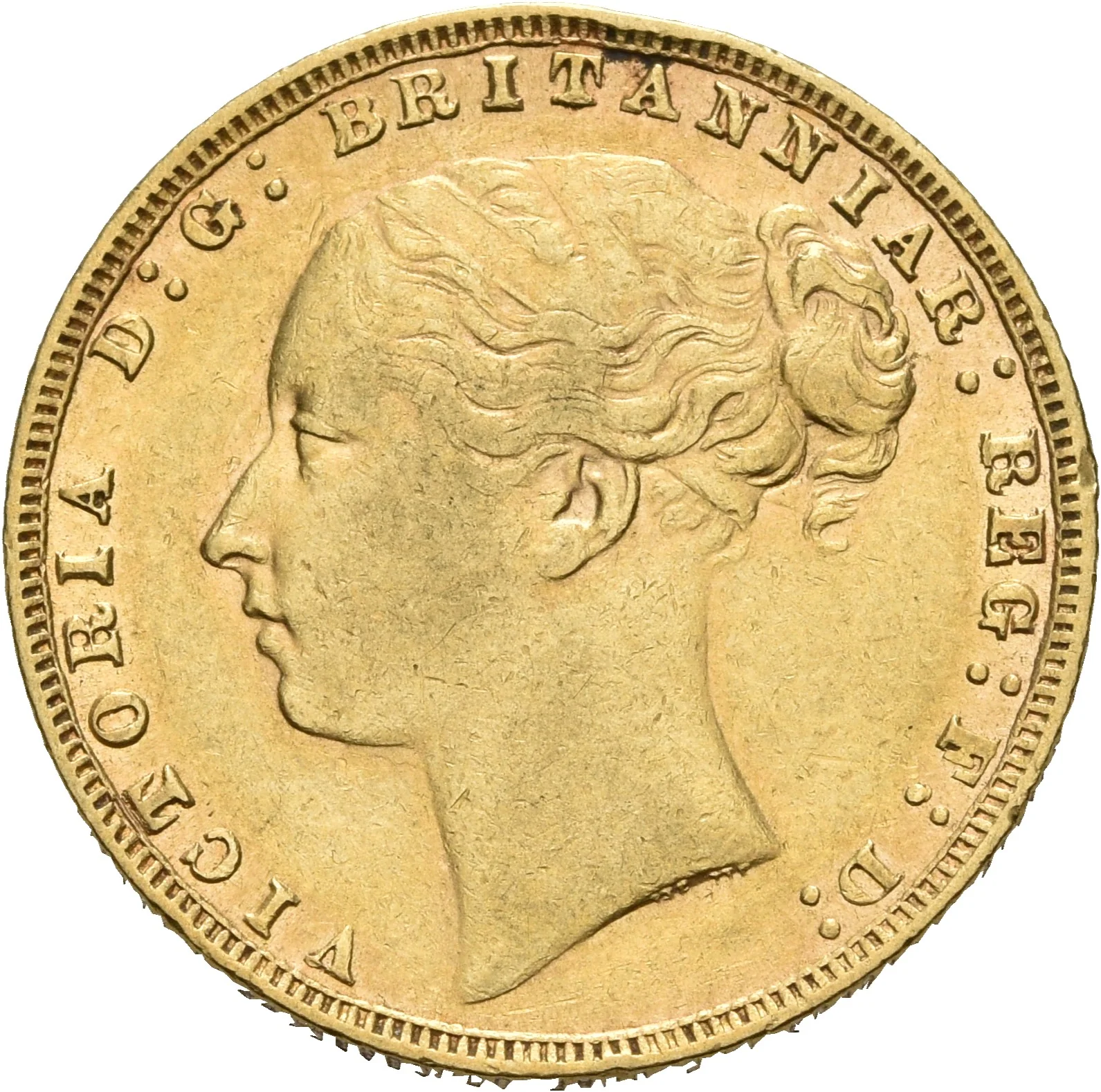
Obverse
Description:
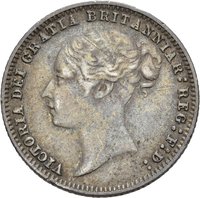
Young Head Victoria left, legend around.
Inscription:
VICTORIA D:G: BRITANNIAR:REG:F:D:
Translation:
Victoria by the Grace of God, Queen of the Britains, Defender of the Faith.
Script: Latin
Language: Latin
Engraver: William Wyon
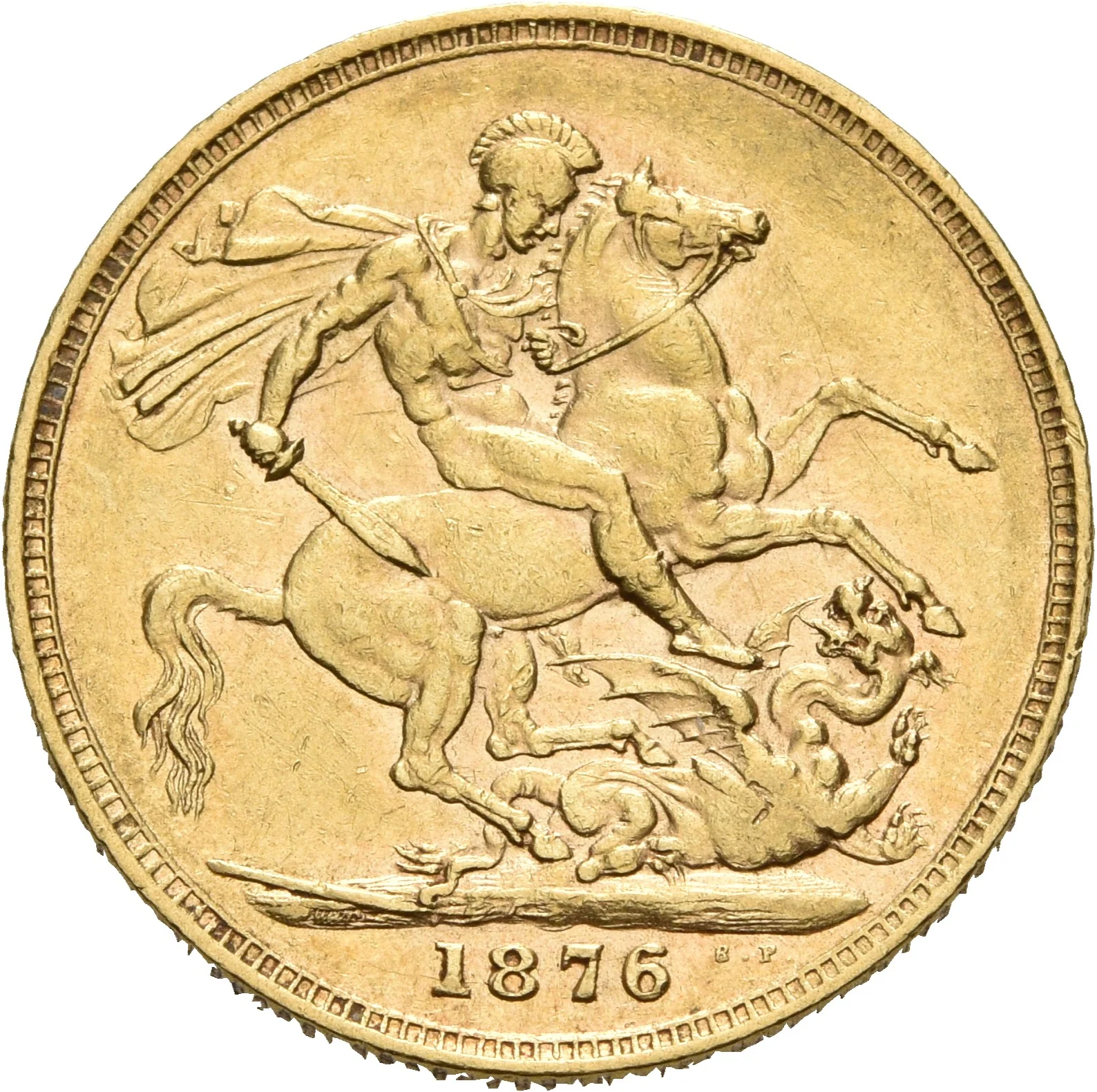
Reverse
Description:
Saint George slaying the dragon, date below.
Inscription:
1872
B.P.
B.P.
Script: Latin
Engraver: Benedetto Pistrucci
Edge
Reeded
Categories
| Mythology> Fantastic animal |
| Animal> Horse |
Mints
| Name | Mark |
|---|---|
| Royal Mint (Tower Hill) | — |
Mintings
| Year | Mint Mark | Mintage | Quality | Collection |
|---|---|---|---|---|
| 1871 | — | 8,767,250 | ||
| 1871 | — | — | Proof | |
| 1872 | — | 13,486,708 | ||
| 1873 | — | 2,368,215 | ||
| 1874 | — | 520,713 | ||
| 1876 | — | 3,319,000 | ||
| 1876 | — | — | Proof | |
| 1878 | — | 1,091,000 | ||
| 1879 | — | 20,000 | ||
| 1880 | — | 3,650,000 | ||
| 1884 | — | 1,770,000 | ||
| 1885 | — | 718,000 |
Historical background
In 1871, the United Kingdom operated under a de facto gold standard, a system that had been formally established by the Coinage Act of 1816. This meant that the pound sterling was legally defined as a specific weight of gold, and Bank of England notes were fully convertible into gold coin upon demand. The primary circulating coins were gold sovereigns and half-sovereigns, with silver and copper coins serving as subsidiary currency for smaller transactions. This monetary framework provided remarkable stability and was a cornerstone of Britain's global financial dominance, facilitating international trade and investment.
However, the period was not without its monetary debates and tensions. A significant issue was the ongoing "limping standard" concerning silver. While gold was the sole standard for defining the pound's value, silver coins remained legal tender but only for limited amounts, and their metallic value was less than their face value. This created a complex bimetallic shadow, especially as the discovery of new silver deposits in the Americas and Europe in the 1860s was driving down the global market price of silver relative to gold. Furthermore, the Bank Charter Act of 1844, which strictly tied the issuance of banknotes to gold reserves, was periodically criticised for being too rigid and exacerbating financial crises by restricting liquidity.
Internationally, 1871 fell within a pivotal decade that would see the UK's system become a global model. Germany, following its victory in the Franco-Prussian War, had just used its war indemnity to transition to a gold standard in 1871, placing further downward pressure on the demonetised silver. This move triggered a chain reaction across Europe and beyond, leading to the era of the classical gold standard (c. 1870-1914). Therefore, in 1871, Britain's currency was stable and dominant, but it stood at the precipice of a major international monetary realignment, where its own system would be widely emulated, solidifying gold's supremacy and indirectly contributing to a global deflationary trend.
However, the period was not without its monetary debates and tensions. A significant issue was the ongoing "limping standard" concerning silver. While gold was the sole standard for defining the pound's value, silver coins remained legal tender but only for limited amounts, and their metallic value was less than their face value. This created a complex bimetallic shadow, especially as the discovery of new silver deposits in the Americas and Europe in the 1860s was driving down the global market price of silver relative to gold. Furthermore, the Bank Charter Act of 1844, which strictly tied the issuance of banknotes to gold reserves, was periodically criticised for being too rigid and exacerbating financial crises by restricting liquidity.
Internationally, 1871 fell within a pivotal decade that would see the UK's system become a global model. Germany, following its victory in the Franco-Prussian War, had just used its war indemnity to transition to a gold standard in 1871, placing further downward pressure on the demonetised silver. This move triggered a chain reaction across Europe and beyond, leading to the era of the classical gold standard (c. 1870-1914). Therefore, in 1871, Britain's currency was stable and dominant, but it stood at the precipice of a major international monetary realignment, where its own system would be widely emulated, solidifying gold's supremacy and indirectly contributing to a global deflationary trend.
🌱 Fairly Common