

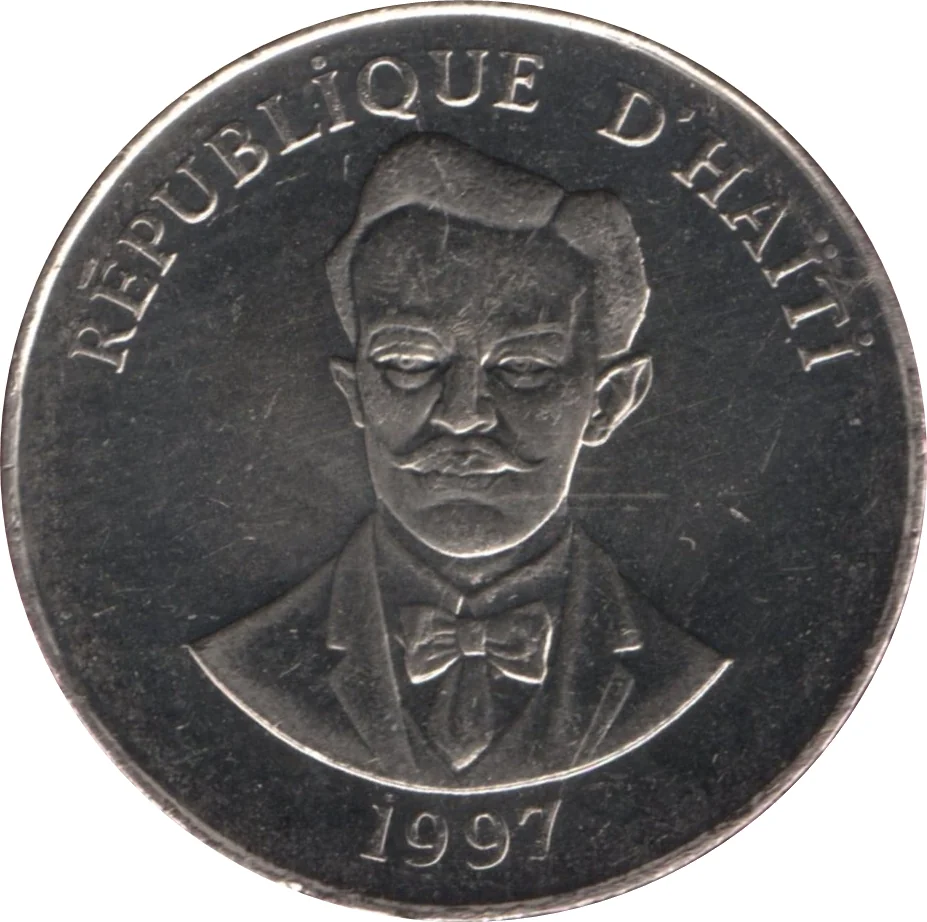
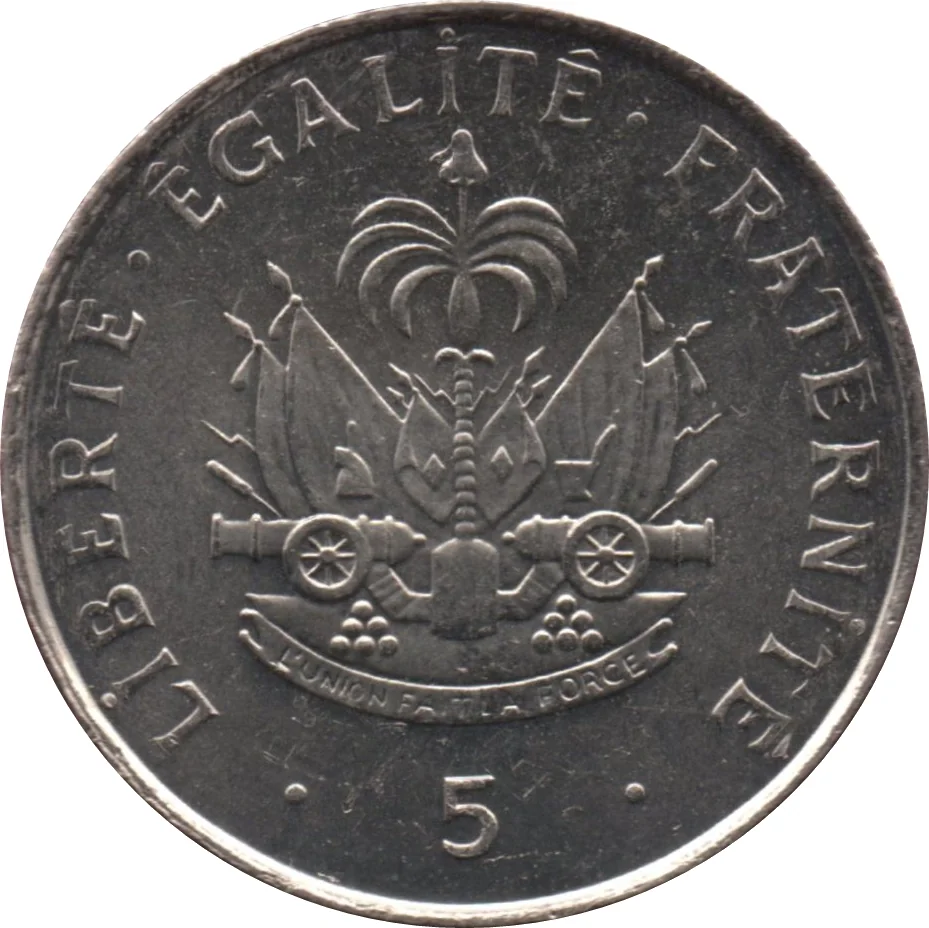
5 centimes – Haiti
Add to wishlist
Haiti
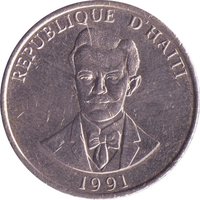
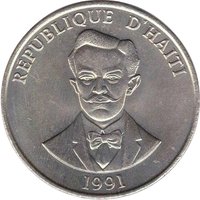
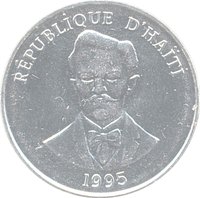
Obverse
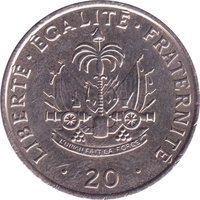
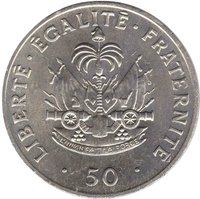
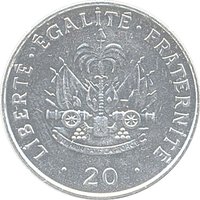
Reverse
Edge
Plain
Categories
| Person> Military leader |
| Mustache/Beard |
| Symbols> Coat of Arms |
Mints
| Name | Mark |
|---|---|
| Royal Mint | — |
Mintings
| Year | Mint Mark | Mintage | Quality | Collection |
|---|---|---|---|---|
| 1986 | — | — | ||
| 1995 | — | — | ||
| 1997 | — | — |
Historical background
In 1986, Haiti's currency situation was characterized by extreme instability and devaluation, deeply intertwined with the nation's political turmoil. The Haitian gourde, officially pegged to the U.S. dollar at 5:1 since 1912, existed in a dual reality. While this official rate was maintained for government transactions and a handful of privileged importers, the vast majority of the population relied on a wildly divergent parallel black-market rate. By 1986, this unofficial rate had spiraled to approximately 15-20 gourdes to the dollar, effectively tripling the cost of essential imported goods like food and fuel for ordinary citizens and crippling the informal economy that formed the backbone of Haitian life.
This economic crisis was a direct legacy of the nearly 30-year Duvalier family dictatorship, which had ended just months earlier in February 1986 with the ouster of Jean-Claude "Baby Doc" Duvalier. The regime had systematically plundered the central bank, mismanaged state-owned enterprises, and relied on rampant monetary printing to finance deficits, leading to high inflation and a massive erosion of confidence in the gourde. The collapse of key agricultural exports, like coffee and sugar, further drained foreign currency reserves, leaving the new transitional National Governing Council (CNG) with an empty treasury and a severely distorted economic structure.
Consequently, the post-Duvalier government in 1986 faced immense pressure from international financial institutions, particularly the IMF, to implement structural adjustments. The most urgent and controversial reform demanded was a sharp, unified devaluation of the gourde to collapse the parallel market and stabilize the economy. However, the fragile CNG, fearing the social explosion that would result from instantly multiplying the price of basic necessities, hesitated. Thus, the currency situation in 1986 remained in a perilous state of suspended animation—a potent symbol of the profound economic disarray and difficult choices facing the nation in the uncertain aftermath of dictatorship.
This economic crisis was a direct legacy of the nearly 30-year Duvalier family dictatorship, which had ended just months earlier in February 1986 with the ouster of Jean-Claude "Baby Doc" Duvalier. The regime had systematically plundered the central bank, mismanaged state-owned enterprises, and relied on rampant monetary printing to finance deficits, leading to high inflation and a massive erosion of confidence in the gourde. The collapse of key agricultural exports, like coffee and sugar, further drained foreign currency reserves, leaving the new transitional National Governing Council (CNG) with an empty treasury and a severely distorted economic structure.
Consequently, the post-Duvalier government in 1986 faced immense pressure from international financial institutions, particularly the IMF, to implement structural adjustments. The most urgent and controversial reform demanded was a sharp, unified devaluation of the gourde to collapse the parallel market and stabilize the economy. However, the fragile CNG, fearing the social explosion that would result from instantly multiplying the price of basic necessities, hesitated. Thus, the currency situation in 1986 remained in a perilous state of suspended animation—a potent symbol of the profound economic disarray and difficult choices facing the nation in the uncertain aftermath of dictatorship.
Series: 1986 Haiti circulation coins
🌱 Very Common