

30 centavos – Portuguese Timor
Add to wishlist
Timor-Leste
Context
Year: 1958
Country: Timor-Leste
Issuer: Portuguese Timor
Period:
(1951—1974)
Currency:
(1958—1976)
Demonetized: Yes
Total mintage: 2,000,000
Material
References
KM: #
Numista: #13138
Value
Exchange value: 0.30 TPE
Obverse
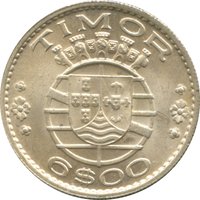
Description:
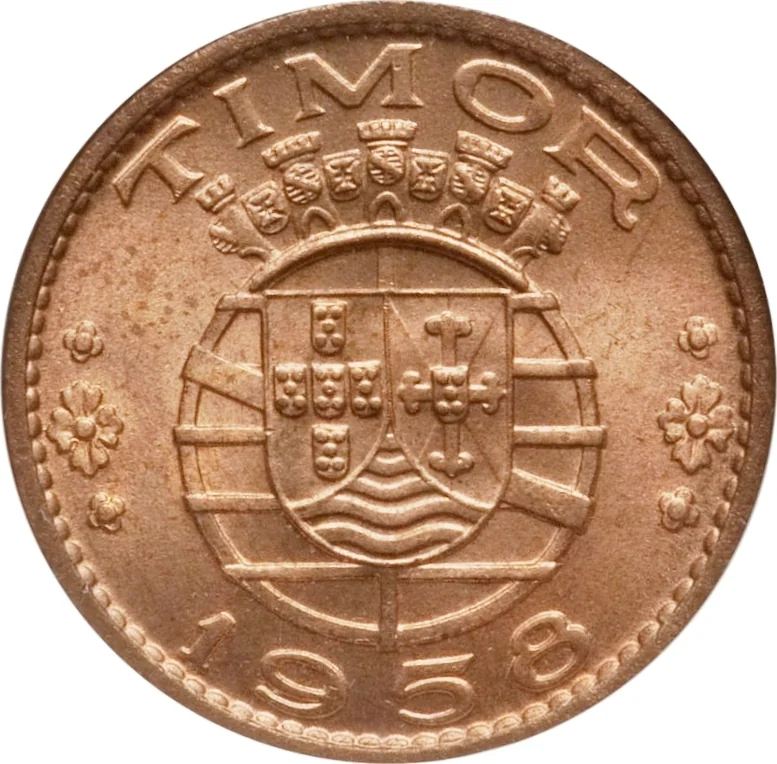
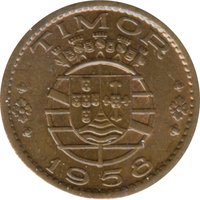
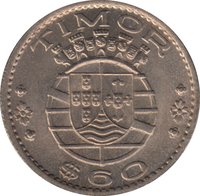
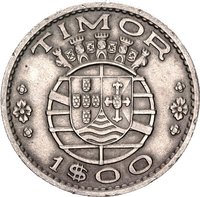
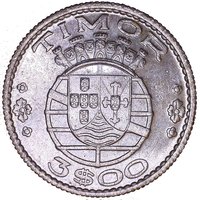
Crowned globe shield, floral legend, date beneath.
Inscription:
TIMOR
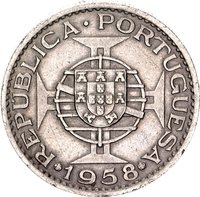
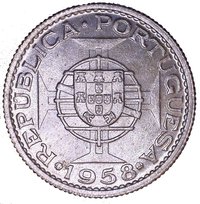
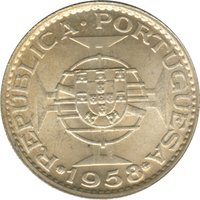
1958
1958
Script: Latin
Reverse
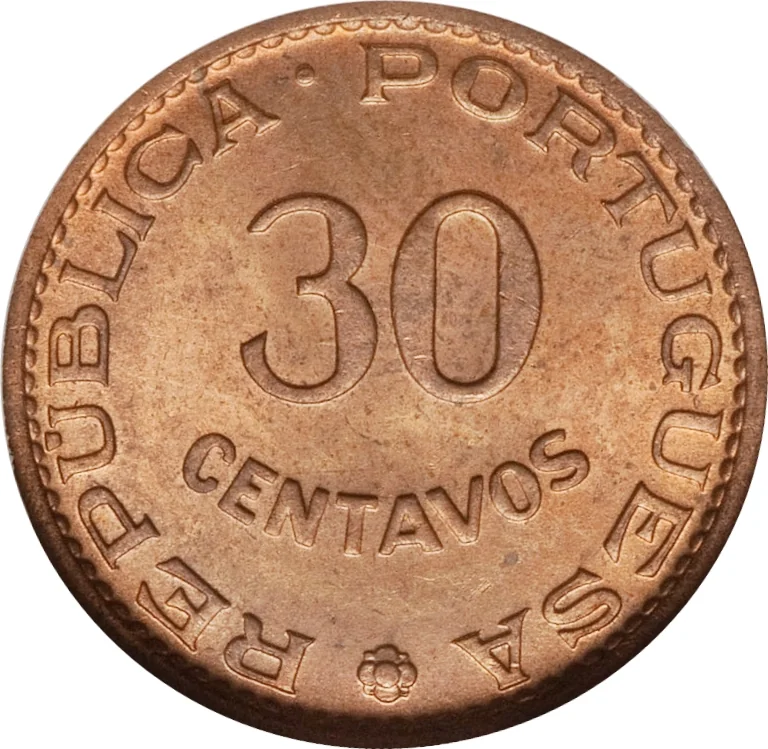
Description:
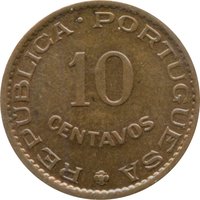
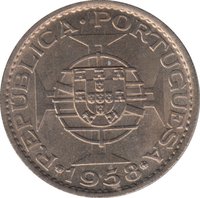
Valuable
Inscription:
30 CENTAVOS
REPUBLICA PORTUGUESA
REPUBLICA PORTUGUESA
Translation:
Thirty Cents
Portuguese Republic
Portuguese Republic
Script: Latin
Language: Portuguese
Edge
Plain
Categories
| Symbols> Coat of Arms |
Mints
| Name | Mark |
|---|---|
| Imprensa Nacional - Casa da Moeda | — |
Mintings
| Year | Mint Mark | Mintage | Quality | Collection |
|---|---|---|---|---|
| 1958 | — | 2,000,000 |
Historical background
In 1958, Portuguese Timor (present-day Timor-Leste) operated under a unique and complex dual-currency system, a legacy of its colonial administration and geographic position. The official currency was the Portuguese Timor Pataca, which was pegged at par to the Macanese Pataca and, by extension, to the Portuguese Escudo. However, this official currency circulated alongside and was heavily influenced by the Dutch East Indies Guilder (and later the Indonesian Rupiah), which was widely used in daily transactions, especially in border regions. This reflected the island's economic reality, as trade and social ties with Dutch (then Indonesian) West Timor were far stronger than those with distant Portugal.
The system was inherently unstable and problematic. The Portuguese authorities struggled to enforce the pataca as the sole legal tender, leading to chronic currency shortages and a reliance on imported coinage from Macau and Portugal. The value and acceptance of the pataca were weak outside of administrative centers, with the population often preferring the more stable and readily available Indonesian currency for practical commerce. This effectively created a dollarized economy where the official currency of the governing power was not the dominant medium of exchange.
This monetary duality underscored Portugal's limited economic investment and the territory's peripheral status within the empire. The situation was a microcosm of Lisbon's broader administrative neglect, focusing primarily on maintaining political control rather than fostering integrated economic development. The reliance on a foreign currency highlighted Timor's de facto economic integration with its Indonesian neighbor, a reality that would foreshadow the geopolitical challenges to come in the following decades.
The system was inherently unstable and problematic. The Portuguese authorities struggled to enforce the pataca as the sole legal tender, leading to chronic currency shortages and a reliance on imported coinage from Macau and Portugal. The value and acceptance of the pataca were weak outside of administrative centers, with the population often preferring the more stable and readily available Indonesian currency for practical commerce. This effectively created a dollarized economy where the official currency of the governing power was not the dominant medium of exchange.
This monetary duality underscored Portugal's limited economic investment and the territory's peripheral status within the empire. The situation was a microcosm of Lisbon's broader administrative neglect, focusing primarily on maintaining political control rather than fostering integrated economic development. The reliance on a foreign currency highlighted Timor's de facto economic integration with its Indonesian neighbor, a reality that would foreshadow the geopolitical challenges to come in the following decades.
🌱 Fairly Common