

1 rupee – Maratha Empire
Add to wishlist
India
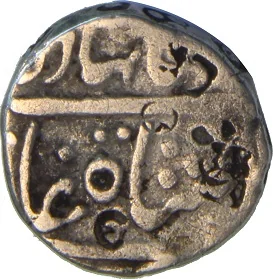
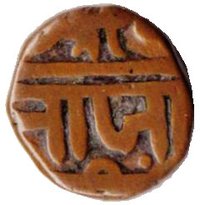
Obverse
Description:
By Ahmad Shah Bahadur
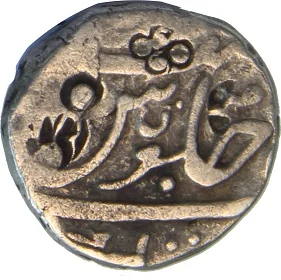
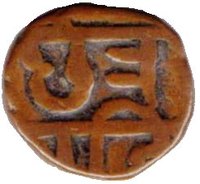
Reverse
Description:
Crescent and dot mint mark
Edge
Plain
Mintings
| Year | Mint Mark | Mintage | Quality | Collection |
|---|---|---|---|---|
| — | — | — |
Historical background
By 1819, the currency situation within the Maratha Empire was one of profound fragmentation and decline, reflecting the polity's own political disintegration. The central authority of the Peshwa in Pune had been critically weakened following the Third Anglo-Maratha War (1817-1818), with vast territories now under direct British control or the rule of subsidiary allies. Consequently, there was no unified imperial currency. Instead, the landscape was a complex mosaic of different coins issued by various residual Maratha powers—the Bhonsles of Nagpur, the Holkars of Indore, the Gaekwads of Baroda, and the Peshwa's rump state—alongside a flood of British East India Company rupees from Bombay and Bengal, and older Mughal-era coins still in circulation.
The primary silver currency was the rupee, but its weight, purity, and value varied significantly between these issuing authorities, causing confusion and hindering trade. For example, the Peshwa's Ankushi rupee (minted in Pune) differed from the Holkar's rupee minted in Indore, and both were distinct from the Company's Sicca rupee. Copper coins (paisa) for smaller transactions were even more localized and irregular. This monetary anarchy was exacerbated by the widespread practice of clipping coins, counterfeiting, and the circulation of worn older issues, which eroded public trust in the value of money.
This chaotic system was on the brink of being swept away. The British, having established paramountcy, were actively imposing monetary order as part of their colonial consolidation. The year 1819 itself saw the closing of several Maratha mints, and the British were standardizing their own rupee and introducing new coinage regulations across annexed territories like the Deccan. Thus, the currency situation of 1819 represents a final, fleeting snapshot of indigenous Maratha numismatic systems in their last moments before being systematically replaced by a uniform British imperial currency.
The primary silver currency was the rupee, but its weight, purity, and value varied significantly between these issuing authorities, causing confusion and hindering trade. For example, the Peshwa's Ankushi rupee (minted in Pune) differed from the Holkar's rupee minted in Indore, and both were distinct from the Company's Sicca rupee. Copper coins (paisa) for smaller transactions were even more localized and irregular. This monetary anarchy was exacerbated by the widespread practice of clipping coins, counterfeiting, and the circulation of worn older issues, which eroded public trust in the value of money.
This chaotic system was on the brink of being swept away. The British, having established paramountcy, were actively imposing monetary order as part of their colonial consolidation. The year 1819 itself saw the closing of several Maratha mints, and the British were standardizing their own rupee and introducing new coinage regulations across annexed territories like the Deccan. Thus, the currency situation of 1819 represents a final, fleeting snapshot of indigenous Maratha numismatic systems in their last moments before being systematically replaced by a uniform British imperial currency.
✨ Legendary