

50 centavos – Brazil
Add to wishlist
Brazil
Context
Years: 1970–1975
Issuer: Brazil
Period:
(since 1967)
Currency:
(1967—1986)
Demonetization: 15 August 1984
Total mintage: 575,097,353
Material
Diameter: 27 mm
Weight: 7.71 g
Thickness: 1.5 mm
Shape: Round
Standard: Silver quarter ounce
Magnetic: No
Technique: Milled
Alignment: Coin alignment
flip
References
KM: #
Numista: #1050
Value
Exchange value: 0.50 BRB
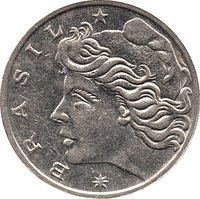
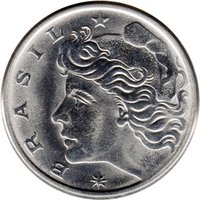
Obverse
Description:
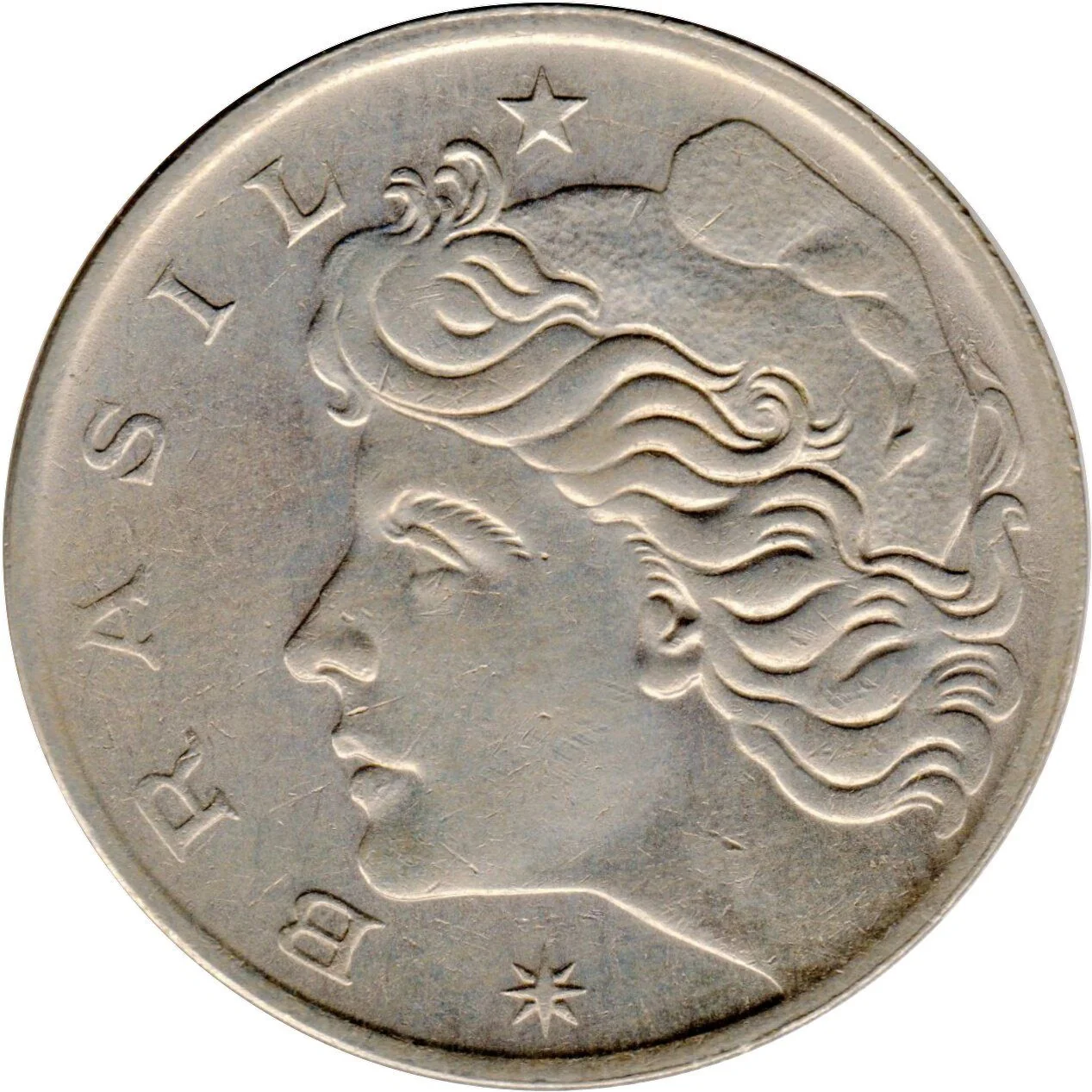
Liberty left. Wind Rose below.
Inscription:
BRASIL
Translation:
BRASIL
Script: Latin
Language: Portuguese
Designer and engraver: Benedicto de Araújo Ribeiro
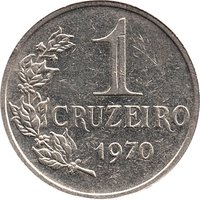
Reverse
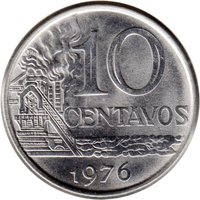
Description:
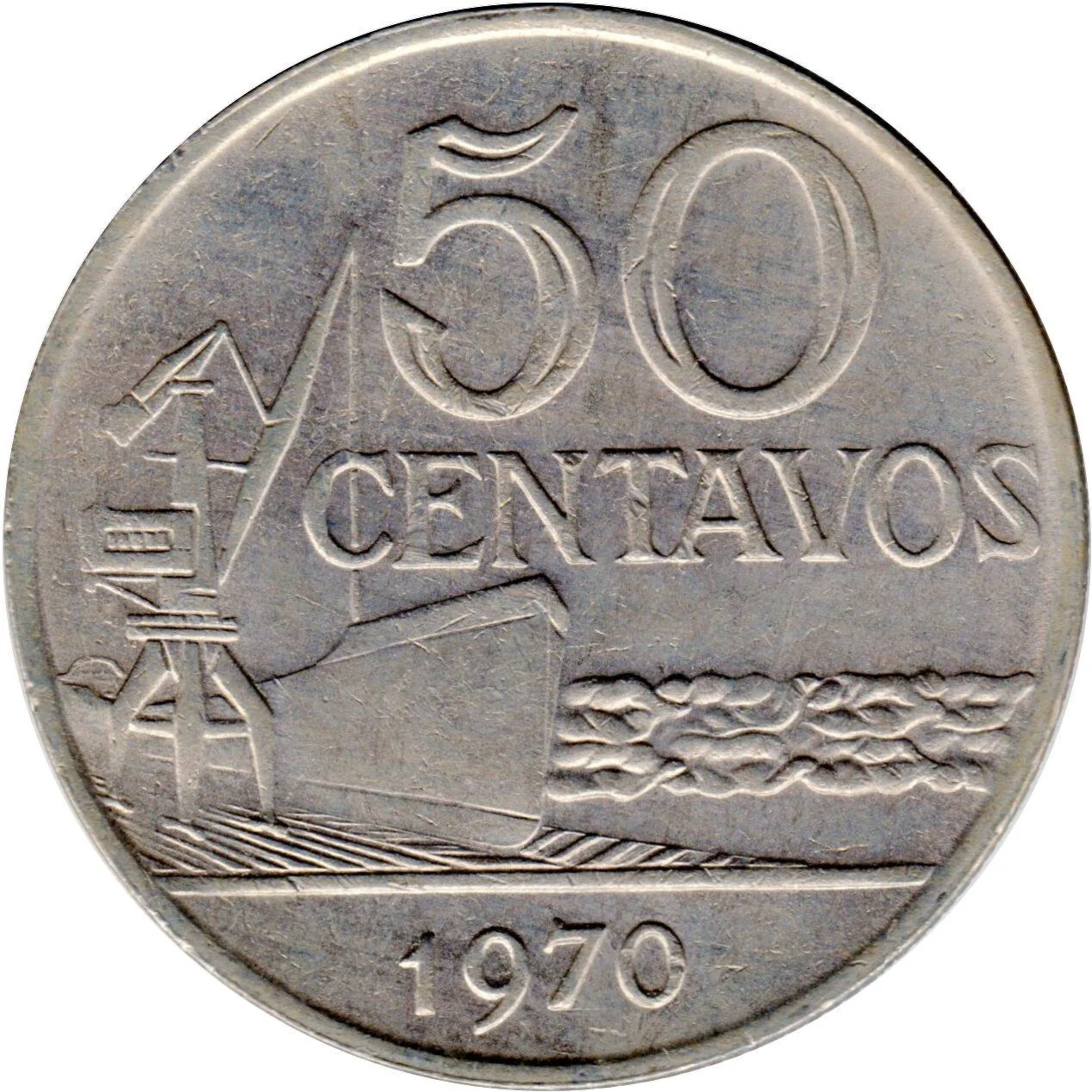
A docked ship and crane symbolize the shipping industry, value, and date.
Inscription:
50
CENTAVOS
1970
CENTAVOS
1970
Script: Latin
Designer and engraver: Benedicto de Araújo Ribeiro
Edge
Reeded
Categories
| Industry |
| Transportation> Watercraft |
Mints
| Name | Mark |
|---|---|
| Casa da Moeda do Brasil | — |
Mintings
| Year | Mint Mark | Mintage | Quality | Collection |
|---|---|---|---|---|
| 1970 | — | 440,643,353 | ||
| 1975 | — | 134,454,000 |
Historical background
By 1970, Brazil was in the midst of the "Brazilian Miracle," a period of rapid economic growth averaging over 10% per year, fueled by an authoritarian military government's state-led development model. This growth, however, was underpinned by complex and tightly controlled currency mechanisms. The country operated under a system of multiple exchange rates, a tool used by the government to strategically manage the economy. Different rates were applied to various types of transactions—such as exports, imports, and financial flows—to encourage specific industries, control the balance of payments, and attract foreign investment, particularly for massive infrastructure projects.
The official face of the currency was the Cruzeiro (Cr$), but its value was not freely determined by the market. The government, through the Superintendency of Money and Credit (SUMOC) and later the Central Bank, maintained a fixed but adjustable exchange rate pegged to the US dollar. This policy aimed to provide stability for planning and to combat the country's persistent, though at the time relatively moderated, inflationary pressures. Inflation in 1970 was approximately 20%, a high figure by global standards but a significant improvement from the hyperinflationary spikes of the previous decade, which the regime pointed to as a success of its economic management.
This controlled financial environment facilitated the influx of foreign loans and direct investment, which were essential for funding the miracle. However, it also masked growing vulnerabilities. The overvalued exchange rate, maintained for stability, made Brazilian exports less competitive over time and encouraged imports, while the reliance on external debt began to sow the seeds for future crisis. Thus, the currency situation of 1970 represented a managed instrument of state policy, effective in driving short-term industrial growth but increasingly disconnected from underlying economic realities, setting the stage for the debt and inflation crises that would engulf Brazil in the 1980s.
The official face of the currency was the Cruzeiro (Cr$), but its value was not freely determined by the market. The government, through the Superintendency of Money and Credit (SUMOC) and later the Central Bank, maintained a fixed but adjustable exchange rate pegged to the US dollar. This policy aimed to provide stability for planning and to combat the country's persistent, though at the time relatively moderated, inflationary pressures. Inflation in 1970 was approximately 20%, a high figure by global standards but a significant improvement from the hyperinflationary spikes of the previous decade, which the regime pointed to as a success of its economic management.
This controlled financial environment facilitated the influx of foreign loans and direct investment, which were essential for funding the miracle. However, it also masked growing vulnerabilities. The overvalued exchange rate, maintained for stability, made Brazilian exports less competitive over time and encouraged imports, while the reliance on external debt began to sow the seeds for future crisis. Thus, the currency situation of 1970 represented a managed instrument of state policy, effective in driving short-term industrial growth but increasingly disconnected from underlying economic realities, setting the stage for the debt and inflation crises that would engulf Brazil in the 1980s.
🌱 Very Common