

2 Euro (Republic of Austria) – Austria
Circulating commemorative coins
Commemoration: 100 years republic of Austria
Austria
Context

Material
References
KM: #Click to copy to clipboard3275
Numista: #131199
Value
Exchange value: 2 EUR = $2.36
Inflation-adjusted value: 2.67 EUR
Obverse
Description:
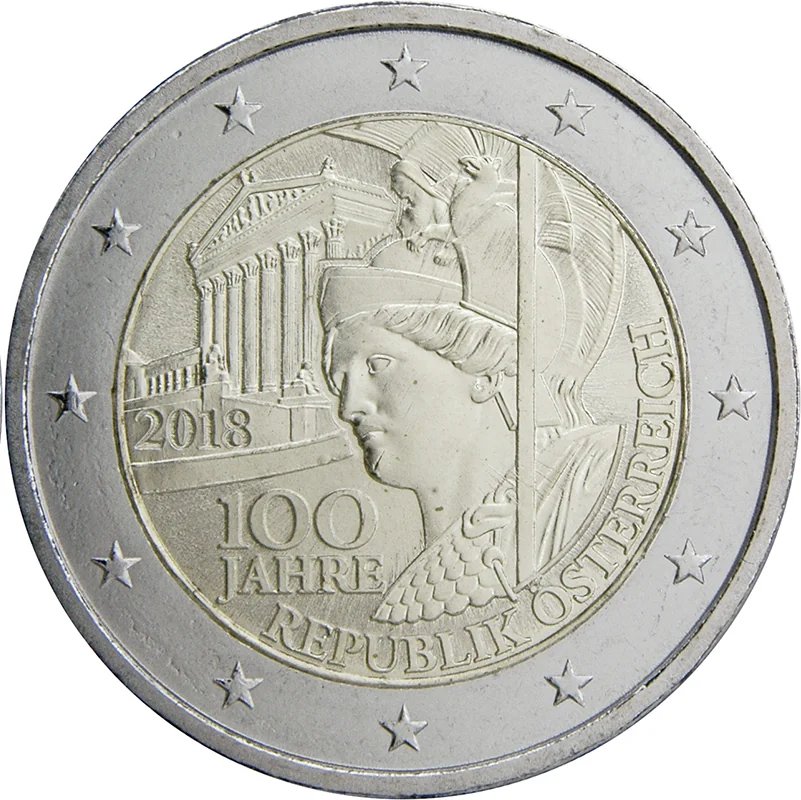
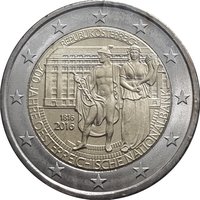
The coin's brass core depicts the Pallas Athena statue before Vienna's Parliament. Designed by Theophil von Hansen, she wears a sphinx-adorned helmet and symbolizes Austrian parliamentarianism, wisdom, and reason.
Inscription:
REPUBLIK ÖSTERREICH
100 JAHRE
2018
100 JAHRE
2018
Translation:
REPUBLIC OF AUSTRIA
100 YEARS
2018
100 YEARS
2018
Script: Latin
Language: German
Designers: Helmut Andexlinger, Herbert Wähner
Reverse
Edge
Legend:
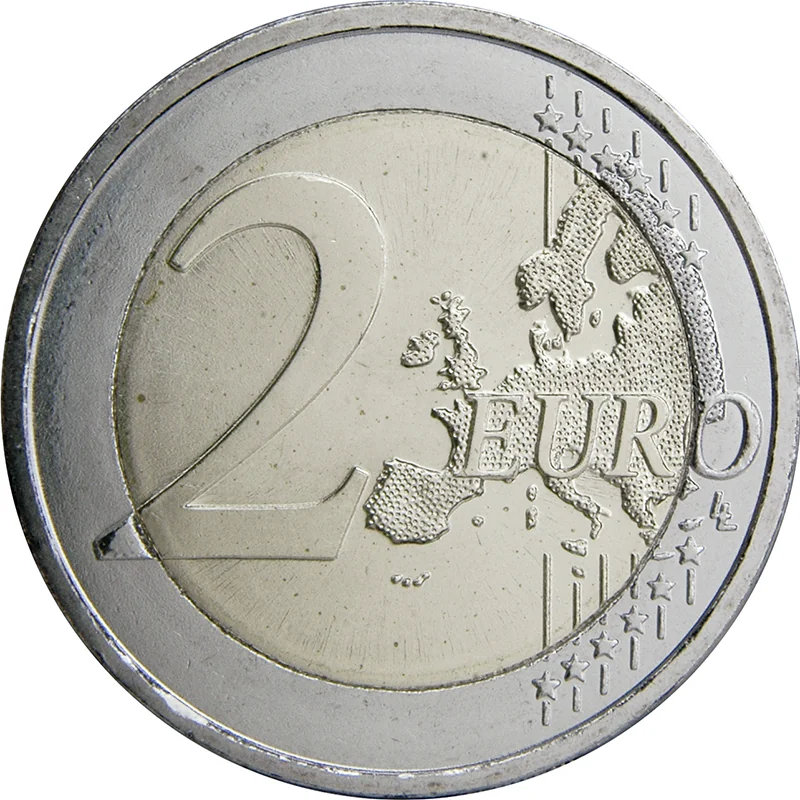
2 EURO *** 2 EURO *** 2 EURO *** 2 EURO ***
Mints
| Name | Mark |
|---|---|
| Münze Österreich | — |
Mintings
| Year | Mint Mark | Mintage | Quality | Collection |
|---|---|---|---|---|
| 2018 | — | 12,600,000 | ||
| 2018 | — | 50,000 | BU | |
| 2018 | — | 10,000 | Proof |
Historical background
In 2018, Austria was a well-established member of the Eurozone, having adopted the euro as its physical currency in 2002. The country's monetary policy was therefore not set independently but by the European Central Bank (ECB), which focused on price stability across the entire currency union. The Austrian economy was performing solidly, with steady growth and low unemployment, but it shared in the broader Eurozone challenges of the period, including persistently low inflation and the ongoing need for accommodative monetary policy from the ECB to support the economic recovery from the sovereign debt crisis.
Domestically, there was little public debate about abandoning the euro, as the currency enjoyed strong popular support for the stability and convenience it provided. However, economic discussions often centered on the euro's exchange rate, particularly against the US dollar, and its impact on Austrian exports. Furthermore, as a nation with a strong tradition of saving, there was notable concern among Austrian households and financial institutions regarding the ECB's historically low interest rates, which eroded returns on conservative savings and pension products.
The year also saw Austria actively engaged in broader European financial initiatives that would shape the currency's future. This included participating in debates on deepening the Economic and Monetary Union (EMU) and the completion of the Banking Union. Domestically, the Schilling, the former national currency, remained a nostalgic reference point but was not a serious political issue. Thus, Austria's 2018 currency situation was characterized by stable integration into the Eurozone framework, with policy attention focused on European-level responses to economic conditions rather than any national monetary upheaval.
Domestically, there was little public debate about abandoning the euro, as the currency enjoyed strong popular support for the stability and convenience it provided. However, economic discussions often centered on the euro's exchange rate, particularly against the US dollar, and its impact on Austrian exports. Furthermore, as a nation with a strong tradition of saving, there was notable concern among Austrian households and financial institutions regarding the ECB's historically low interest rates, which eroded returns on conservative savings and pension products.
The year also saw Austria actively engaged in broader European financial initiatives that would shape the currency's future. This included participating in debates on deepening the Economic and Monetary Union (EMU) and the completion of the Banking Union. Domestically, the Schilling, the former national currency, remained a nostalgic reference point but was not a serious political issue. Thus, Austria's 2018 currency situation was characterized by stable integration into the Eurozone framework, with policy attention focused on European-level responses to economic conditions rather than any national monetary upheaval.
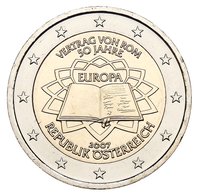
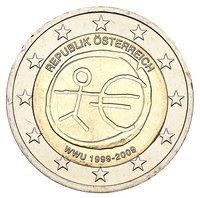
Series: Austria 2 euro commemoratives

🌱 Very Common