

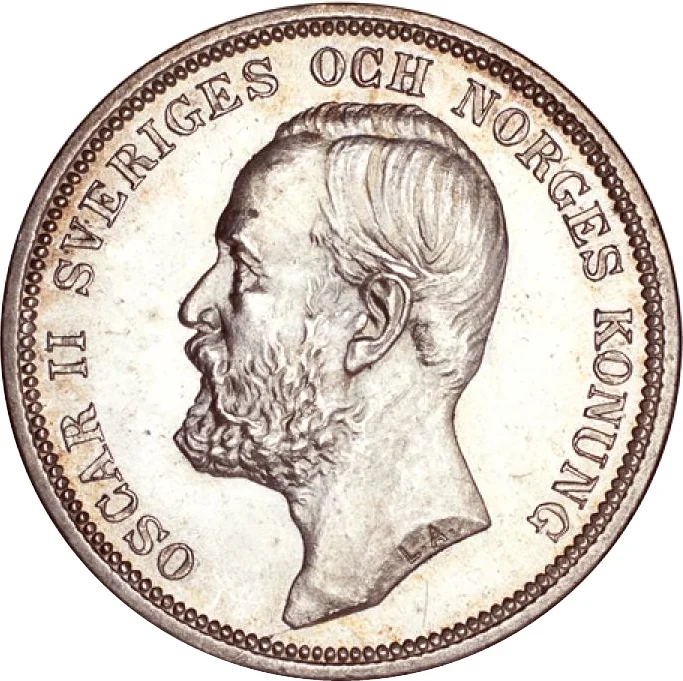

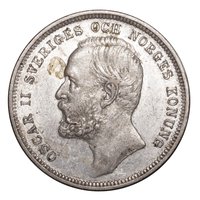
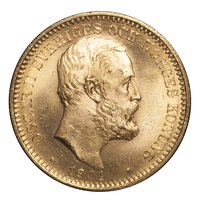
Obverse
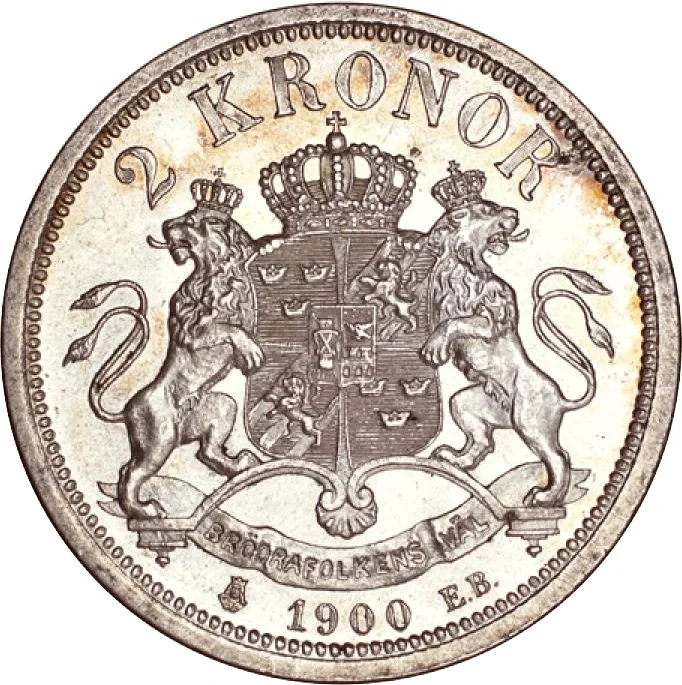
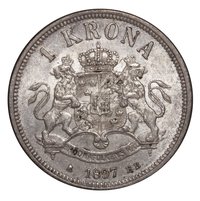
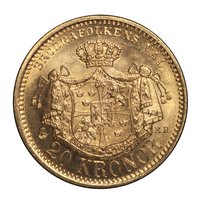
Reverse
Edge
Milled
Mints
| Name | Mark |
|---|---|
| Kungliga Myntet | — |
Mintings
| Year | Mint Mark | Mintage | Quality | Collection |
|---|---|---|---|---|
| 1890 | — | 71,877 | ||
| 1892 | — | 86,651 | ||
| 1893 | — | 48,827 | ||
| 1897 | — | 206,819 | ||
| 1898 | — | — | ||
| 1900 | — | 130,837 | ||
| 1903 | — | 64,308 | ||
| 1904 | — | 175,029 |
Historical background
In 1890, Sweden operated under a bimetallic currency system, formally established by the 1873 Scandinavian Monetary Union with Denmark and Norway. This union created the krona (crown), replacing the former riksdaler, and pegged it to gold at a fixed rate of 2,480 kronor per kilogram of fine gold. While the system was legally bimetallic, allowing for both gold and silver coinage, the global decline in silver prices following the 1870s had effectively pushed Sweden onto a de facto gold standard. Silver coins remained in circulation but as token money, their value derived from their fixed exchange rate with gold-backed notes and coins.
This period was one of monetary stability and economic growth for Sweden, fueled by rapid industrialization, exports of timber, iron ore, and emerging engineering goods. The gold standard provided stable exchange rates with other major economies, facilitating international trade and investment, which were crucial for Sweden's industrial expansion. However, the system also tied the domestic money supply to the nation's gold reserves, limiting the central bank's (the Riksbank) ability to respond to domestic liquidity crises and making the economy vulnerable to international financial shocks.
Beneath this stability, debates were simmering. The global "silver question" and agricultural price deflation led to periodic political pressure, particularly from debtor farmers, for monetary reform or even a return to a silver standard to increase the money supply and raise prices. These calls were largely resisted by the financial establishment, industrialists, and the Riksbank, who prized the stability and international credibility of the gold peg. Thus, the currency situation in 1890 was characterized by a successful and rigid international system that supported growth but was beginning to face scrutiny over its social and economic constraints.
This period was one of monetary stability and economic growth for Sweden, fueled by rapid industrialization, exports of timber, iron ore, and emerging engineering goods. The gold standard provided stable exchange rates with other major economies, facilitating international trade and investment, which were crucial for Sweden's industrial expansion. However, the system also tied the domestic money supply to the nation's gold reserves, limiting the central bank's (the Riksbank) ability to respond to domestic liquidity crises and making the economy vulnerable to international financial shocks.
Beneath this stability, debates were simmering. The global "silver question" and agricultural price deflation led to periodic political pressure, particularly from debtor farmers, for monetary reform or even a return to a silver standard to increase the money supply and raise prices. These calls were largely resisted by the financial establishment, industrialists, and the Riksbank, who prized the stability and international credibility of the gold peg. Thus, the currency situation in 1890 was characterized by a successful and rigid international system that supported growth but was beginning to face scrutiny over its social and economic constraints.
🌱 Common