

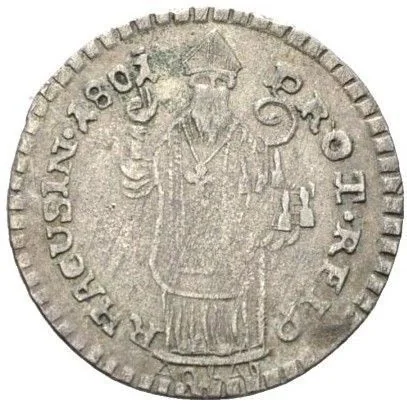
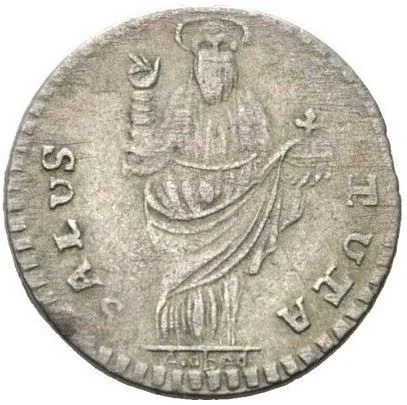
1 Perpero – Republic of Ragusa
Croatia
Context
Years: 1801–1803
Country: Croatia 
Issuer: Republic of Ragusa
Period:
(1294—1803)
Currency:
(1294—1803)
Subdivision: 1 Perpero = 12 Grosetti
Demonetized: Yes
Material
References
Numista: #129803
Value
Bullion value: $11.51
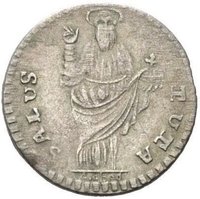
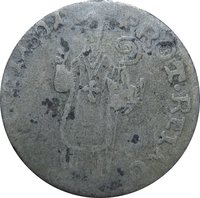
Obverse
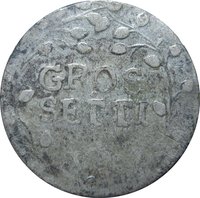
Reverse
Edge
Mintings
| Year | Mint Mark | Mintage | Quality | Collection |
|---|---|---|---|---|
| 1801 | — | — | ||
| 1802 | — | — | ||
| 1803 | — | — |
Historical background
In 1801, the Republic of Ragusa (modern-day Dubrovnik, Croatia) operated within a complex and precarious monetary environment, a reflection of its unique political and economic position. As a small, aristocratic maritime republic, it formally owed allegiance to the Ottoman Empire as a tributary state while simultaneously navigating the spheres of influence of major European powers, particularly the Habsburg Monarchy and, increasingly, Napoleonic France. This political duality was mirrored in its currency circulation. The republic did not mint its own coins but functioned with a diverse system of foreign specie. The most dominant and trusted currency in daily commerce was the Austrian Conventionsthaler and its subsidiary Kreuzer, due to Ragusa's extensive trade links with Habsburg lands. Alongside these, Ottoman piastres (kuruş), Venetian ducats and lire, and Spanish silver pesos (pieces of eight) all circulated freely, their values fluctuating based on trade flows and metallic content.
This multi-currency system, while flexible for international trade, presented significant challenges. Exchange rates between the various gold, silver, and billon coins were not fixed, leading to complexities in accounting and the potential for arbitrage. The Ragusan government attempted to regulate this by officially proclaiming fixed values for certain foreign coins, but market forces often prevailed. Furthermore, the period around 1801 was one of growing monetary instability across Europe due to the Napoleonic Wars, which disrupted trade routes and caused shortages of specie. For Ragusa, a city-state whose wealth was almost entirely derived from maritime commerce and financial services, any disruption to the reliable flow of precious metal coins threatened its economic stability.
The currency situation in 1801 thus encapsulates Ragusa's fragile independence in its final years. The reliance on foreign coinage underscored its lack of sovereign monetary authority and its dependence on the economic stability of larger empires. This financial vulnerability was a microcosm of its broader political predicament. Within a decade, in 1808, this delicate balance would collapse entirely when Napoleon's forces, having already abolished the Venetian Republic, marched into Ragusa and formally dissolved the centuries-old republic, sweeping away its economic and political structures.
This multi-currency system, while flexible for international trade, presented significant challenges. Exchange rates between the various gold, silver, and billon coins were not fixed, leading to complexities in accounting and the potential for arbitrage. The Ragusan government attempted to regulate this by officially proclaiming fixed values for certain foreign coins, but market forces often prevailed. Furthermore, the period around 1801 was one of growing monetary instability across Europe due to the Napoleonic Wars, which disrupted trade routes and caused shortages of specie. For Ragusa, a city-state whose wealth was almost entirely derived from maritime commerce and financial services, any disruption to the reliable flow of precious metal coins threatened its economic stability.
The currency situation in 1801 thus encapsulates Ragusa's fragile independence in its final years. The reliance on foreign coinage underscored its lack of sovereign monetary authority and its dependence on the economic stability of larger empires. This financial vulnerability was a microcosm of its broader political predicament. Within a decade, in 1808, this delicate balance would collapse entirely when Napoleon's forces, having already abolished the Venetian Republic, marched into Ragusa and formally dissolved the centuries-old republic, sweeping away its economic and political structures.

💎 Extremely Rare