

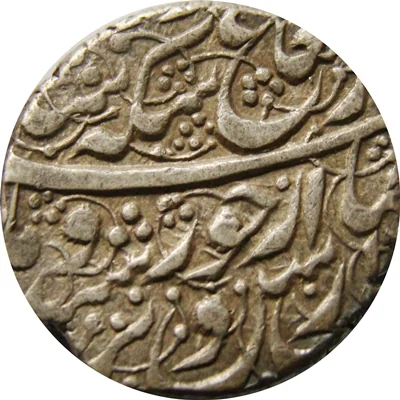
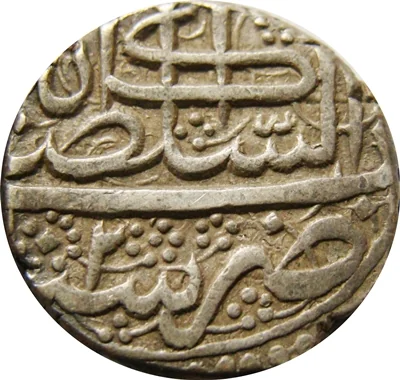
1 Rupee – Afghanistan
Afghanistan
Context
Material
Diameter: 21.69 mm
Weight: 10.5 g
Silver weight: 10.50 g
Shape: Irregular round
Composition: Silver
Magnetic: No
References
KM: #Click to copy to clipboard468
Numista: #104847
Value
Bullion value: $31.10
Obverse
Description:
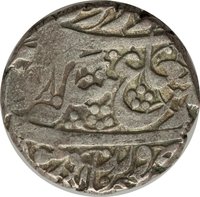
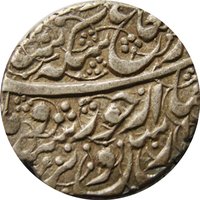
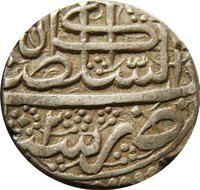
Inscription, AH date. Varied obverse legend arrangements.
Script: Arabic
Reverse
Description:
Kabul mint, dated by reign.
Script: Arabic
Edge
Mints
| Name | Mark |
|---|---|
| Kabul | — |
Mintings
| Year | Mint Mark | Mintage | Quality | Collection |
|---|---|---|---|---|
| 1819 | — | — | ||
| 1820 | — | — | ||
| 1821 | — | — | ||
| 1822 | — | — | ||
| 1823 | — | — | ||
| 1824 | — | — |
Historical background
In 1819, Afghanistan's currency situation was characterized by fragmentation and instability, reflecting the broader political turmoil following the collapse of the Durrani Empire. The empire, founded by Ahmad Shah Durrani, had previously provided a degree of monetary unity, but after his death in 1772, the realm fractured into competing principalities. By 1819, the Sadozai dynasty had effectively ended, and the Barakzai chiefs were vying for control, with no single authority issuing a universal currency for the entire region. This decentralization meant that monetary systems were largely local, varying from city to city and ruler to ruler.
The primary circulating medium consisted of silver and copper coins. The most recognized silver coin was the rupee, often minted in the style of the earlier Durrani issues or influenced by the Mughal and Sikh coinage of neighboring regions. Copper dams and paisa coins facilitated smaller, everyday transactions. The value, weight, and purity of these coins were highly inconsistent, as they were struck at various mints in cities like Kabul, Kandahar, Herat, and Peshawar under the authority of different local khans and warlords. This lack of standardization created significant challenges for trade and commerce, as merchants had to constantly assess and negotiate exchange rates.
Furthermore, the currency landscape was influenced by powerful external economic forces. To the east, the Sikh Empire under Ranjit Singh, which had annexed Peshawar and other former Durrani territories, circulated its own rupees, adding another competing currency along Afghanistan's frontiers. Meanwhile, trade with British India and Central Asian khanates meant that foreign coins, particularly Persian and Indian rupees, also circulated widely, often preferred for their reliability. Consequently, Afghanistan in 1819 lacked a sovereign monetary system, operating instead with a patchwork of debased local coinage and more trusted foreign currency, underscoring the country's political disintegration and economic vulnerability.
The primary circulating medium consisted of silver and copper coins. The most recognized silver coin was the rupee, often minted in the style of the earlier Durrani issues or influenced by the Mughal and Sikh coinage of neighboring regions. Copper dams and paisa coins facilitated smaller, everyday transactions. The value, weight, and purity of these coins were highly inconsistent, as they were struck at various mints in cities like Kabul, Kandahar, Herat, and Peshawar under the authority of different local khans and warlords. This lack of standardization created significant challenges for trade and commerce, as merchants had to constantly assess and negotiate exchange rates.
Furthermore, the currency landscape was influenced by powerful external economic forces. To the east, the Sikh Empire under Ranjit Singh, which had annexed Peshawar and other former Durrani territories, circulated its own rupees, adding another competing currency along Afghanistan's frontiers. Meanwhile, trade with British India and Central Asian khanates meant that foreign coins, particularly Persian and Indian rupees, also circulated widely, often preferred for their reliability. Consequently, Afghanistan in 1819 lacked a sovereign monetary system, operating instead with a patchwork of debased local coinage and more trusted foreign currency, underscoring the country's political disintegration and economic vulnerability.

💎 Extremely Rare