

1 Qindar Ar – Albania
Albania
Context

Material
References
KM: #Click to copy to clipboard14
Numista: #10470
Value
Exchange value: 1⁄20 ALK
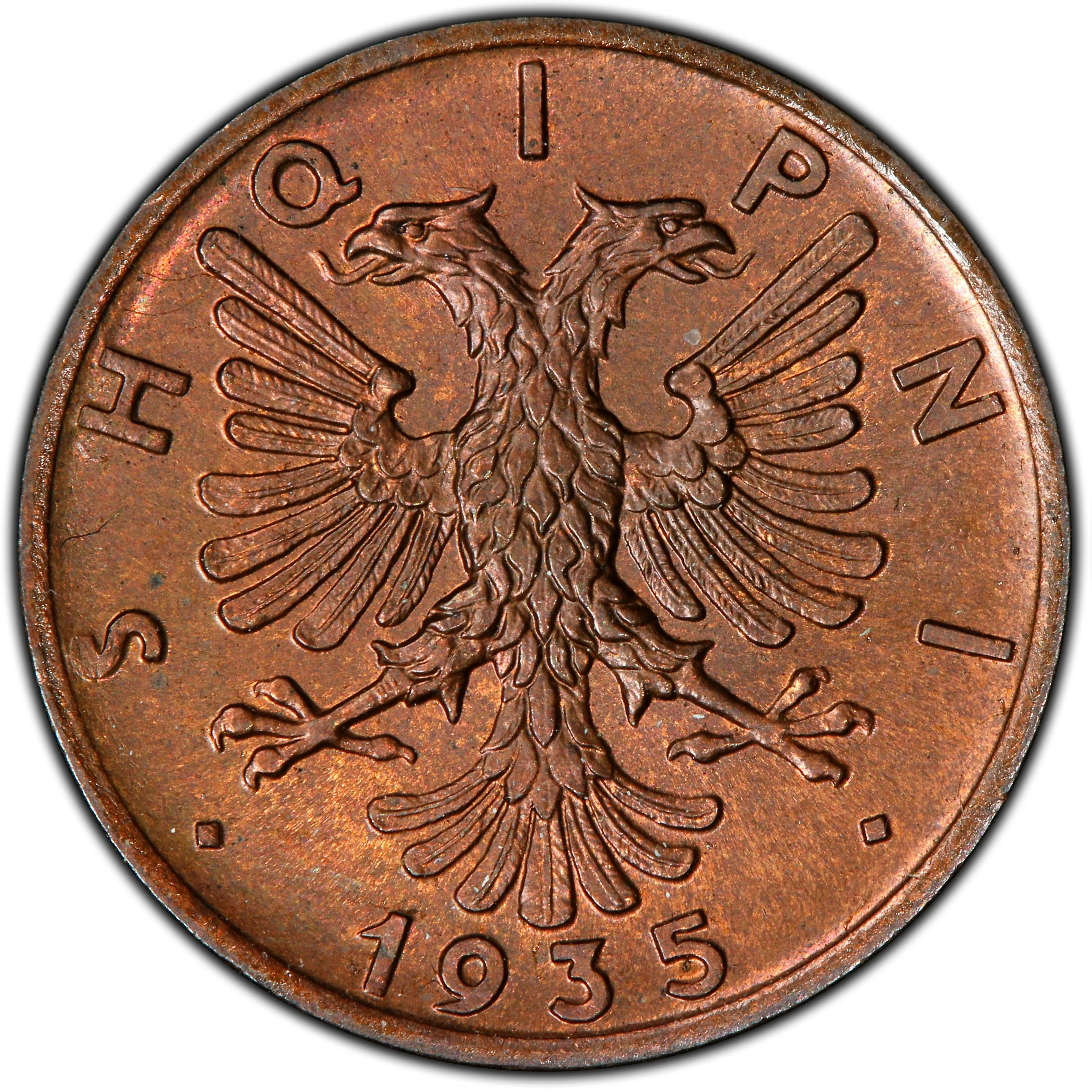
Obverse
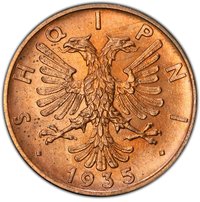
Description:
Two-headed eagle, wings and legs outstretched.
Inscription:
·SHQIPNI·
1935
1935
Translation:
AlBANIA
1935
1935
Script: Latin
Language: Albanian
Engraver: Giuseppe Romagnoli
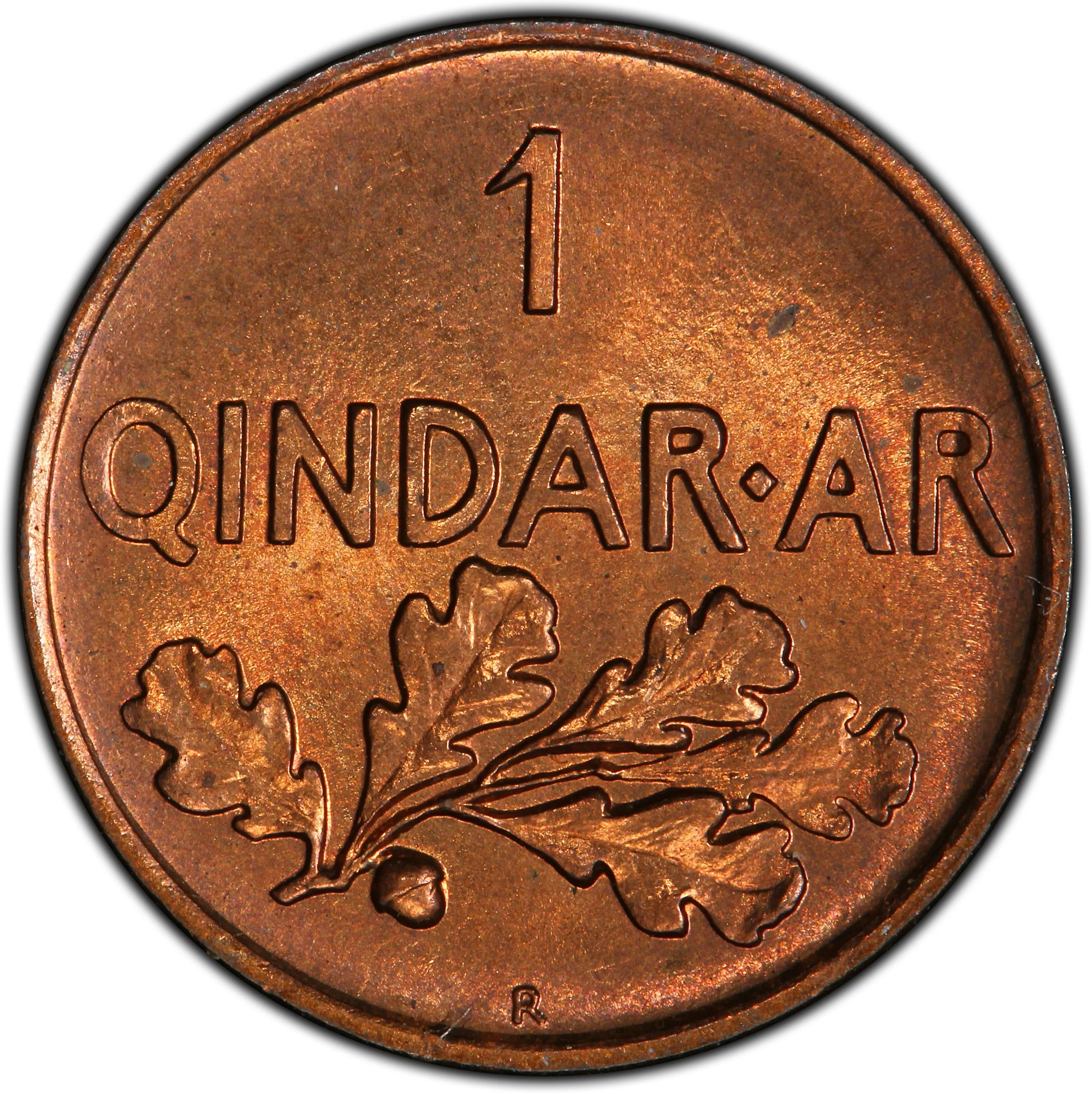
Reverse
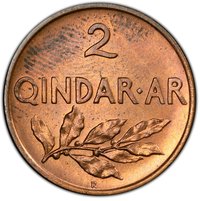
Description:
Oak leaves and acorn below denomination.
Inscription:
1
QINDAR·AR
R
QINDAR·AR
R
Script: Latin
Engraver: Giuseppe Romagnoli
Edge
Plain
Categories
| Animal> Bird |
| Symbol> Double-headed eagle |
Mints
| Name | Mark |
|---|---|
| Rome | R |
Mintings
| Year | Mint Mark | Mintage | Quality | Collection |
|---|---|---|---|---|
| 1935 | R | 2,000,000 |
Historical background
In 1935, Albania's currency situation was characterized by the dominance of the gold franc (Franga Ari) as the official unit of account, a system established in 1926. However, the actual circulating medium was a complex mix of physical foreign currencies, primarily the Italian lira and the gold franc, alongside the Albanian qindarka (a subdivision of the franc). This created a de facto bimetallic system where everyday transactions were conducted in multiple metallic and paper currencies, leading to practical complications for commerce and state accounting.
This monetary landscape was a direct reflection of Albania's political and economic dependence. Following the Treaty of Tirana (1926) and the First Pact of Tirana (1927), Italy held immense influence over the Albanian state and its economy. The National Bank of Albania, which held the exclusive right of note issue, was founded in Rome and was effectively an Italian institution. While it had issued banknotes denominated in francs since 1926, the Italian lira remained heavily circulated, symbolizing Italy's deepening penetration and control over Albanian financial structures under King Zog I's regime.
Consequently, the currency situation in 1935 was one of formal stability but underlying vulnerability. The gold franc provided a nominal standard, but the reliance on foreign specie, especially the lira, tied Albania's monetary health directly to Italian policy. This arrangement facilitated Italian investment and loans, which were strategically used to bind Albania closer, but it also left the country with little independent monetary authority, a prelude to the full economic annexation that would culminate in Italy's military invasion in 1939.
This monetary landscape was a direct reflection of Albania's political and economic dependence. Following the Treaty of Tirana (1926) and the First Pact of Tirana (1927), Italy held immense influence over the Albanian state and its economy. The National Bank of Albania, which held the exclusive right of note issue, was founded in Rome and was effectively an Italian institution. While it had issued banknotes denominated in francs since 1926, the Italian lira remained heavily circulated, symbolizing Italy's deepening penetration and control over Albanian financial structures under King Zog I's regime.
Consequently, the currency situation in 1935 was one of formal stability but underlying vulnerability. The gold franc provided a nominal standard, but the reliance on foreign specie, especially the lira, tied Albania's monetary health directly to Italian policy. This arrangement facilitated Italian investment and loans, which were strategically used to bind Albania closer, but it also left the country with little independent monetary authority, a prelude to the full economic annexation that would culminate in Italy's military invasion in 1939.
Series: 1935 Albania circulation coins
🌱 Fairly Common