

5 forint – Hungary
Add to wishlist
Circulating commemorative coins
Commemoration: Lajos Kossuth
Hungary
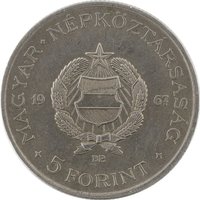
Obverse
Description:
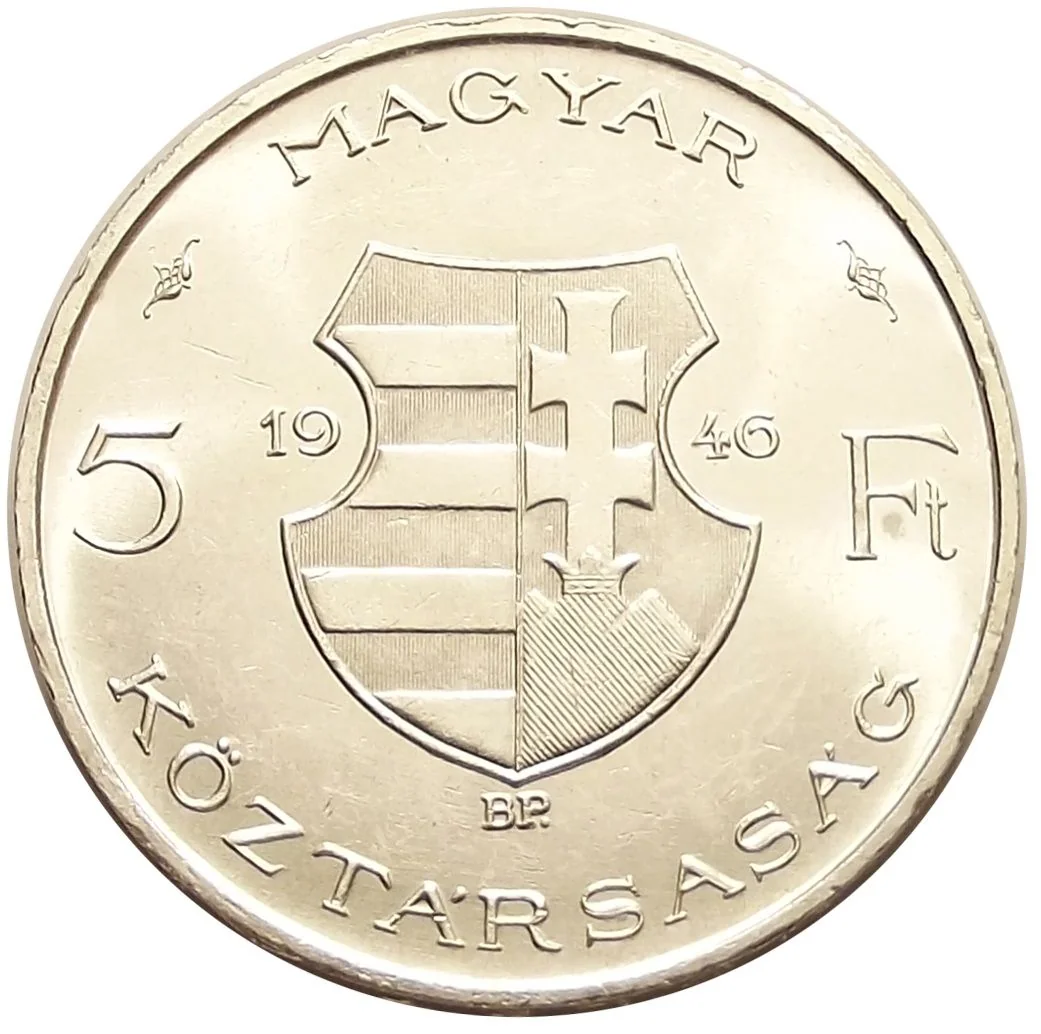
Hungarian coat of arms centered, with state name, denomination, and issue date on the sides.
Inscription:
MAGYAR KÖZTÁRSASÁG
5 19 46 Ft
BP.
5 19 46 Ft
BP.
Translation:
Hungarian Republic
5 46 19 Ft
Budapest
5 46 19 Ft
Budapest
Script: Latin
Language: Hungarian
Engraver: István Iván
Reverse
Description:
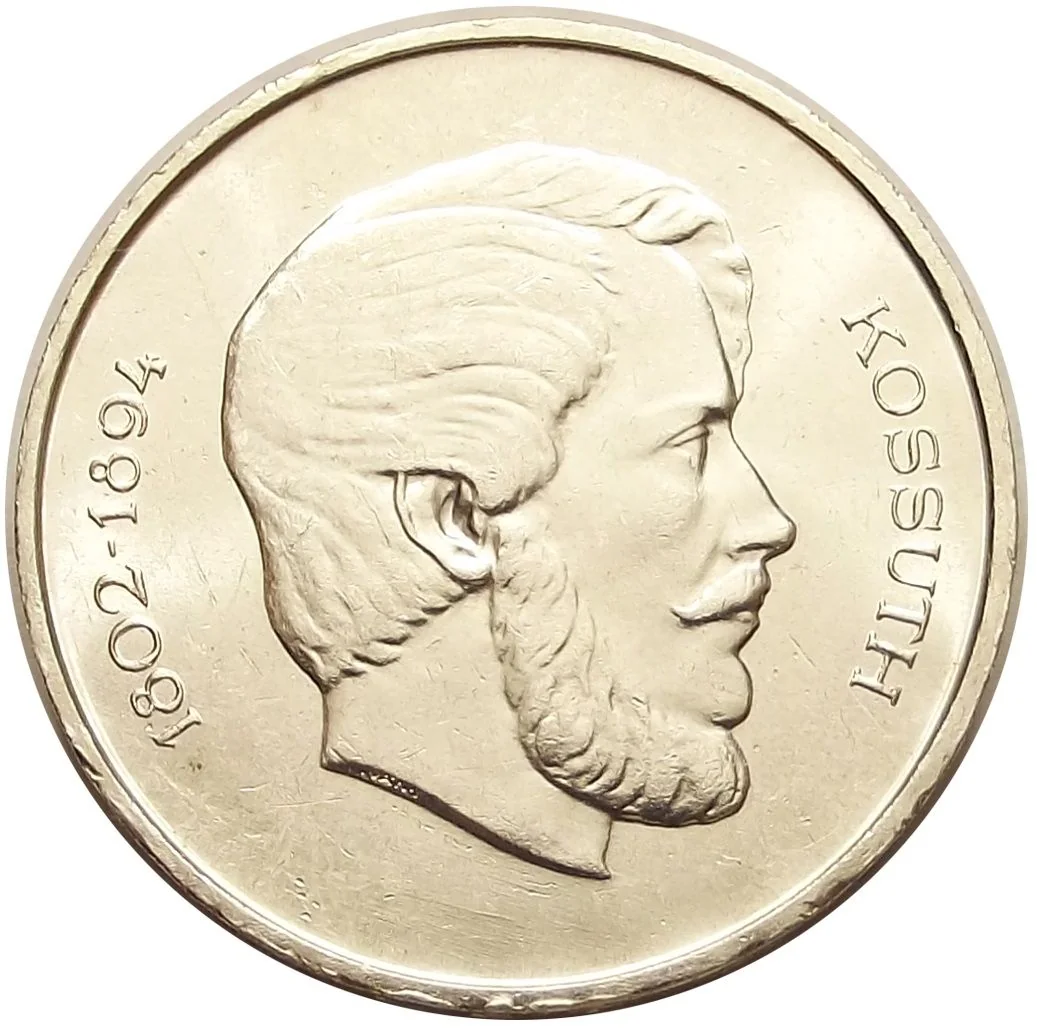
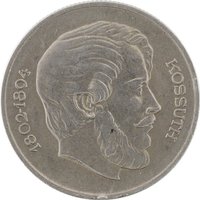
Bust of Lajos Kossuth in profile.
Inscription:
1802-1894
KOSSUTH
KOSSUTH
Script: Latin
Engraver: István Iván
Edge
Smooth with inscription
Legend:
MUNKA A NEMZETI JÓLÉT ALAPJA +
Translation:
WORK IS THE FOUNDATION OF NATIONAL PROSPERITY +
Language: Hungarian
Mints
| Name | Mark |
|---|---|
| Hungarian mint | BP. |
Mintings
| Year | Mint Mark | Mintage | Quality | Collection |
|---|---|---|---|---|
| 1946 | BP | 39,802 |
Historical background
In 1946, Hungary experienced the most severe hyperinflation in recorded history, an economic catastrophe born from the devastation of World War II. The national currency, the pengő, had been heavily debased during the war to fund the conflict, and the situation spiraled completely out of control following the country's occupation and subsequent ruin. By mid-1946, inflation reached incomprehensible levels, with prices doubling every 15 hours at its peak. The government issued banknotes in denominations as high as 100 quintillion (10^20) pengő, and everyday transactions required carrying stacks of virtually worthless currency.
The government attempted several desperate measures to halt the collapse, including the introduction of a tax-based auxiliary currency called the "tax pengő," but these failed to restore public confidence. The crisis paralyzed the economy, forcing a return to barter and destroying the savings of the entire population. The social and political turmoil was immense, undermining stability and creating a desperate need for a radical monetary solution.
This solution arrived on August 1, 1946, with the introduction of the forint, the new stable currency that remains Hungary's legal tender today. The forint was introduced at a rate of 1 forint = 400,000 quadrillion (4 x 10^29) pengő, a conversion that starkly illustrates the total annihilation of the old currency. Backed by a comprehensive stabilization plan, which included strict budgeting, control of the money supply, and international assistance, the forint immediately halted hyperinflation and restored basic monetary function, marking one of the most dramatic currency stabilizations of the 20th century.
The government attempted several desperate measures to halt the collapse, including the introduction of a tax-based auxiliary currency called the "tax pengő," but these failed to restore public confidence. The crisis paralyzed the economy, forcing a return to barter and destroying the savings of the entire population. The social and political turmoil was immense, undermining stability and creating a desperate need for a radical monetary solution.
This solution arrived on August 1, 1946, with the introduction of the forint, the new stable currency that remains Hungary's legal tender today. The forint was introduced at a rate of 1 forint = 400,000 quadrillion (4 x 10^29) pengő, a conversion that starkly illustrates the total annihilation of the old currency. Backed by a comprehensive stabilization plan, which included strict budgeting, control of the money supply, and international assistance, the forint immediately halted hyperinflation and restored basic monetary function, marking one of the most dramatic currency stabilizations of the 20th century.
🌟 Limited