

2 pengos (Franz von Liszt) – Hungary
Add to wishlist
Circulating commemorative coins
Commemoration: 50th Anniversary - Death of Franz von Liszt
Hungary
Context
Year: 1936
Issuer: Hungary
Ruler: Nicolas Horthy
Currency:
(1927—1946)
Demonetization: 31 January 1942
Total mintage: 202,000
Material
References
KM: #
Numista: #12868
Value
Bullion value: $15.65
Obverse
Description:
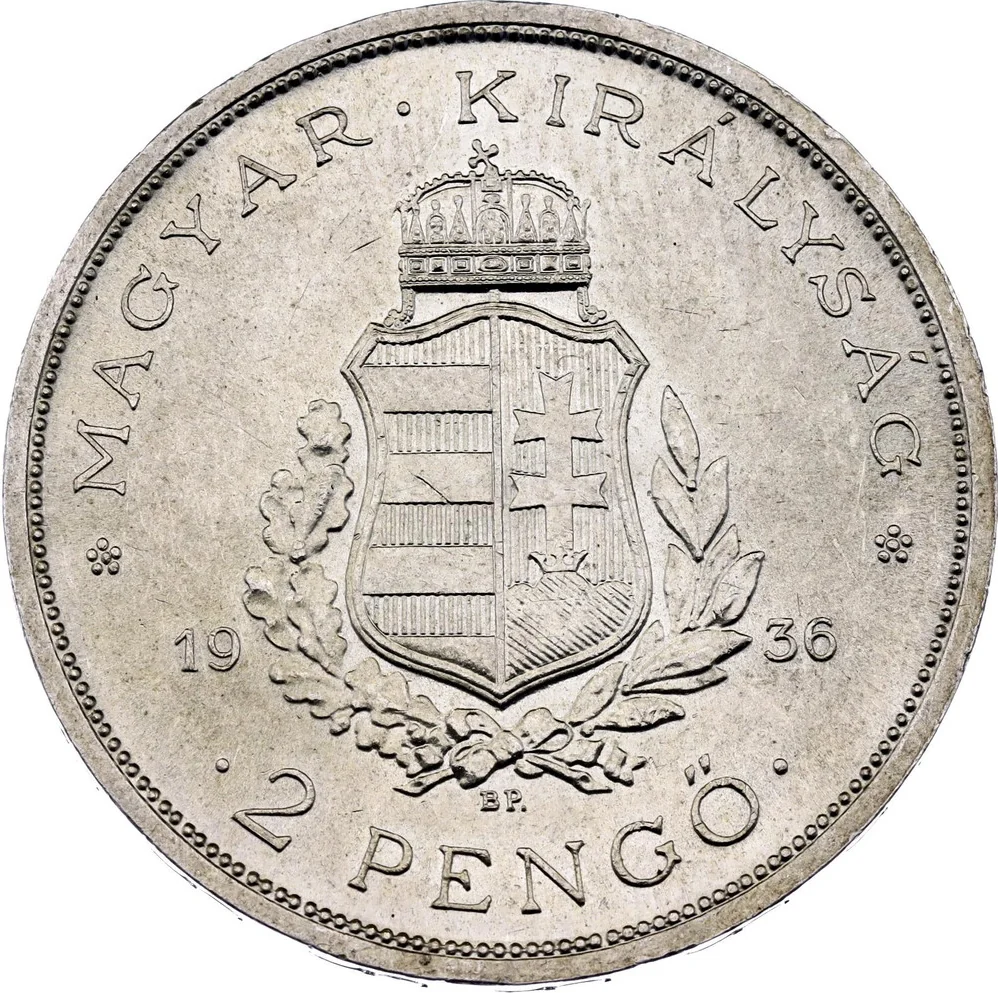
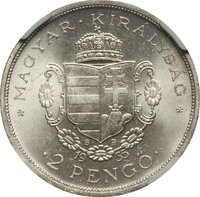
Hungary's coat of arms.
Inscription:
MAGYAR KIRÁLYSÁG
1936
BP.
2 PENGŐ
1936
BP.
2 PENGŐ
Translation:
Kingdom of Hungary
1936
Budapest
2 Pengő
1936
Budapest
2 Pengő
Script: Latin
Language: Hungarian
Engraver: Lajos Berán
Reverse
Description:
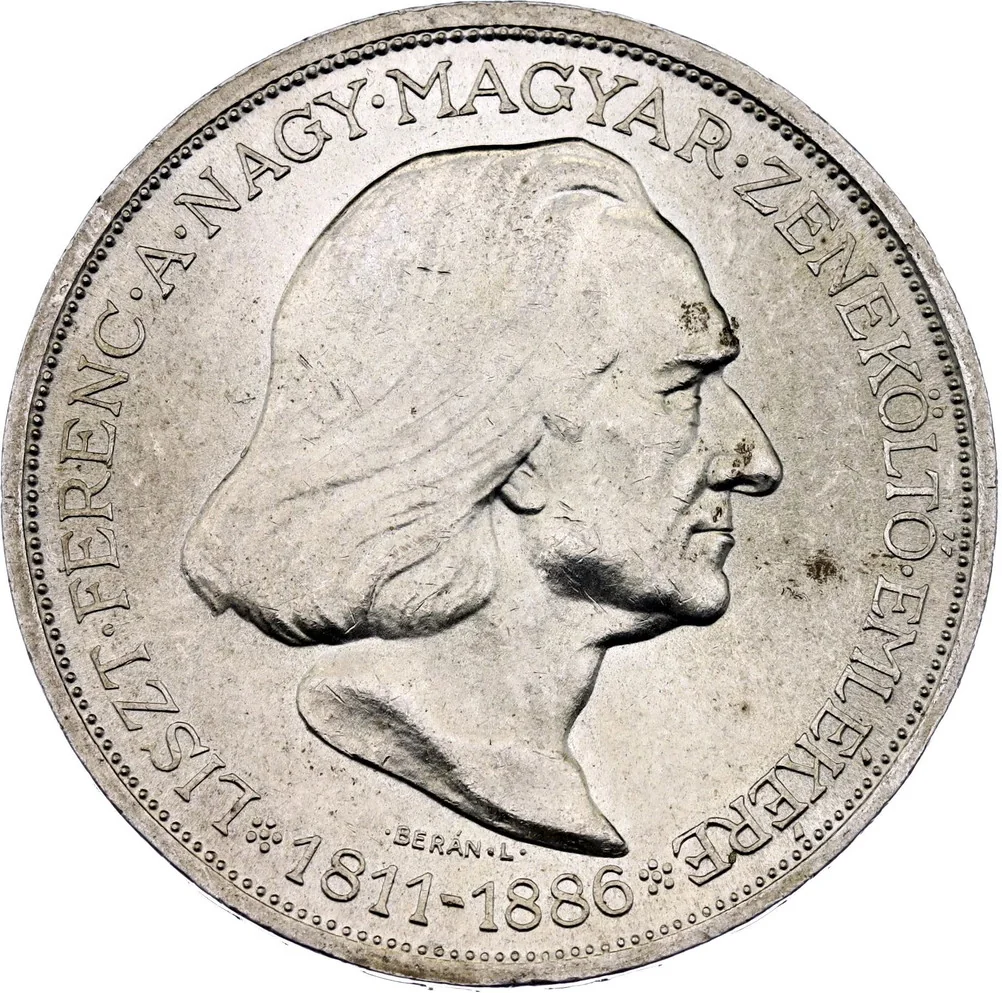
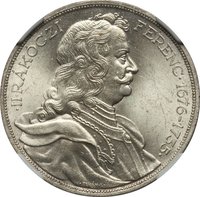
Portrait of Franz Liszt
Inscription:
LISZT FERENC A NAGY MAGYAR ZENEKÖLTŐ EMLÉKÉRE
BERÁN L.
1811-1886
BERÁN L.
1811-1886
Translation:
IN MEMORY OF FRANZ LISZT, THE GREAT HUNGARIAN MUSICAL POET
L. BERÁN
1811-1886
L. BERÁN
1811-1886
Script: Latin
Language: Hungarian
Engraver: Lajos Berán
Edge
Patterned
Categories
| Art> Music |
| Event> Death anniversary |
Mints
| Name | Mark |
|---|---|
| Hungarian mint | — |
Mintings
| Year | Mint Mark | Mintage | Quality | Collection |
|---|---|---|---|---|
| 1936 | — | 200,000 | ||
| 1936 | — | 2,000 | Proof |
Historical background
In 1936, Hungary’s currency situation was defined by its continued operation under a strict foreign exchange control regime, established in 1931 following the collapse of the Austrian Creditanstalt and the ensuing global financial crisis. The Hungarian pengő, introduced in 1927 to stabilize the hyperinflated post-war currency, was nominally pegged to gold but in practice its convertibility was suspended. The National Bank of Hungary, in close coordination with the government, managed a complex system of licensing for international transactions, allocating scarce foreign currency reserves primarily for essential imports like raw materials and debt servicing, while restricting capital flight and non-essential consumer goods.
The economy and currency were under significant strain due to the legacy of the Great Depression and the burdensome terms of the 1924 reconstruction loan, administered by the League of Nations. While some recovery in agricultural prices and industrial output was underway by 1936, Hungary’s chronic trade deficit and substantial foreign debt obligations meant its gold and foreign exchange reserves remained perilously low. Consequently, the pengő existed in a state of managed instability, with its real value on unofficial “black” or grey markets often lower than the official rate, reflecting a lack of international confidence.
This controlled environment was a tool of the increasingly autocratic Horthy regime, which used economic policy to pursue national goals of industrial development and military rearmament, while maintaining close economic ties with Nazi Germany. By 1936, Germany was becoming Hungary’s most important trading partner, with clearing agreements that bypassed hard currency needs but also increased Hungarian economic and political dependency. Thus, the currency situation was not merely a financial matter but a reflection of Hungary’s fragile economic independence and its strategic alignment within a destabilized Europe.
The economy and currency were under significant strain due to the legacy of the Great Depression and the burdensome terms of the 1924 reconstruction loan, administered by the League of Nations. While some recovery in agricultural prices and industrial output was underway by 1936, Hungary’s chronic trade deficit and substantial foreign debt obligations meant its gold and foreign exchange reserves remained perilously low. Consequently, the pengő existed in a state of managed instability, with its real value on unofficial “black” or grey markets often lower than the official rate, reflecting a lack of international confidence.
This controlled environment was a tool of the increasingly autocratic Horthy regime, which used economic policy to pursue national goals of industrial development and military rearmament, while maintaining close economic ties with Nazi Germany. By 1936, Germany was becoming Hungary’s most important trading partner, with clearing agreements that bypassed hard currency needs but also increased Hungarian economic and political dependency. Thus, the currency situation was not merely a financial matter but a reflection of Hungary’s fragile economic independence and its strategic alignment within a destabilized Europe.
🌱 Common