

10 cents – Straits Settlements
Add to wishlist
Malaysia
Context
Years: 1902–1903
Country: Malaysia
Issuer: Straits Settlements
Ruler: Edward VII
Currency:
(1845—1939)
Demonetized: Yes
Total mintage: 7,519,265
Material
References
KM: #
Numista: #12774
Value
Bullion value: $5.55
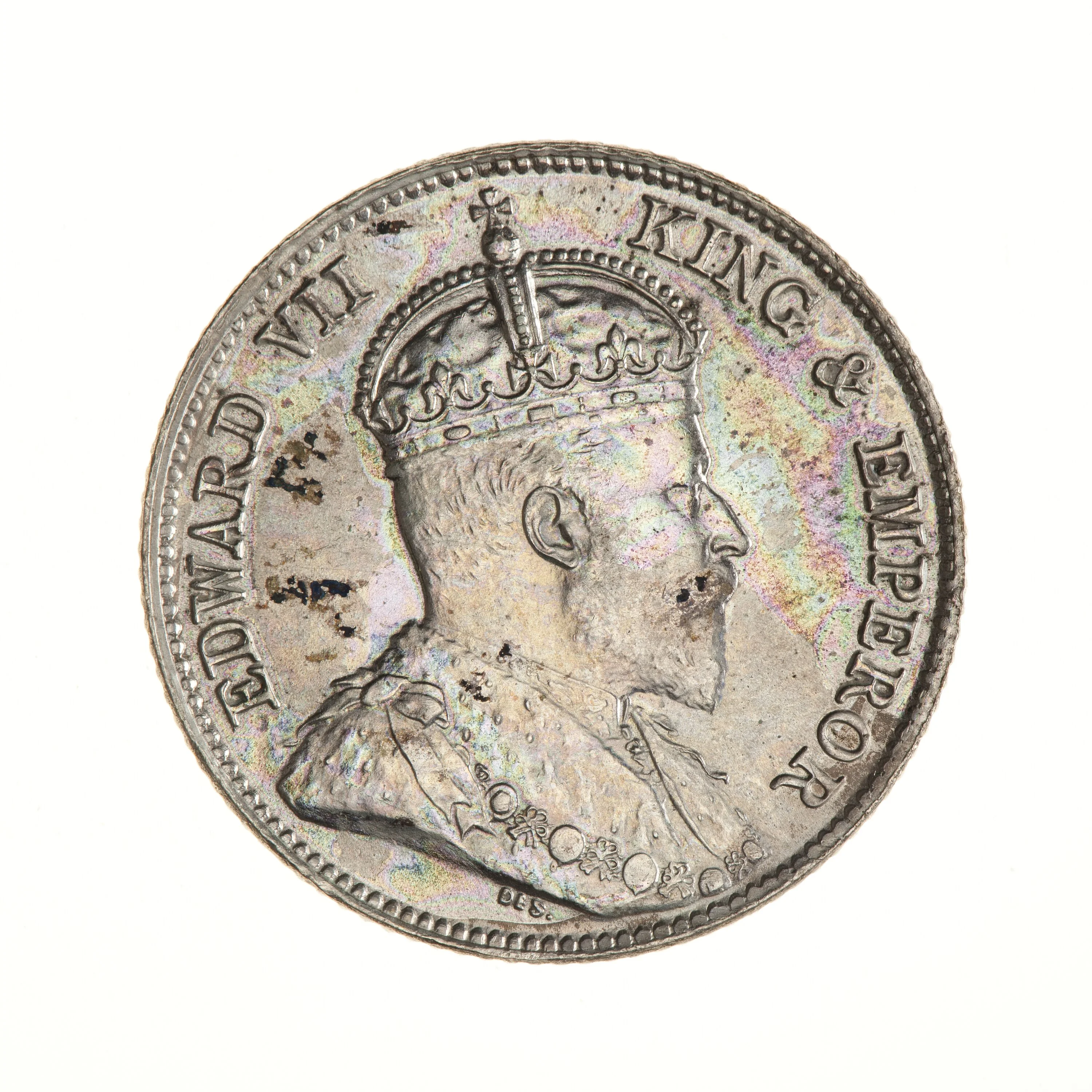
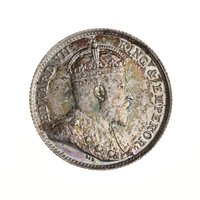
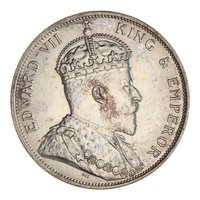
Obverse
Description:
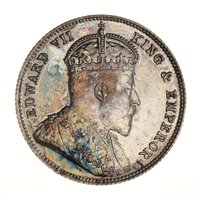
Right-facing crowned bust.
Inscription:
EDWARD VII KING & EMPEROR
Translation:
EDWARD VII KING & EMPEROR
Script: Latin
Engraver: George William de Saulles
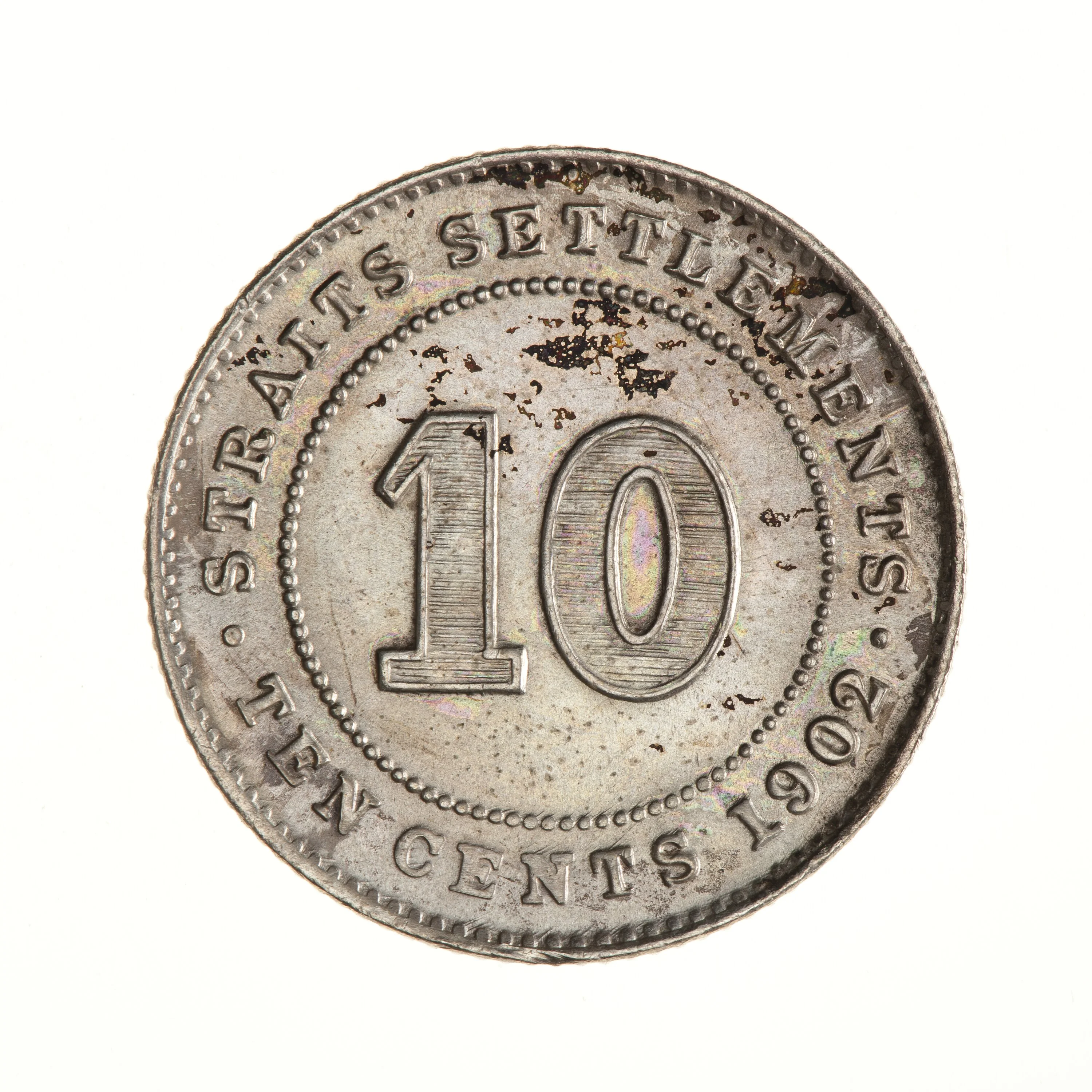
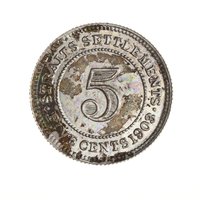
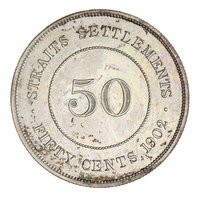
Reverse
Description:
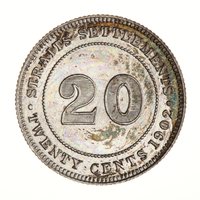
Denomination in beaded circle, date at lower right.
Inscription:
·STRAITS SETTLEMENTS·
10
TEN CENTS 1902
10
TEN CENTS 1902
Script: Latin
Edge
Reeded
Mints
| Name | Mark |
|---|---|
| Royal Mint (Tower Hill) | — |
Mintings
| Year | Mint Mark | Mintage | Quality | Collection |
|---|---|---|---|---|
| 1902 | — | 6,118,000 | ||
| 1902 | — | — | Proof | |
| 1903 | — | 1,401,265 | ||
| 1903 | — | — | Proof |
Historical background
By 1902, the currency situation in the Straits Settlements (comprising Singapore, Penang, and Malacca) was one of transition and consolidation under a formal colonial system. The region had long been a commercial crossroads, leading to a chaotic circulation of various silver dollars, including the popular Spanish and Mexican "Carolus" and "pillar" dollars, as well as the British trade dollar and the Hong Kong dollar. This multiplicity of coins, each with fluctuating intrinsic silver value, created significant challenges for trade and government accounting, prompting the colonial administration to seek a uniform and stable currency.
The key development came in 1903, but was prepared for throughout 1902, with the passage of the Straits Settlements (Coinage) Order in Council. This legislation established a full, distinct currency system for the colony, moving beyond the previous practice of merely declaring certain foreign silver coins as legal tender. The cornerstone of this new system was the introduction of a Straits dollar, to be minted by the Royal Mint in London with a fixed silver content and a guaranteed sterling exchange rate of 2 shillings 4 pence. This effectively placed the Straits Settlements on a sterling exchange standard, ensuring stability with Britain's gold-based currency.
Therefore, in 1902, the monetary landscape was characterised by the final phase of planning and legislative groundwork to replace the existing jumble of silver currencies. The authorities aimed to eliminate the inefficiencies and risks of the old system by introducing a government-issued, token coinage that would be the sole legal tender. This move was designed to solidify British economic control, simplify commercial transactions, and firmly anchor the colony's finances to the imperial sterling system, setting the stage for the new Straits dollar to become the dominant currency from 1904 onward.
The key development came in 1903, but was prepared for throughout 1902, with the passage of the Straits Settlements (Coinage) Order in Council. This legislation established a full, distinct currency system for the colony, moving beyond the previous practice of merely declaring certain foreign silver coins as legal tender. The cornerstone of this new system was the introduction of a Straits dollar, to be minted by the Royal Mint in London with a fixed silver content and a guaranteed sterling exchange rate of 2 shillings 4 pence. This effectively placed the Straits Settlements on a sterling exchange standard, ensuring stability with Britain's gold-based currency.
Therefore, in 1902, the monetary landscape was characterised by the final phase of planning and legislative groundwork to replace the existing jumble of silver currencies. The authorities aimed to eliminate the inefficiencies and risks of the old system by introducing a government-issued, token coinage that would be the sole legal tender. This move was designed to solidify British economic control, simplify commercial transactions, and firmly anchor the colony's finances to the imperial sterling system, setting the stage for the new Straits dollar to become the dominant currency from 1904 onward.
🌟 Uncommon