

¼ cent – Straits Settlements
Add to wishlist
Malaysia
Context
Year: 1916
Country: Malaysia
Issuer: Straits Settlements
Ruler: George V
Currency:
(1845—1939)
Demonetized: Yes
Total mintage: 4,000,000
Material
References
KM: #
Numista: #12769
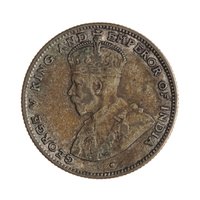
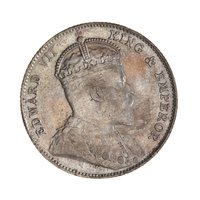
Obverse
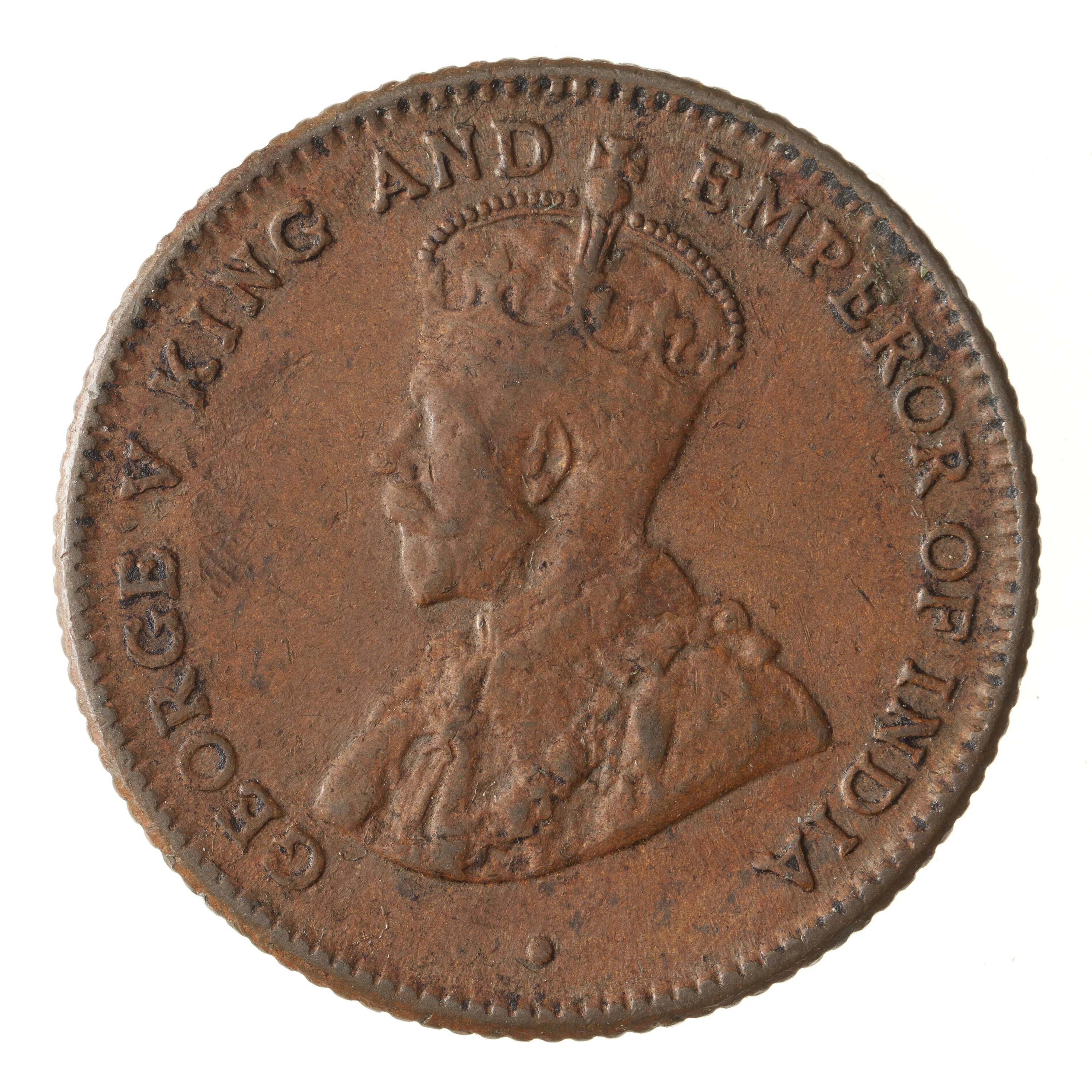
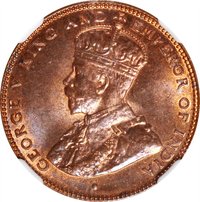
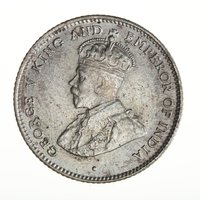
Description:
Crowned left-facing bust.
Inscription:
· GEORGE V KING AND EMPEROR OF INDIA
Translation:
GEORGE V KING AND EMPEROR OF INDIA
Script: Latin
Language: English
Engraver: Edgar Bertram MacKennal
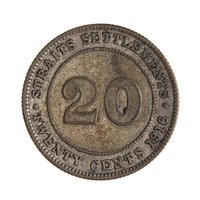
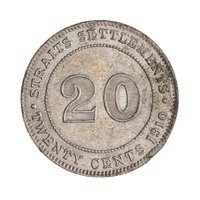
Reverse
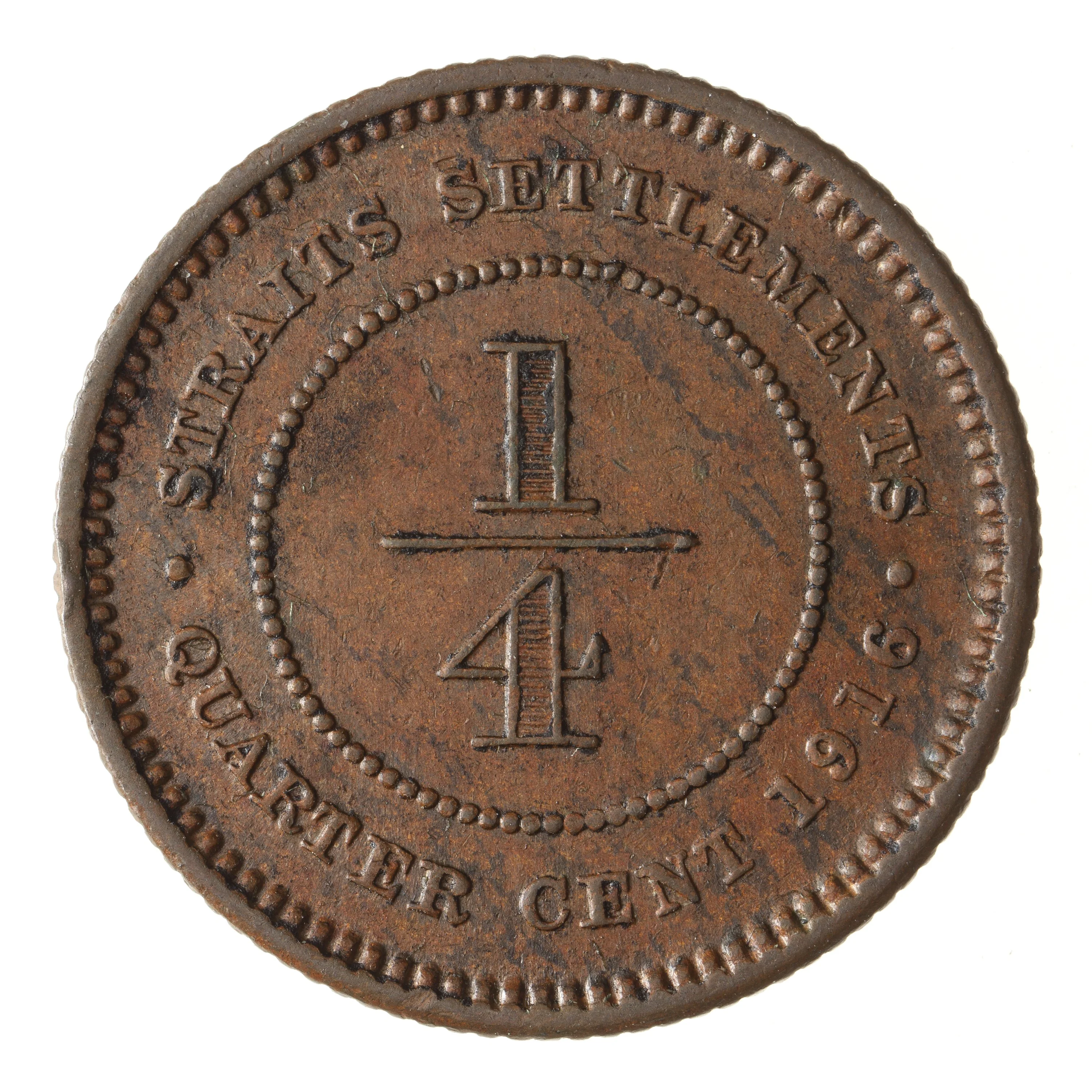
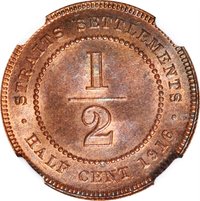
Description:
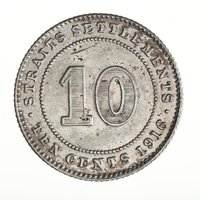
Denomination in beaded circle, date at lower right.
Inscription:
·STRAITS SETTLEMENTS·
1/4
QUARTER CENT 1916
1/4
QUARTER CENT 1916
Script: Latin
Edge
Reeded
Mints
| Name | Mark |
|---|---|
| Kolkata / Calcutta / Murshidabad | — |
Mintings
| Year | Mint Mark | Mintage | Quality | Collection |
|---|---|---|---|---|
| 1916 | — | 4,000,000 | ||
| 1916 | — | — | Proof |
Historical background
In 1916, the Straits Settlements (comprising Singapore, Penang, and Malacca) operated under a unique and robust currency board system, the Straits Settlements Dollar. Established in 1903, this system was designed for absolute stability, with the local currency fully backed by sterling reserves held in London. For every Straits dollar issued, its equivalent value in British pounds was held, creating a fixed exchange rate of 2 shillings and 4 pence to the dollar. This "sterling exchange standard" made the Straits dollar a trusted and strong currency throughout the region, facilitating the vibrant entrepôt trade that was the colony's economic lifeblood.
The outbreak of the First World War in 1914 had introduced significant strain, which continued into 1916. While the currency board maintained its peg, the war disrupted shipping and trade flows, causing a physical shortage of silver coinage in circulation. This was exacerbated by hoarding, as the public sought the security of hard currency amidst global uncertainty. To address the shortage, the government introduced and heavily relied on low-denomination paper notes (one-dollar and ten-cent notes), which, though initially met with public reluctance, became essential for daily transactions. Furthermore, the war effort led to increased British borrowing from the colony's substantial reserves, testing the system's liquidity but not breaking its convertibility pledge.
Despite these wartime pressures, 1916 saw the Straits Settlements currency system demonstrating remarkable resilience. Its strict adherence to the currency board principle prevented inflation and maintained international confidence, a stark contrast to the depreciating paper currencies of many combatant nations. The situation underscored the colony's role as a financial hub and its deep integration into the British imperial economy. The stability of the Straits dollar during this period solidified its position as the dominant trade currency in Malaya and surrounding regions, a foundation it would retain until the Japanese invasion in World War II.
The outbreak of the First World War in 1914 had introduced significant strain, which continued into 1916. While the currency board maintained its peg, the war disrupted shipping and trade flows, causing a physical shortage of silver coinage in circulation. This was exacerbated by hoarding, as the public sought the security of hard currency amidst global uncertainty. To address the shortage, the government introduced and heavily relied on low-denomination paper notes (one-dollar and ten-cent notes), which, though initially met with public reluctance, became essential for daily transactions. Furthermore, the war effort led to increased British borrowing from the colony's substantial reserves, testing the system's liquidity but not breaking its convertibility pledge.
Despite these wartime pressures, 1916 saw the Straits Settlements currency system demonstrating remarkable resilience. Its strict adherence to the currency board principle prevented inflation and maintained international confidence, a stark contrast to the depreciating paper currencies of many combatant nations. The situation underscored the colony's role as a financial hub and its deep integration into the British imperial economy. The stability of the Straits dollar during this period solidified its position as the dominant trade currency in Malaya and surrounding regions, a foundation it would retain until the Japanese invasion in World War II.
🌱 Fairly Common