

1 Falus – Afghanistan
Afghanistan
Context
Year: 1821
Islamic (Hijri) Year: 1236
Issuer: Afghanistan 
Ruler: Ayub Shah
Currency:
(1747—1891)
Demonetization: 1922
Material
References
KM: #Click to copy to clipboard58
Numista: #10454
Obverse
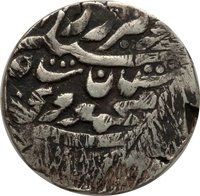
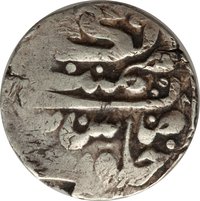
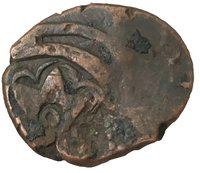
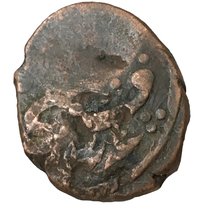
Description:
Crossed swords
Reverse
Edge
Mints
| Name | Mark |
|---|---|
| Kabul | — |
Mintings
| Year | Mint Mark | Mintage | Quality | Collection |
|---|---|---|---|---|
| 1821 | — | — |
Historical background
In 1821, the currency situation in Afghanistan was fragmented and reflected the decentralized political landscape following the fragmentation of the Durrani Empire. The country was divided among multiple rival rulers, with the principal power centers being Kabul under Dost Mohammad Khan, Kandahar under a coalition of his brothers, and Herat under the Sadozai prince Kamran Shah. There was no unified national currency; instead, regional authorities minted their own coins, leading to a circulation of diverse and often competing monetary units.
The primary currency in circulation was the silver rupee, but its weight, purity, and value varied significantly between regions. Kabul minted its own rupees, as did Kandahar and Herat, creating a complex system for trade. Alongside these, older Durrani-era coins, Persian tomans and krans from Herat's closer ties to Iran, and even British Indian rupees from trade routes remained in use. This monetary plurality necessitated constant exchange and assay, hindering commerce and underscoring the lack of central economic authority.
This fragmented currency system was both a symptom and a cause of the era's instability. The inability to control a unified currency limited each ruler's fiscal power and complicated revenue collection, forcing reliance on irregular tributes and land taxes. For the Afghan populace, it meant daily economic uncertainty and vulnerability to debasement. The situation would only begin to resolve decades later as Dost Mohammad Khan consolidated power, eventually unifying the coinage under the Kabul mint in the latter half of the 19th century.
The primary currency in circulation was the silver rupee, but its weight, purity, and value varied significantly between regions. Kabul minted its own rupees, as did Kandahar and Herat, creating a complex system for trade. Alongside these, older Durrani-era coins, Persian tomans and krans from Herat's closer ties to Iran, and even British Indian rupees from trade routes remained in use. This monetary plurality necessitated constant exchange and assay, hindering commerce and underscoring the lack of central economic authority.
This fragmented currency system was both a symptom and a cause of the era's instability. The inability to control a unified currency limited each ruler's fiscal power and complicated revenue collection, forcing reliance on irregular tributes and land taxes. For the Afghan populace, it meant daily economic uncertainty and vulnerability to debasement. The situation would only begin to resolve decades later as Dost Mohammad Khan consolidated power, eventually unifying the coinage under the Kabul mint in the latter half of the 19th century.

💎 Extremely Rare