

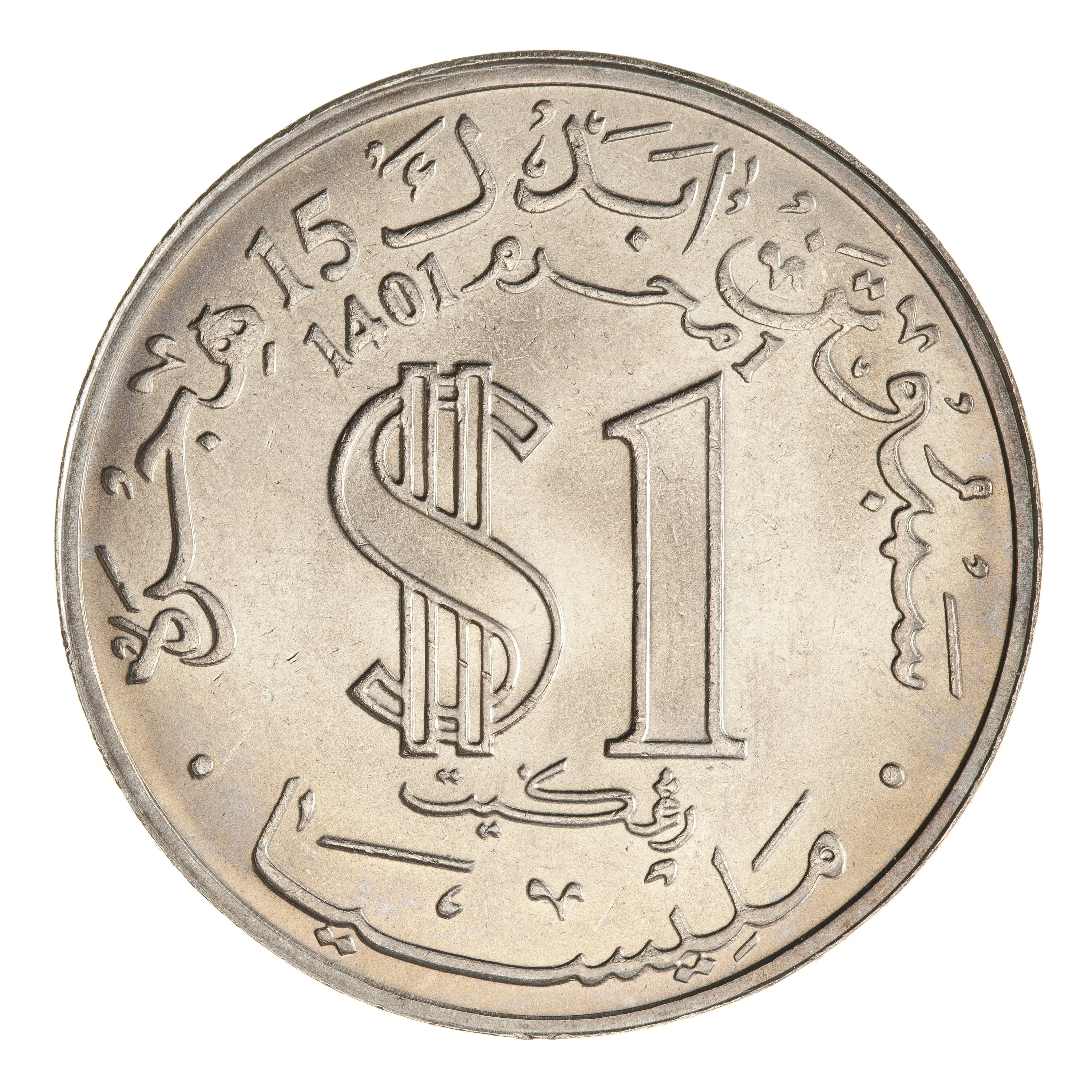
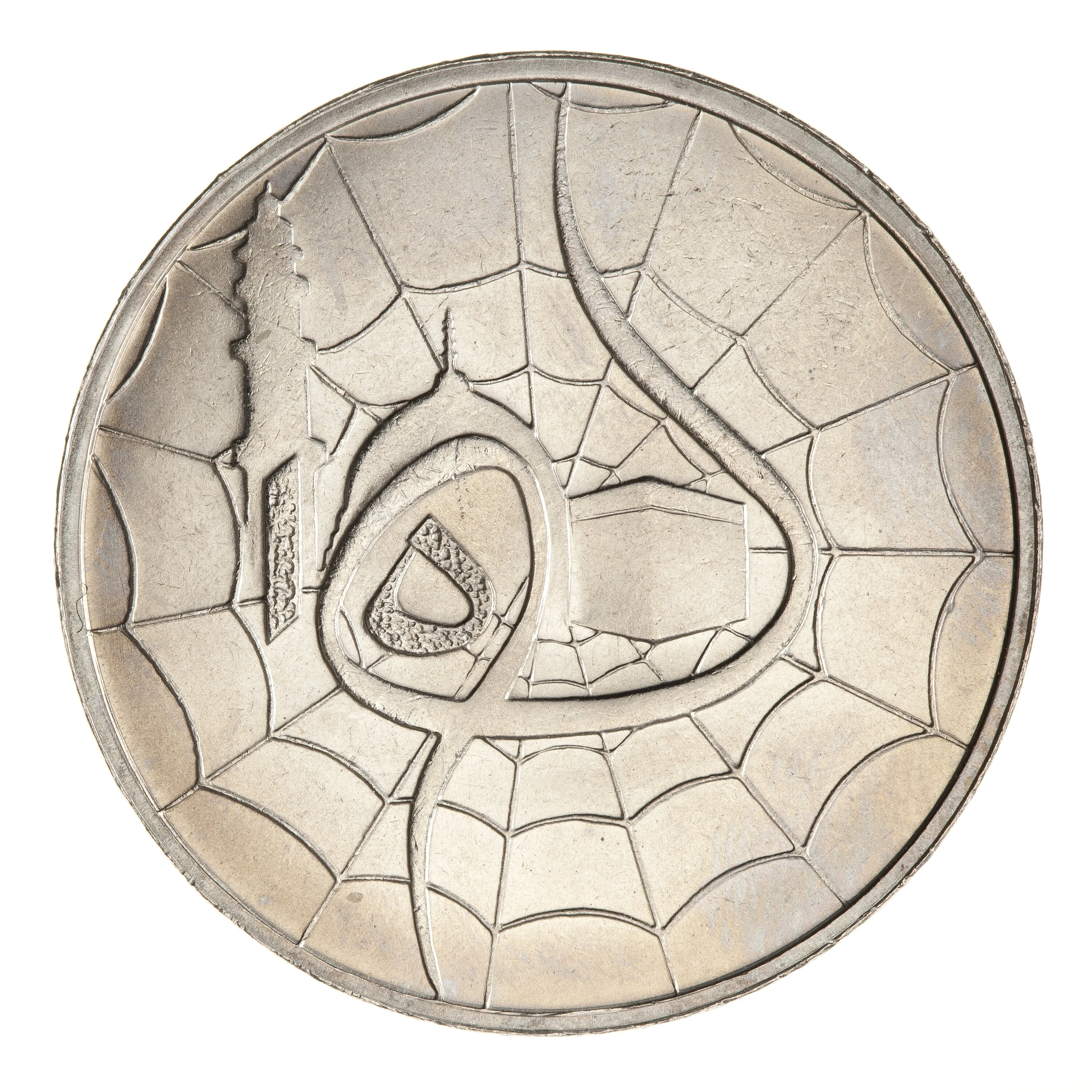
1 Ringgit (Hijra) – Malaysia
Circulating commemorative coins
Commemoration: 1400th Anniversary of the Hijra
Malaysia
Context
Year: 1981
Islamic (Hijri) Year: 1401
Issuer: Malaysia 
Period:
(since 1963)
Currency:
(since 1967)
Total mintage: 500,000
Material
Diameter: 33.5 mm
Weight: 17 g
Thickness: 2.5 mm
Shape: Round
Composition: Copper-nickel
Technique: Milled
Alignment: Medal alignment
flip
References
KM: #Click to copy to clipboard28
Numista: #12747
Value
Exchange value: 1 MYR = $0.26
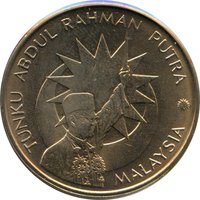
Obverse
Reverse
Edge
Smooth with Inscription
Legend:
BANK NEGARA MALAYSIA BANK NEGARA MALAYSIA
Translation:
CENTRAL BANK OF MALAYSIA CENTRAL BANK OF MALAYSIA
Language: Malay
Mintings
| Year | Mint Mark | Mintage | Quality | Collection |
|---|---|---|---|---|
| 1981 | — | 500,000 |
Historical background
In 1981, Malaysia's currency situation was defined by the operational framework of the Ringgit (MYR), which was pegged to a trade-weighted basket of currencies of its major trading partners. This system, managed by Bank Negara Malaysia (the central bank), replaced a direct peg to the British Pound in 1975 and provided greater stability by mitigating volatility against any single currency, particularly the US Dollar. This was a period of controlled flexibility, where the Ringgit's value was adjusted periodically by the central bank in response to fundamental economic indicators and external trade flows, rather than being set by a free-floating market.
The broader economic context was one of significant transition and commodity-driven growth. Malaysia was a major exporter of primary commodities like rubber, tin, and palm oil, and was also witnessing rising revenues from newly significant oil and gas exports. Consequently, the Ringgit's value and the country's monetary policy were heavily influenced by global commodity price fluctuations. The early 1980s also saw the beginning of a shift under Prime Minister Mahathir Mohamad's administration towards heavy industrialization, which would later increase import demands for capital goods and influence foreign exchange needs.
However, the global economic environment posed challenges. The early 1980s were marked by high worldwide inflation and aggressive interest rate hikes in the United States, which led to a strong US Dollar and global capital shifts. While Malaysia's basket peg offered some insulation, these external pressures strained the system. They contributed to capital outflows and increased the cost of servicing foreign debt, foreshadowing the more severe economic pressures that would culminate in a deep recession later in the mid-1980s and ultimately lead to a much stricter fixed peg to the US Dollar in 1998.
The broader economic context was one of significant transition and commodity-driven growth. Malaysia was a major exporter of primary commodities like rubber, tin, and palm oil, and was also witnessing rising revenues from newly significant oil and gas exports. Consequently, the Ringgit's value and the country's monetary policy were heavily influenced by global commodity price fluctuations. The early 1980s also saw the beginning of a shift under Prime Minister Mahathir Mohamad's administration towards heavy industrialization, which would later increase import demands for capital goods and influence foreign exchange needs.
However, the global economic environment posed challenges. The early 1980s were marked by high worldwide inflation and aggressive interest rate hikes in the United States, which led to a strong US Dollar and global capital shifts. While Malaysia's basket peg offered some insulation, these external pressures strained the system. They contributed to capital outflows and increased the cost of servicing foreign debt, foreshadowing the more severe economic pressures that would culminate in a deep recession later in the mid-1980s and ultimately lead to a much stricter fixed peg to the US Dollar in 1998.
🌟 Uncommon