

1 Falus – Afghanistan
Afghanistan
Context
Year: 1814
Islamic (Hijri) Year: 1229
Issuer: Afghanistan 
Ruler: Mahmud Shah
Currency:
(1747—1891)
Demonetization: 1922
Material
References
KM: #Click to copy to clipboard54
Numista: #10451
Obverse
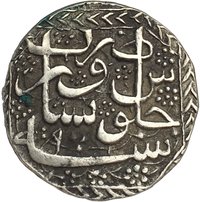
Description:
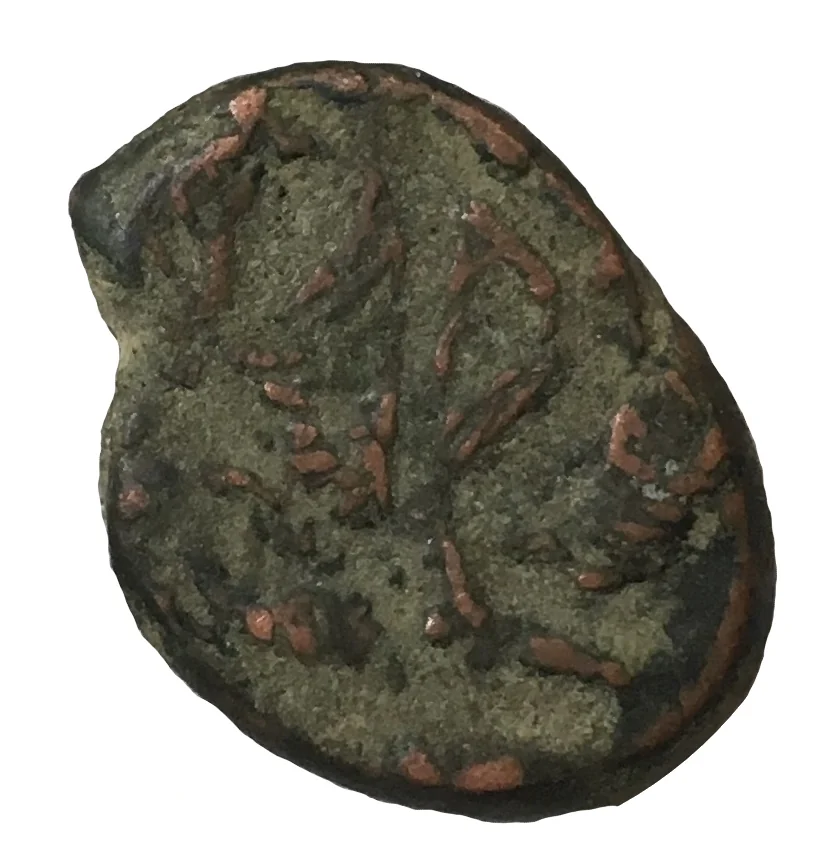
Large "J" with leaf and swords.
Reverse
Description:
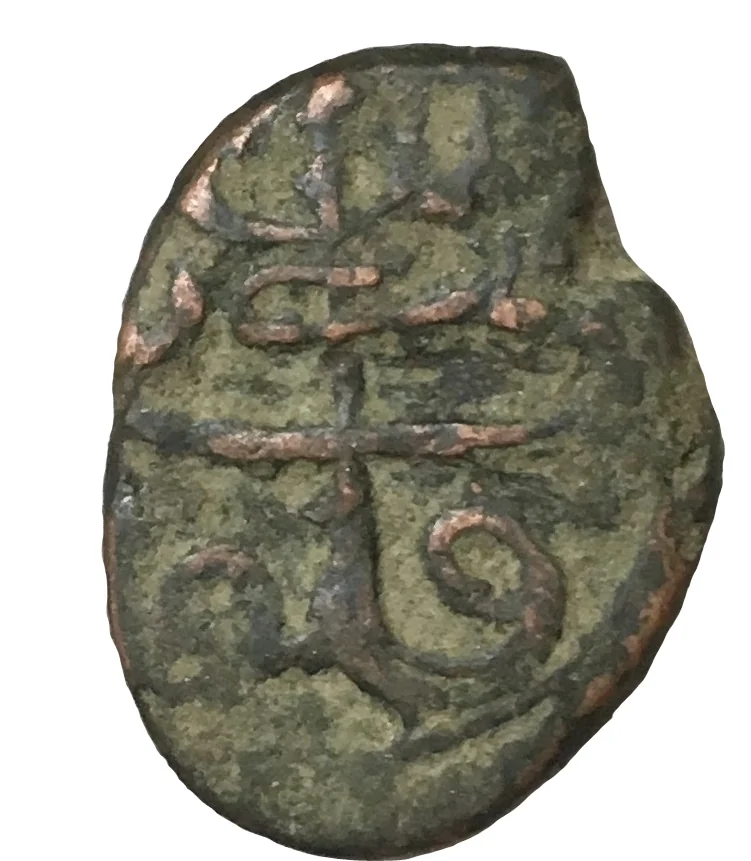
"Falus" backwards.
Edge
Mints
| Name | Mark |
|---|---|
| Kabul | — |
Mintings
| Year | Mint Mark | Mintage | Quality | Collection |
|---|---|---|---|---|
| 1814 | — | — |
Historical background
In 1814, Afghanistan existed not as a unified nation-state but as a collection of rival principalities and tribal confederacies, most notably the Durrani Empire, which was in a state of severe fragmentation following the assassination of its founder, Ahmad Shah Durrani, in 1772. The dominant political entity was the Durrani monarchy in Kabul, but its authority was contested and its control over outlying regions like Herat, Kandahar, and Peshawar was often nominal. This political decentralization was directly reflected in the monetary system, which lacked standardization and central control. The primary currency in circulation was the Durrani silver rupee, first minted by Ahmad Shah, but its weight, purity, and value could vary significantly between the mints of different cities and ruling brothers.
The monetary landscape was a complex mosaic of legacy and contemporary coinage. Alongside the Durrani rupees, older Mughal and Safavid coins remained in circulation, valued by their intrinsic silver content rather than any central decree. Furthermore, foreign trade brought a steady influx of British Indian rupees, Russian rubles, and Persian krans into the bazaars, particularly along key trade routes like the Grand Trunk Road. This created a multi-currency environment where money changers (sarraf) played a crucial economic role, assessing and exchanging a bewildering variety of coins. The value of currency was ultimately determined by its weight in precious metal, and transactions often required careful weighing and assaying.
This period of monetary fragmentation was a direct symptom of the ongoing power struggles following the collapse of a centralized empire. With no strong central authority to enforce a uniform coinage, local khans and rulers often struck their own coins as a symbol of sovereignty and to fund their military campaigns. Consequently, the currency situation in 1814 was one of uncertainty and complexity, mirroring the political instability of the region. It was a system reliant on the trust and expertise of local merchants, rather than the guarantee of a state, setting the stage for the monetary reforms that would later be attempted during the reign of Dost Mohammad Khan as he worked to reunify the country.
The monetary landscape was a complex mosaic of legacy and contemporary coinage. Alongside the Durrani rupees, older Mughal and Safavid coins remained in circulation, valued by their intrinsic silver content rather than any central decree. Furthermore, foreign trade brought a steady influx of British Indian rupees, Russian rubles, and Persian krans into the bazaars, particularly along key trade routes like the Grand Trunk Road. This created a multi-currency environment where money changers (sarraf) played a crucial economic role, assessing and exchanging a bewildering variety of coins. The value of currency was ultimately determined by its weight in precious metal, and transactions often required careful weighing and assaying.
This period of monetary fragmentation was a direct symptom of the ongoing power struggles following the collapse of a centralized empire. With no strong central authority to enforce a uniform coinage, local khans and rulers often struck their own coins as a symbol of sovereignty and to fund their military campaigns. Consequently, the currency situation in 1814 was one of uncertainty and complexity, mirroring the political instability of the region. It was a system reliant on the trust and expertise of local merchants, rather than the guarantee of a state, setting the stage for the monetary reforms that would later be attempted during the reign of Dost Mohammad Khan as he worked to reunify the country.

💎 Extremely Rare